
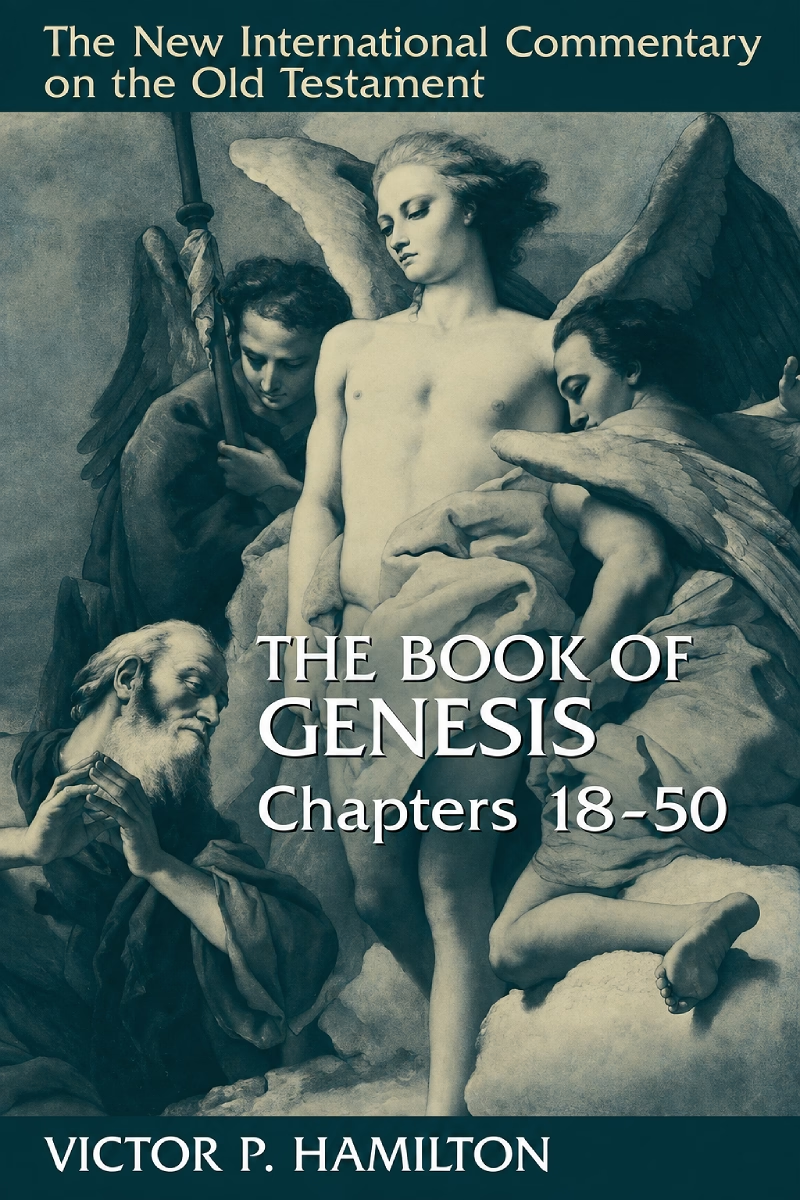
The Book of Genesis, Chapters 18-50
Victor P. Hamilton’s commentary on Genesis 18–50 follows Abraham, Isaac, Jacob, and Joseph through the patriarchal narratives, showing how God remains faithful to his promised word and covenant commitments. Detailed Hebrew exegesis, literary analysis, and repeated New Testament connections illuminate promise, providence, faith, family conflict, and reconciliation.
Available Instantly
About This Book
Victor P. Hamilton’s The Book of Genesis, Chapters 18–50 is the second half of his major NICOT exposition of Genesis. It provides detailed linguistic, literary, historical, and theological commentary from Abraham’s encounter with the three visitors in Genesis 18 through the death of Joseph in Genesis 50. Hamilton’s governing emphasis is the faithfulness of Yahweh to his promised word and covenant commitments to the people he has chosen to receive that promise.
The opening portion completes the Abraham cycle. Hamilton studies Abraham’s hospitality and intercession in Genesis 18, the judgment of Sodom and Gomorrah in Genesis 19, Abraham and Sarah in Gerar, the birth of Isaac, the departure of Hagar and Ishmael, and the testing of Abraham in the binding of Isaac in Genesis 22. These chapters develop the tension between divine promise and circumstances that appear to threaten its fulfillment. They also raise questions about faith, obedience, judgment, intercession, inheritance, and the continuation of the covenant line. The search for a wife for Isaac in Genesis 24 and the death of Abraham bring this phase of the promise story to a close.
Hamilton then follows the Isaac and Jacob narratives, including the birth of Jacob and Esau, the birthright and blessing, Isaac and Abimelech, Jacob’s flight, Bethel, the years with Laban, the growth of Jacob’s household, his return to Canaan, his encounters with God, and the conflicts and reconciliations that shape his family. The commentary repeatedly shows how the promise is renewed and preserved through deeply imperfect people. God’s faithfulness, rather than human consistency, carries the covenant story forward.
The Joseph narrative receives sustained treatment through the final chapters of Genesis. Hamilton explains Joseph’s dreams, his betrayal and sale by his brothers, his descent into Egypt, Judah and Tamar, Joseph in Potiphar’s house and prison, Pharaoh’s dreams, Joseph’s rise to authority, the famine, the repeated journeys of Joseph’s brothers to Egypt, Joseph’s testing of them, his eventual self-disclosure, and the migration of Jacob’s family to Egypt. The closing chapters treat Jacob’s blessings, the deaths of Jacob and Joseph, and the way the book ends with God’s promises still moving toward future fulfillment. These narratives give significant attention to divine providence, human responsibility, family conflict, forgiveness, reconciliation, and the mysterious way God advances his purposes through suffering and reversal.
A distinctive feature throughout Hamilton’s Genesis commentary is his recurring discussion of New Testament appropriation. He examines how later biblical writers receive figures and passages such as Abraham, Isaac, Jacob, and the patriarchal promises. This helps readers understand not only the ancient meaning of Genesis but also its place in the wider biblical message.
The volume is especially useful for readers asking how God’s promises survive human failure, why the patriarchal stories matter for covenant theology, how faith and obedience operate in Abraham’s testing, how providence is displayed in the Joseph story, and how reconciliation can emerge from betrayal and family conflict. Hamilton’s close reading keeps the individual episodes connected to the central theological claim of the volume: God proves faithful to his word and preserves the promised line through Abraham, Isaac, Jacob, and Joseph.
Book Details

Reading Fit
STUDY LEVEL
Advanced, Intermediate
STUDY SCOPE
Individual Book, Old Testament
BOOKS INCLUDED

Edition & Format
PUBLISHED
September 26, 1995
AVAILABLE FORMATS
hardcover, kindle
LENGTH
1225 pages

Topics Covered
You Might Also Like