
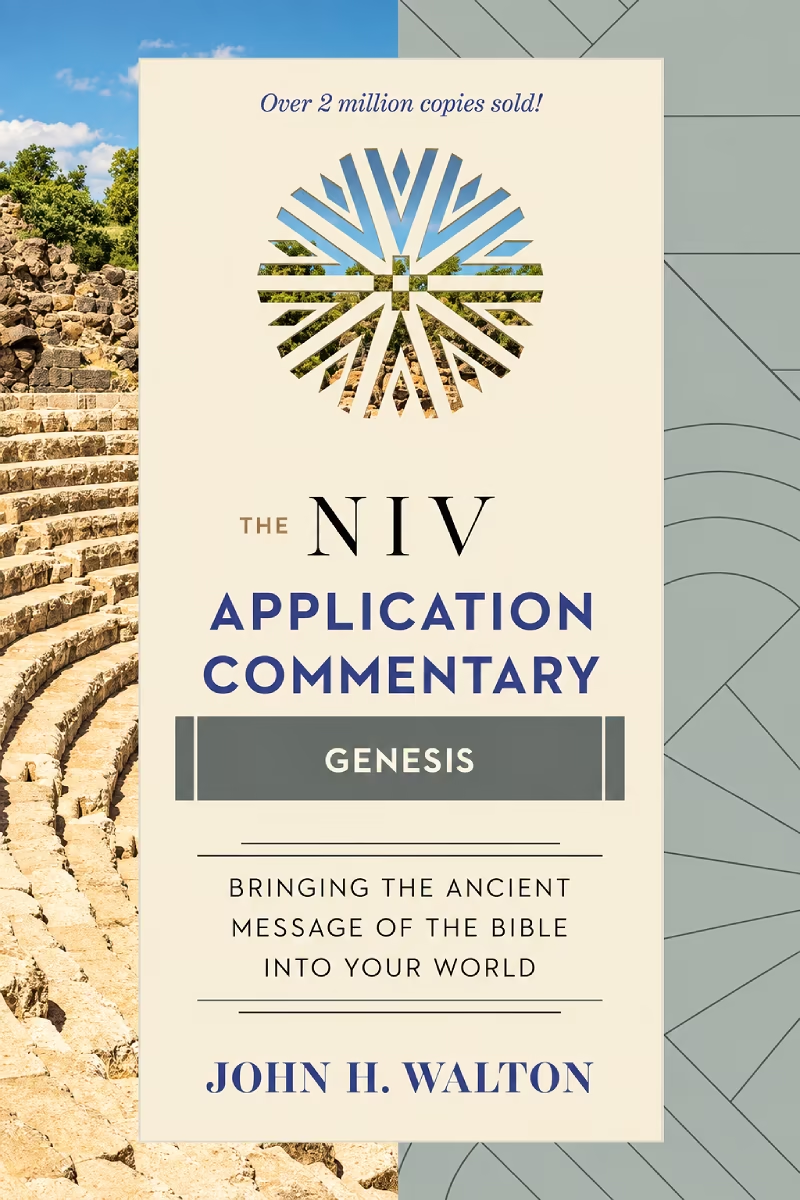
Genesis (The NIV Application Commentary)
John H. Walton’s Genesis commentary follows the whole book from creation through Joseph, explaining the ancient meaning of each passage and carrying its enduring theology into contemporary life. Its major threads are God’s rule and character, creation and order, human rebellion, covenant, promise, faith, providence, and God’s intention to bless through his people.
Available Instantly
About This Book
John H. Walton’s Genesis in the NIV Application Commentary is a full-book exposition designed to move from the ancient meaning of Genesis to its enduring theological significance and contemporary application. Following the series’ three-part method—Original Meaning, Bridging Contexts, and Contemporary Significance—the commentary treats Genesis as an ancient text that must first be understood within its literary, historical, and cultural world before its message is carried into present Christian life.
A governing theme throughout the commentary is God’s mastery in creation, covenant, and history. Genesis 1–11 presents God bringing order into a world threatened by disorder and human rebellion. Creation, the image and vocation of humanity, the entrance of sin, Cain, the flood, and Babel establish both God’s sovereign purpose and humanity’s repeated failure to live within that purpose. Walton gives sustained attention to the early chapters of Genesis, their ancient Near Eastern setting, and the theological questions they raise about creation, human identity, sin, judgment, blessing, and divine order.
Genesis 12–50 then develops the covenantal and family history through Abraham, Isaac, Jacob, and Joseph. The Abraham narratives receive extensive treatment as the beginning of God’s covenant program of promise and blessing. God calls Abraham, makes promises concerning land, descendants, and blessing, and repeatedly preserves those promises through situations that appear to threaten their fulfillment. Faith, obedience, divine election, covenant signs, testing, and the relationship between promise and fulfillment all emerge within this material.
The Jacob narratives continue the theme of God working through deeply flawed people and disordered family relationships. Walton traces God’s purposes through rivalry, deception, fear, reconciliation, and transformation. Joseph’s story then brings the commentary’s themes of providence and order to a climax: what appears to be family catastrophe and famine becomes the means by which God preserves life and advances his purposes. The movement from chaos to order therefore occurs not only in creation but also in covenant history and God’s governance of human events.
The commentary gives particular attention to how ancient cultural background clarifies passages that modern readers often misunderstand. Customs surrounding marriage, inheritance, blessing, covenant, family structure, land, hospitality, and ancient cosmology are used to illuminate the text rather than to replace its theological message. This makes the work especially useful to readers asking what difficult Genesis passages meant in their original setting and how those meanings should shape modern interpretation.
Because it is an application commentary, the work also repeatedly asks what Genesis teaches present-day believers. Questions include how people respond to God’s promises when fulfillment is delayed, how faith functions amid uncertainty, how sin disorders families and communities, how God’s purposes continue through human weakness, and how divine providence should be understood when circumstances appear contrary to promise. Walton does not reduce Genesis to moral examples; he continually places human conduct within the larger story of God’s character, covenant, blessing, judgment, and redemptive purpose.
Genesis itself is the sustained textual framework and therefore deserves the strongest possible biblical-book ranking. Major portions such as Genesis 1–11 and Genesis 12–50 also function as independently meaningful search targets because the commentary gives extensive treatment to both primeval and patriarchal history. The work is especially strong for searches on creation, Abraham, the Abrahamic covenant, Jacob, Joseph, God’s blessing, divine providence, the flood, Babel, faith, promise, and the ancient Near Eastern background of Genesis.
For readers seeking to understand how the first book of the Bible connects theology with life, this commentary offers both detailed exegesis and practical interpretation. Its central concern is not simply what happened in Genesis, but what the book reveals about who God is, how he establishes and preserves his purposes, how he responds to rebellion, and how his covenant promises shape the lives of those he calls.
Book Details

Reading Fit
STUDY LEVEL
Advanced, Intermediate
STUDY SCOPE
Individual Book, Old Testament
BOOKS INCLUDED

Edition & Format
PUBLISHED
January 4, 2011
AVAILABLE FORMATS
hardcover, kindle
LENGTH
774 pages

Topics Covered
You Might Also Like