
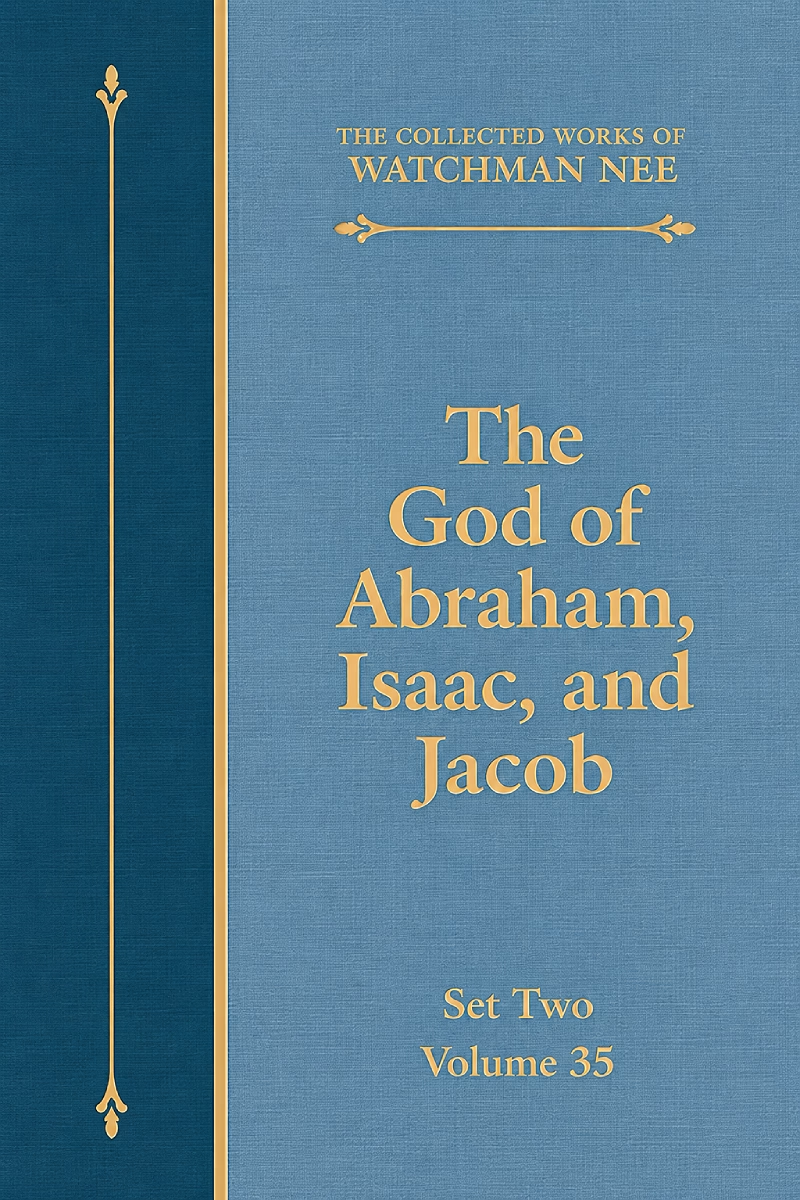
The God of Abraham, Isaac, and Jacob
Watchman Nee follows Abraham, Isaac, and Jacob as a threefold picture of Christian experience: faith responding to God’s promise, inheritance received in Christ, and the Holy Spirit’s discipline of natural strength. Their Genesis histories become a vivid study of grace, resurrection, spiritual maturity, and the lifelong formation of Christ in the believer.
Available Instantly
About This Book
The God of Abraham, Isaac, and Jacob is Watchman Nee’s sustained study of Genesis 12–50 as a threefold picture of Christian experience. Abraham, Isaac, and Jacob are not treated as isolated biographies. Nee presents their histories as complementary stages in God’s work: Abraham emphasizes God as the source of promise and the life of faith; Isaac emphasizes inheritance received from God rather than produced by human effort; and Jacob emphasizes the discipline of the Holy Spirit upon natural strength until spiritual maturity and a transformed character emerge.
The Abraham section follows God’s call from Ur and Haran into Canaan and develops the meaning of the land, the altar, Shechem, Bethel, Hebron, and Abraham’s repeated tests. Faith in God and the promises of God are major concerns. Nee traces the promised seed, Abraham’s attempts to secure the promise through Ishmael, and the contrast between grace and human effort. Genesis 15 contributes to the discussion of justification by faith, while circumcision and covenant become important in the later development of Abraham’s relationship with God. Abraham’s history repeatedly asks whether God’s purpose will be received from Him or pursued through natural strength.
Genesis 22 becomes one of the book’s major passages. Abraham’s offering of Isaac brings together promise, obedience, surrender, and resurrection. Nee presents Abraham as learning to hold even God’s gift in dependence upon the Giver. Hebrews and Romans help interpret this crisis as faith in the God of resurrection. The chapter therefore gives the offering of Isaac significance beyond an isolated Old Testament event and relates it to Christian faith and God’s ability to fulfill His own promise beyond natural possibility.
Isaac supplies the book’s second major spiritual principle: receiving. His place as the son of promise and heir is used to explain the grace of God and the believer’s inheritance in Christ. Nee applies Isaac’s history through Galatians, Romans, and related New Testament passages, distinguishing spiritual realities received in Christ from attainments produced by effort. Union with Christ appears through the expressions “we in Christ” and “Christ in us.” The Cross and resurrection also enter this section as Nee describes the believer’s position and provision in Christ and Christ Himself as the substance of what God gives.
The longest experiential development belongs to Jacob. His grasping, calculation, self-reliance, and determination to secure blessing through his own ability become the setting for the discipline of the Holy Spirit. Nee follows Jacob through family conflict, exile, Laban, Mahanaim, and the return toward Canaan. God’s discipline is not presented as punishment for its own sake but as a sustained work that exposes the inadequacy of natural strength and makes room for a different spiritual constitution.
Genesis 32 and Peniel form a decisive center. Jacob wrestles, is touched in the hollow of his thigh, and leaves with a lasting lameness. Nee interprets this as the breaking of natural strength. Yet the book does not end at the crisis. Jacob continues through Bethel and Hebron, and his later life is examined for signs of maturity: quietness, tenderness, compassion, spiritual standing, and the capacity to bless others.
The final chapter gathers the entire study into spiritual transformation. Nee connects the discipline experienced by Jacob with partaking of God’s holiness, the fruit of the Spirit, Christ being formed in believers, and the formation of precious spiritual material. The Holy Spirit’s work is therefore more than outward correction. The goal is a person whose inward constitution increasingly expresses Christ.
The book addresses readers asking what Abraham, Isaac, and Jacob represent in Christian experience, how faith relates to God’s promises, why grace excludes confidence in natural effort, what inheritance in Christ means, why God disciplines believers, what Peniel signifies, how natural strength is broken, and how spiritual maturity and transformation develop over time.
Book Details

Reading Fit
STUDY LEVEL
Intermediate
STUDY SCOPE
Individual Book, Old Testament, Topical
BOOKS INCLUDED

Edition & Format
PUBLISHED
May 6, 2013
AVAILABLE FORMATS
kindle
LENGTH
201 pages

Topics Covered
You Might Also Like