
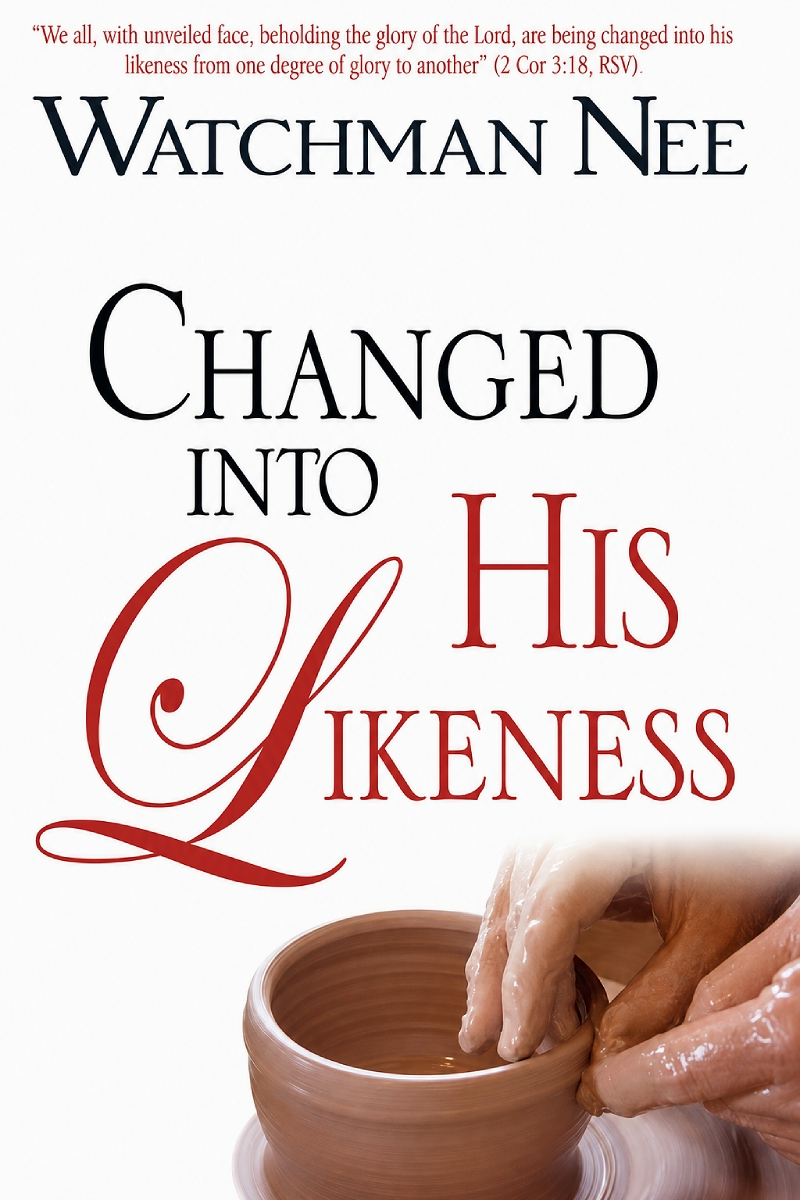
Changed Into His Likeness
Through Abraham, Isaac, and Jacob, Watchman Nee traces three complementary stages of spiritual formation: God’s sovereign call and promise, the inheritance freely given in Christ, and the Holy Spirit’s discipline of natural strength. Their Genesis histories become a searching picture of faith, grace, victory over sin, and transformation into Christ’s likeness.
Available Instantly
About This Book
Changed Into His Likeness uses the lives of Abraham, Isaac, and Jacob as a sustained Genesis-based picture of God’s work of spiritual transformation. Watchman Nee presents the three patriarchs as complementary stages of Christian experience: Abraham shows God as the sovereign Originator who calls and promises; Isaac shows what is freely received in Christ; and Jacob shows how the Holy Spirit deals with natural strength until the believer is inwardly changed. The book asks not merely what happened to these men, but what their histories reveal about God’s way of forming His people.
Abraham’s history begins with divine choice and calling. Nee emphasizes that spiritual life originates with God rather than with human initiative. Abraham is called out, brought into the land, given promise, and taught to live by faith while fulfillment is delayed. His altars, pilgrim life, failures, and recoveries become practical lessons in responding to God. The birth of Ishmael exposes the attempt to produce by natural effort what God has promised to give, while the covenant of grace emphasizes that God Himself undertakes the fulfillment of His purpose.
Genesis 22 brings Abraham’s history to a decisive test. The offering of Isaac asks whether Abraham will cling to the gift or trust the Giver. Nee connects surrender with faith in God’s promise and with resurrection, drawing on Hebrews to show Abraham counting on God’s power to raise the dead. The episode therefore speaks to readers asking why God tests faith, why cherished gifts must remain under His lordship, and how promise can still be trusted when obedience appears to threaten its fulfillment.
Isaac introduces the principle of receiving. He is the son given by promise and becomes a picture of the believer’s inheritance in Christ. Nee uses Galatians and related New Testament teaching to show that what God provides in Christ is not attained by spiritual effort but received as gift. This reaches a major practical development in “The New Life Indwelling.” Romans 6 is used to explain the believer’s union with Christ in death and resurrection: the old man has been crucified with Christ, and victory over sin begins by recognizing and counting upon what God has already accomplished. Christ is not merely a helper who supplies strength for holiness; He is presented as the believer’s indwelling life and victory, with 1 Corinthians 1:30 and Colossians 3:4 reinforcing that emphasis.
Jacob’s history supplies the necessary counterpart. Receiving Christ’s fullness does not make the believer’s natural strength harmless. Jacob’s cleverness, bargaining, self-confidence, and ability to arrange circumstances illustrate the self-reliant nature that must come under God’s discipline. Nee explicitly relates this problem to victorious Christian living and sanctification: teaching about victory over sin remains incomplete if the strength of the natural man is never dealt with. Difficult circumstances and relationships become part of the Holy Spirit’s schooling rather than merely obstacles to escape.
Genesis 32 and Peniel form the crisis of Jacob’s transformation. God touches the source of his natural strength, leaving him with a lasting weakness and a new basis of dependence. The later Jacob increasingly displays tenderness, quietness, worship, discernment, and the capacity to bless. Hebrews 12 contributes the language of divine discipline and its “peaceable fruit,” helping Nee show that spiritual maturity is not measured by outward success or natural capability but by what God has inwardly formed.
The book’s biblical types and character studies therefore address several practical questions at once: Why does Christian self-effort fail? How is victory over sin received in Christ? What is the difference between God’s gift and the believer’s attempt to produce it? Why does God permit discipline, delay, frustration, and weakness? What does Peniel mean spiritually? And how does God move a believer from calling, through receiving Christ’s sufficiency, into the deeper transformation of natural strength? Nee’s answer is that God changes His people through His own initiative, the finished provision of Christ, and the patient disciplinary work of the Holy Spirit.
Book Details

Reading Fit
STUDY LEVEL
Intermediate
STUDY SCOPE
Old Testament, Topical
BOOKS INCLUDED

Edition & Format
PUBLISHED
November 25, 2014
AVAILABLE FORMATS
paperback, hardcover, kindle, audiobook
LENGTH
126 pages
· 4h 57m audio

Topics Covered
You Might Also Like