
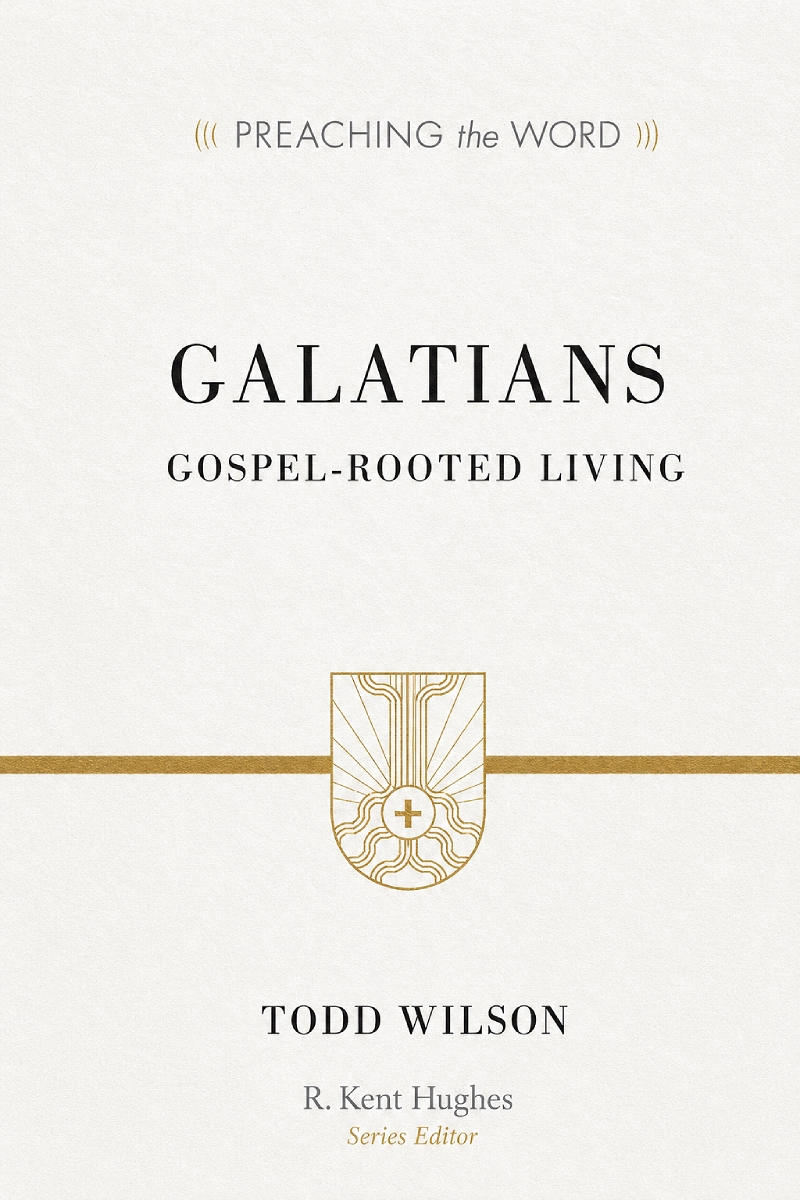
Galatians: Gospel-Rooted Living
Todd Wilson’s pastoral exposition of Galatians shows how the gospel of grace shapes the whole Christian life. Moving from justification by faith and Christ’s cross to adoption, freedom, and life in the Spirit, it explains why believers must keep returning to the gospel rather than adding law, self-effort, or the flesh to Christ’s finished work.
Available Instantly
About This Book
Todd Wilson’s Galatians: Gospel-Rooted Living is a pastoral, verse-by-verse exposition of Paul’s letter built around one governing concern: Christians must not merely begin with the gospel but continue to live from the grace of God revealed in Jesus Christ. Wilson treats the crisis in Galatia as more than a first-century dispute about circumcision and the Mosaic law. Beneath the controversy is the enduring question of how believers actually live the Christian life after conversion. The answer is gospel-rooted living: returning again and again to Christ’s finished work rather than relying on religious performance, human approval, self-effort, or the desires of the flesh.
The commentary follows Galatians closely and repeatedly connects doctrine with spiritual practice. In Galatians 1, Paul’s astonishment at a distorted gospel leads into questions of apostolic authority, faithfulness to the truth, people-pleasing, and the danger of abandoning grace. Galatians 2 develops the public conflict with Peter and the truth of justification by faith apart from works of the law. Wilson gives particular attention to Galatians 2:15–21, where being crucified with Christ becomes the pattern for what he calls “cruciformity”—a life shaped by the cross and by Christ living in the believer. The passage therefore connects the doctrine of justification with practical freedom from hypocrisy, pride, and self-centered living.
Galatians 3–4 supplies a major theological center. Wilson traces Paul’s appeal to Abraham, the blessing promised through faith, Christ’s bearing of the law’s curse, the purpose and temporary role of the law, and the priority of God’s promise. He explains how believers become heirs in Christ and how adoption as sons changes their relationship to God from slavery to sonship. Paul’s use of Hagar and Sarah is treated within the larger contrast between bondage and freedom, law and promise, and human effort and divine grace. These chapters help readers understand why adding religious requirements to the gospel does not perfect Christian life but turns believers away from the way they began—by hearing with faith and receiving the Spirit.
The practical climax comes in Galatians 5–6. Christian freedom is not license for self-indulgence; it is freedom to serve through love. Wilson develops Paul’s contrast between the flesh and the Spirit, the works of the flesh, the fruit of the Spirit, and the call to walk by the Spirit. The Christian life is therefore neither legalistic striving nor autonomous self-expression, but Spirit-enabled life flowing from the gospel. Galatians 6 extends this into the shared life of the church through spiritual restoration, bearing one another’s burdens, generous support of gospel ministry, doing good, and refusing to boast in anything except the cross of Christ.
The book is especially useful for readers asking how grace relates to obedience, why believers still struggle with the flesh, what Christian freedom means, how the law relates to the promise, and how the death of Christ changes everyday conduct. Wilson’s recurring emphasis is that the same gospel that justifies also gives the pattern and power for ongoing Christian living. Grace is not merely the entrance into the Christian life; it remains the ground on which believers stand, the truth that guards their freedom, and the source from which life in the Spirit grows.
Book Details

Reading Fit
STUDY LEVEL
Fundamental, Intermediate
STUDY SCOPE
Individual Book, New Testament
BOOKS INCLUDED

Edition & Format
PUBLISHED
July 31, 2013
AVAILABLE FORMATS
hardcover, kindle
LENGTH
357 pages

Topics Covered
You Might Also Like