
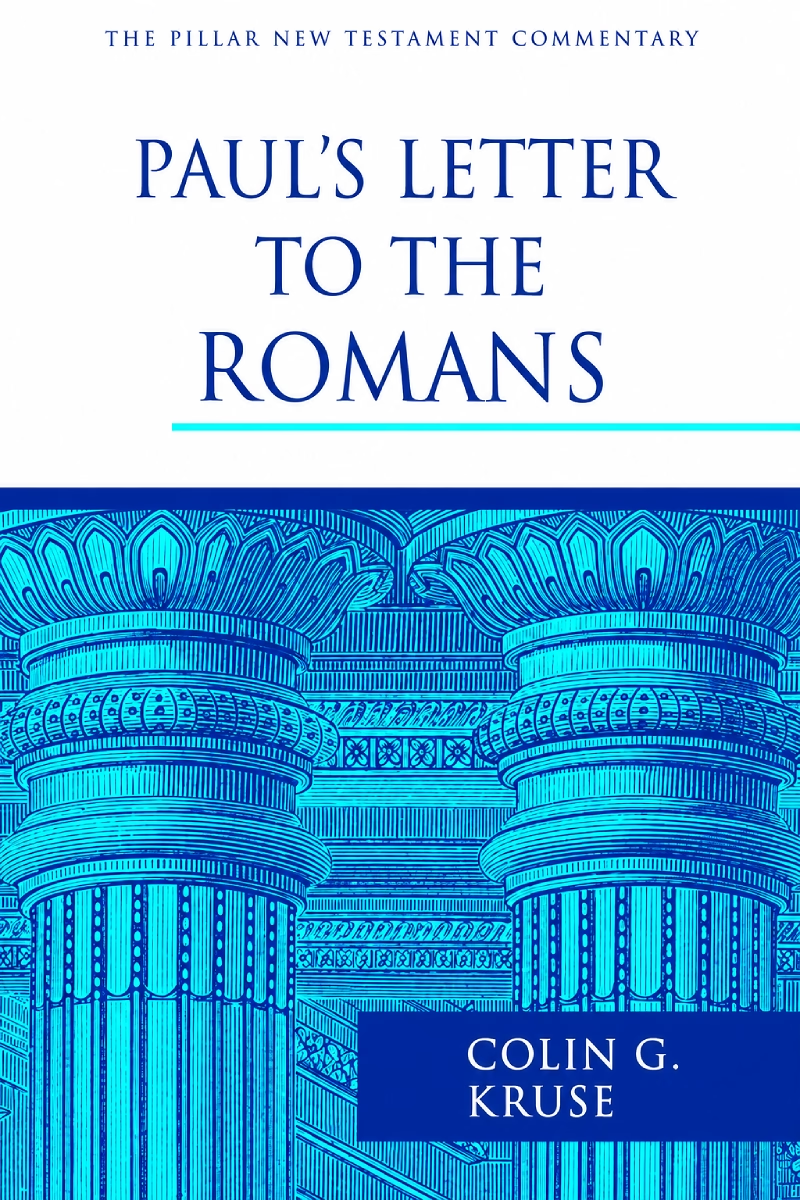
Paul’s Letter to the Romans
Colin Kruse’s detailed yet accessible exposition of Romans follows Paul’s gospel from humanity’s sin and God’s righteous judgment to justification by faith, new life in Christ and the Spirit, God’s purpose for Israel, and the transformed life of the church. It also weighs major interpretive questions with careful attention to Paul’s argument.
Available Instantly
About This Book
Colin G. Kruse’s Paul’s Letter to the Romans is a full exposition of Romans that treats Paul’s gospel as the governing center of the letter. Kruse presents the gospel in the setting of God’s sovereign action as Creator, Judge, and Redeemer, showing how God acts through Jesus Christ to deal with human sin and its consequences. The commentary is therefore useful not only for readers asking what Romans means verse by verse, but also for questions such as: What is the gospel? How can sinners be put right with God? What does justification by faith mean? What is the relationship between grace, faith, works, and the law? How does the gospel change the way Christians live?
Kruse gives sustained attention to Romans 1–4, where Paul exposes humanity’s universal accountability before God and develops the righteousness of God, judgment, the law, faith, justification, and Abraham. Romans 1:16–17 functions as a programmatic statement of the gospel, while Romans 3:21–26 receives close attention for God’s saving righteousness, justification, redemption, and Christ’s atoning death. The commentary also addresses Paul’s treatment of same-sex relations in Romans 1:26–27 and the difficult questions surrounding judgment, works of the law, and the place of Jewish privilege.
In Romans 5–8 Kruse follows Paul from peace with God and reconciliation through Adam-and-Christ theology into freedom from sin, life in union with Christ, the problem of the law and the flesh, and life through the Holy Spirit. His treatment of Romans 6–8 helps readers think through how believers can live differently after conversion, what Paul means by dying and rising with Christ, how Romans 7 should be understood, and how the indwelling Spirit relates to sanctification, adoption, assurance, suffering, hope, and final glory. These chapters connect the doctrine of justification with the transformed life that flows from the gospel rather than leaving salvation as a merely abstract status.
Romans 9–11 receives substantial treatment as Kruse examines Israel, election, mercy, Jewish unbelief, Gentile inclusion, God’s faithfulness, and Paul’s statement that “all Israel will be saved.” The commentary treats these chapters as an important part of Paul’s gospel argument rather than an isolated digression. This makes the volume especially relevant to readers studying how Israel and the nations fit within God’s saving purpose and how Paul holds together divine mercy, human response, and the promises of God.
Kruse then traces the practical outworking of the gospel through Romans 12–15. He explains the call to present the body as a living sacrifice, transformed thinking, service through differing gifts, genuine love, the believer’s relation to governing authorities, Christian conscience, and disputes between the “strong” and the “weak.” Romans 14:1–15:13 receives particular attention for questions about liberty, conscience, mutual acceptance, and church unity. Paul’s missionary purpose and concern for Jew-Gentile fellowship also help explain why theology and pastoral exhortation belong together in Romans.
The final chapters include Paul’s ministry relationships and greetings, including discussion of Phoebe and Junia. Throughout the commentary Kruse compares major interpretive options, interacts with Greek and scholarly debates without making the work inaccessible, and uses additional notes for difficult theological or contemporary questions. The result is a substantial guide to Romans as a coherent proclamation of God’s gospel and its consequences for salvation, holiness, church life, conscience, mission, and hope.
Book Details

Reading Fit
STUDY LEVEL
Advanced, Intermediate
STUDY SCOPE
Individual Book, New Testament
BOOKS INCLUDED

Edition & Format
PUBLISHED
June 14, 2012
AVAILABLE FORMATS
hardcover, kindle
LENGTH
669 pages

Topics Covered
You Might Also Like