

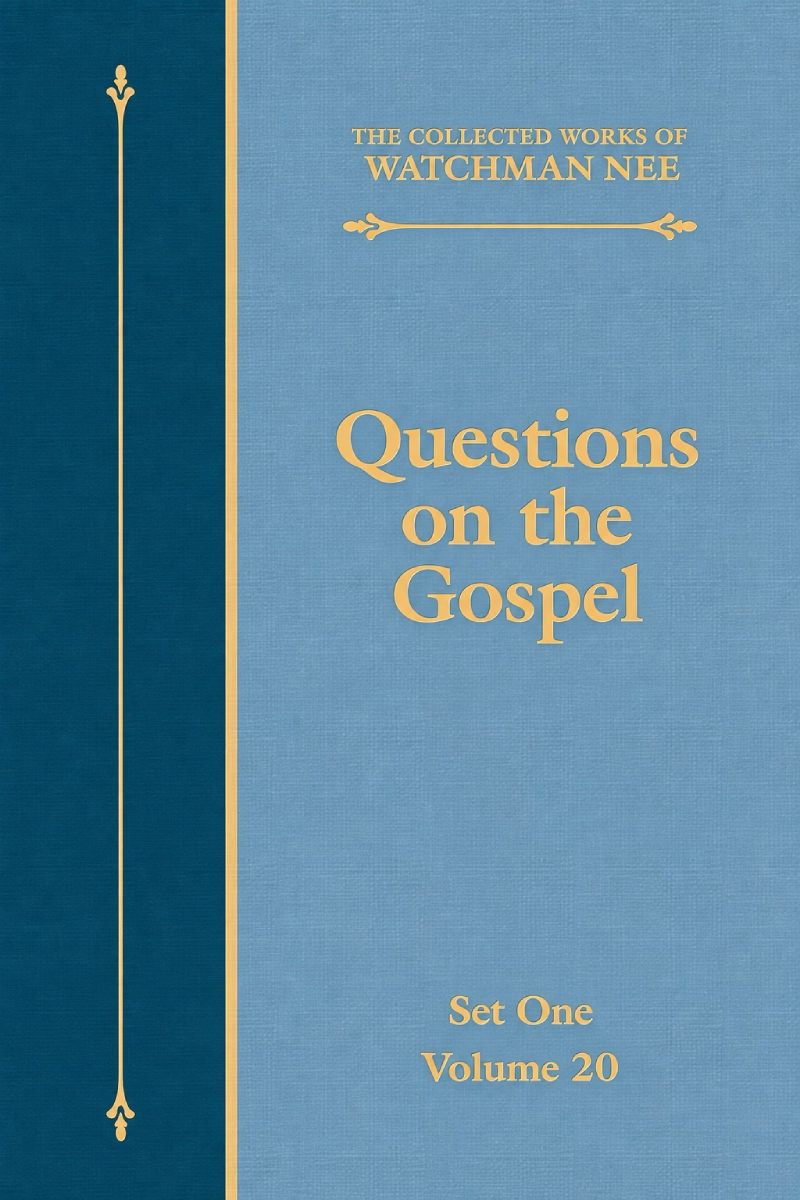
Questions on the Gospel
In fifty questions and answers, Watchman Nee works through the gospel’s most persistent biblical difficulties: grace and righteousness, faith, forgiveness, law, Christ’s death and resurrection, redemption, union with Christ, eternal salvation, and sanctification. The book shows how these truths fit together without confusing distinct uses of salvation, forgiveness, or justification.
Available Instantly
About This Book
Questions on the Gospel is Watchman Nee’s collection of fifty detailed questions and answers designed to give believers a scriptural foundation for understanding and presenting the gospel. Its method is comparative: passages that seem difficult, contradictory, or easily confused are placed beside one another so that distinctions within the gospel become clear. The book ranges from grace, righteousness, faith, forgiveness, and justification through the person and work of Christ, the law, redemption, the Cross, the Blood, resurrection, union with Christ, eternal salvation, difficult warning passages, and sanctification.
The early questions establish the relationship between grace and God’s righteousness. Nee argues that grace does not mean that God ignores sin; the free gift of salvation rests on what God has righteously accomplished in Christ. Questions on transgression, iniquity, sin and sins, purification, Romans 4, Hebrews 9, and Leviticus 4 explore how guilt is dealt with and how forgiveness relates to justification. Romans is a major biblical foundation throughout the volume, especially Romans 4 and 5. The result addresses readers asking how God can forgive sinners while remaining righteous, what justification means, and why salvation cannot be earned by works.
A substantial sequence examines law and faith. Nee distinguishes the function of the law from the way of receiving salvation and works through passages in Matthew and Galatians that can appear to place law and grace in tension. The law reveals divine requirement; the gospel announces what God has accomplished in Christ and what the sinner receives by believing. Faith in Jesus Christ is therefore treated not as religious achievement but as the means of receiving God’s gift.
The person and redemptive work of Jesus Christ occupy the middle of the book. Questions address Christ’s two natures, His relation to the law, the meaning of redemption, His crucifixion, His death under the judgment of God, and the finished character of His work. Nee distinguishes the Blood and the Cross without separating them. The Blood answers the problem of sins and the believer’s standing before God, while the Cross also reaches the old man and the believer’s participation in Christ’s death. Acts, Isaiah, Romans, Galatians, Colossians, 2 Corinthians, Hebrews, and the sacrificial background of Leviticus contribute to this teaching.
Resurrection is treated as essential to salvation rather than as an appendix to the Cross. Questions on believing in Christ’s resurrection, 1 Corinthians 15, Romans 4–5, and the relation of resurrection to salvation explain why Christ’s rising confirms His accomplished work and introduces a living new relationship with Him. This leads into several questions on objective and subjective union, the believer’s position in Christ, and crucifixion with Christ. Union with Christ connects what happened to Christ historically with the believer’s new standing and life.
The later questions concentrate on the security, scope, and biblical vocabulary of salvation. Nee asks what it means to believe and not perish, what is required for salvation, whether a believer can fall from grace, and how Hebrews 6 and Hebrews 10 should be understood. He distinguishes eternal salvation from other scriptural uses of salvation, including daily deliverance, salvation from tribulation, salvation of the body, and salvation of the soul in relation to the coming kingdom. In the same way he distinguishes several kinds of forgiveness rather than assuming every passage about forgiveness concerns eternal condemnation. These distinctions are intended to prevent readers from using warning, discipline, fellowship, or kingdom passages to overturn the free and eternal character of salvation received by faith.
The final question gives a substantial treatment of sanctification. Nee traces sanctification from Genesis to Revelation as separation unto God, then distinguishes the believer’s sanctified position from the practical fruit of holiness. Exodus, Leviticus, the Gospels, Acts, 1 Corinthians, and other passages show that what belongs to God is set apart for Him because of His claim and redemption.
Questions on the Gospel therefore helps readers asking: Is salvation really by grace through faith alone? How do grace and righteousness fit together? What is the difference between forgiveness and justification? Why did Christ have to die, and how do the Blood and Cross differ? Why does resurrection matter? What does union with Christ mean? Can a saved person perish? How should difficult passages about works, falling from grace, Hebrews 6, Hebrews 10, or salvation of the soul be understood? And what is the difference between positional sanctification and practical holiness? The book’s breadth makes it a doctrinal and interpretive guide to the gospel rather than a treatment of only one aspect of conversion.
Book Details

Reading Fit
STUDY LEVEL
Fundamental, Intermediate
STUDY SCOPE
Topical
BOOKS INCLUDED

Edition & Format
PUBLISHED
May 4, 2013
AVAILABLE FORMATS
paperback, kindle
LENGTH
233 pages

Topics Covered
You Might Also Like