

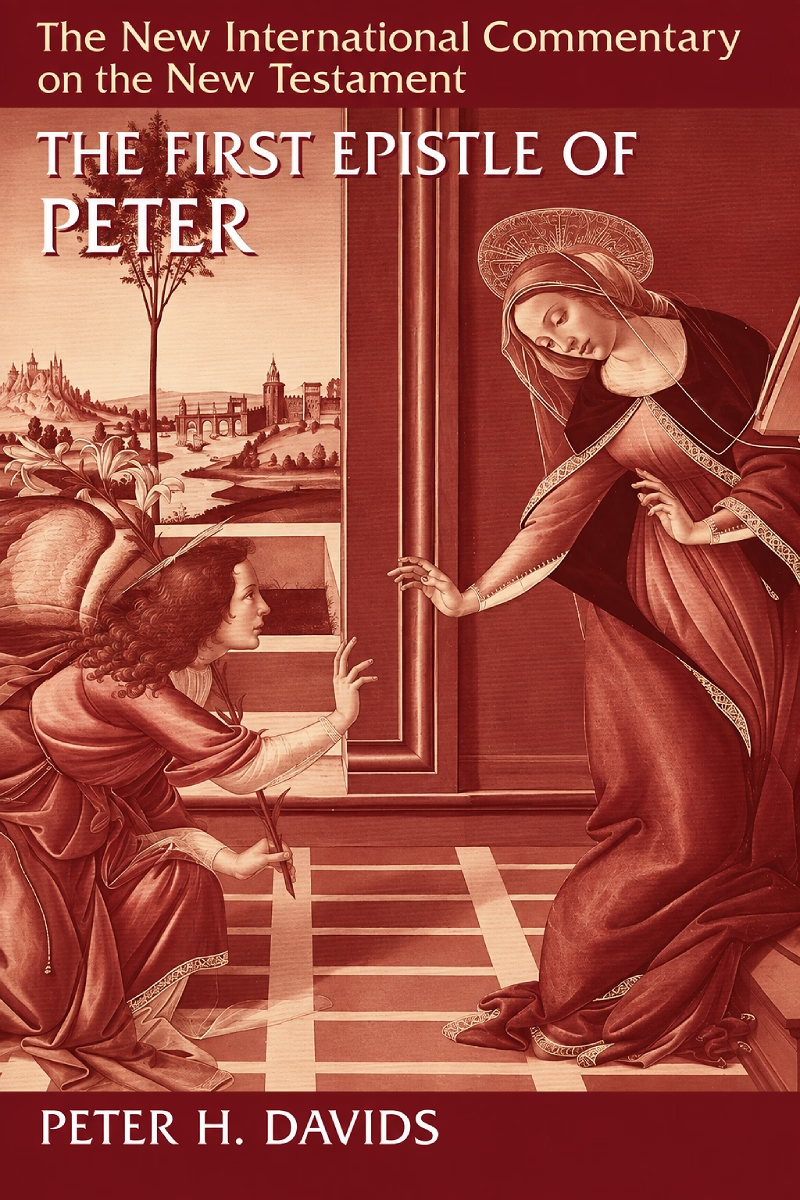
The First Epistle of Peter
Peter H. Davids presents 1 Peter as New Testament theology joined to pastoral care for Christians living under pressure. He traces suffering, holiness, hope, salvation, Christian identity, life in society, and the example of Christ, showing how believers can live faithfully as God’s people in a hostile world while awaiting Christ’s appearing and promised glory.
Available Instantly
About This Book
Peter H. Davids’s The First Epistle of Peter is a verse-by-verse commentary that reads 1 Peter as both substantial New Testament theology and pastoral care for Christians living under pressure. Davids pays close attention to the letter’s structure, historical setting, language, Old Testament use, sayings of Jesus, and theological themes, but he consistently keeps the practical purpose of the epistle in view: how God’s people are to live faithfully when they experience social hostility, suffering, and the tension of belonging to a coming salvation while still living in the present world.
Davids identifies several major theological emphases in 1 Peter, including its eschatological focus, holiness, hope, salvation, community, relationship to the surrounding world, Trinitarian language, and suffering. The opening section, 1 Peter 1:3–2:10, establishes foundational themes of the Christian life. The living hope of believers rests on God’s saving work and the future inheritance kept for them. That hope becomes an incentive to holiness, obedience, reverent conduct, love, and a new identity as the people of God. Davids explains the imagery of new birth, imperishable seed, spiritual nourishment, living stones, and a holy and royal priesthood, showing how 1 Peter uses Israel’s Scriptures to describe the church’s identity and calling.
The middle of the letter, 1 Peter 2:11–4:11, addresses Christian conduct within social institutions and a non-Christian world. Davids treats the call to honorable behavior, submission to governing authorities, the situation of household servants, and marriage when one spouse does not share the faith. These instructions are not isolated rules. They belong to Peter’s larger concern that believers live visibly good lives, bear unjust treatment without abandoning faithfulness, and give a credible witness in a society that may misunderstand or oppose them.
The suffering of Jesus is central to this pastoral ethic. Davids gives careful attention to 1 Peter 2:18–25 and 3:13–22, where Christ’s suffering provides both saving significance and a pattern for believers. The commentary explains the difficult passage about Christ, the spirits in prison, and baptism in 1 Peter 3:18–22, as well as the relation between suffering, vindication, resurrection, and the believer’s hope. Davids’s extended excursus on suffering in 1 Peter and the New Testament shows that suffering is not incidental to the letter; it is one of the major problems the epistle is designed to address.
The final major section, 1 Peter 4:12–5:11, confronts Christian suffering directly. Believers should not treat fiery trials as strange, but should understand suffering for Christ within the horizon of coming glory and judgment. Davids explains the responsibilities of elders, humility within the community, casting anxiety on God, and the warning to resist the devil while remaining firm in faith. The letter’s future orientation gives present suffering a larger frame: Christ will be revealed, faithful believers will share in glory, and God will ultimately restore and establish his people.
Davids also shows how 1 Peter draws together salvation and Christian living. Redemption through Christ, new birth, hope, holiness, faith, communal love, witness, submission, suffering, and perseverance are not separate themes but parts of one identity. The commentary is therefore relevant to readers asking how Christians should respond to hostility, how holiness relates to hope, what it means to live as strangers or exiles, how believers should act toward governments and unbelieving neighbors, why Peter points repeatedly to Christ’s suffering, how to understand 1 Peter 3:18–22, and how faith can remain steady when following Christ carries a social or personal cost.
Book Details

Reading Fit
STUDY LEVEL
Advanced, Intermediate
STUDY SCOPE
Individual Book, New Testament
BOOKS INCLUDED

Edition & Format
PUBLISHED
August 7, 1990
AVAILABLE FORMATS
hardcover, kindle
LENGTH
365 pages

Topics Covered
You Might Also Like