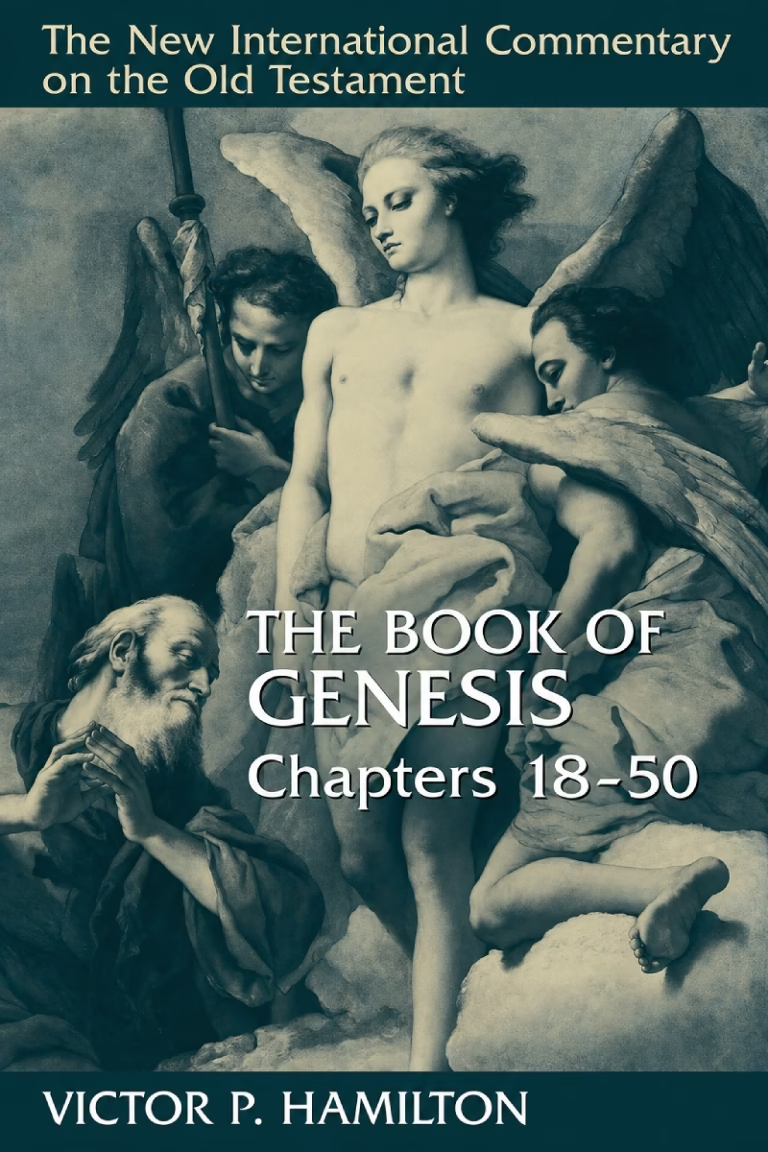

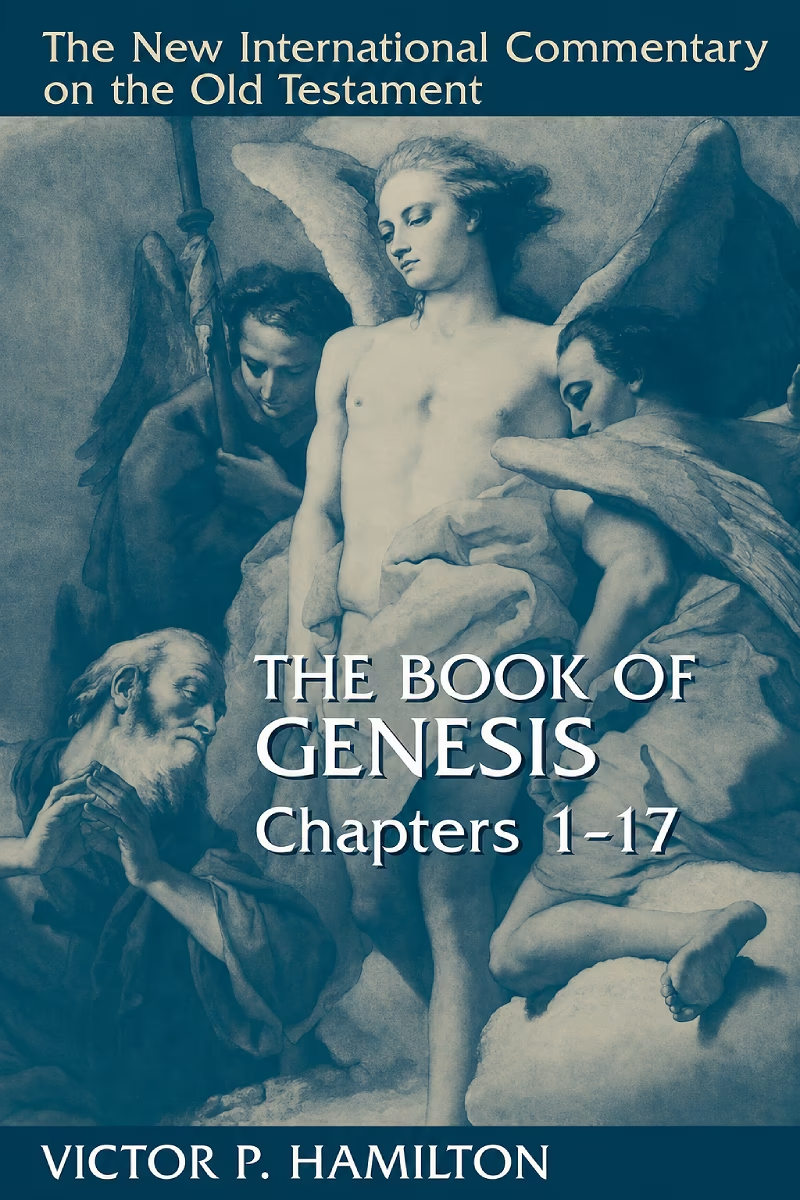
The Book of Genesis, Chapters 1-17
Victor P. Hamilton’s detailed commentary on Genesis 1–17 follows the text from creation, Eden, and the flood to Babel and the early Abraham narratives. Alongside careful Hebrew exegesis, it traces God’s gracious promise of blessing and reconciliation in the face of human sin and shows how the New Testament receives these foundational passages.
Available Instantly
About This Book
Victor P. Hamilton’s The Book of Genesis, Chapters 1–17 is a detailed exegetical and theological commentary on the opening seventeen chapters of Genesis. Working from his own translation of the Hebrew text, Hamilton treats Genesis as a literary and theological unity and gives sustained attention to its ancient Near Eastern setting, structure, composition, difficult interpretive questions, and continuing biblical significance. His governing theological emphasis is God’s gracious promise of blessing and reconciliation in the face of evil and human sin.
The commentary gives extensive treatment to the creation narratives of Genesis 1–2, including the days of creation, the ordering of the world, the creation of humanity, the image of God, the garden of Eden, the creation of woman, marriage, human vocation, and the command concerning the trees. Hamilton then follows the movement into Genesis 3, explaining the temptation, transgression, divine judgment, curse, expulsion from Eden, and the consequences of humanity’s rebellion. Readers looking for careful study of creation, the fall of humanity, the origin and spread of sin, or how Genesis presents the relationship between God and the human race receive substantial textual and theological engagement.
Genesis 4–11 is treated as primeval history. Hamilton comments closely on Cain and Abel, the genealogy from Adam to Noah, the difficult sons of God and daughters of humankind passage in Genesis 6:1–4, the corruption and violence that precede the flood, Noah and the ark, the flood itself, and God’s covenant with Noah in Genesis 9. He also develops the Table of Nations and the tower of Babel, showing how judgment, preservation, dispersion, and divine purpose prepare for the transition to Abraham.
The final major portion of the volume turns to Genesis 12–17 and the beginning of the Abraham cycle. Here the promise of blessing becomes especially concrete as God calls Abram, gives promises concerning land and descendants, and establishes covenant commitments that shape the rest of Genesis. Hamilton discusses Abraham’s faith, the patriarchal setting, Hagar and Ishmael, covenant signs such as circumcision, and the developing promise that God’s purposes of blessing will advance despite weakness, conflict, barrenness, and sin.
A distinctive feature of the commentary is Hamilton’s repeated attention to the New Testament appropriation of Genesis. After major sections he examines how New Testament writers use these passages and incorporate Genesis into the message of the New Covenant. This gives the volume unusual value for readers asking how creation, Adam, Noah, Abraham, covenant, sin, judgment, blessing, and promise continue to function in later biblical theology.
Because the work is both verse-by-verse and theologically synthetic, it serves readers asking questions such as: What does Genesis 1–17 actually teach about creation and humanity? How does sin enter and spread through the biblical story? What is the significance of the flood and the Noahic covenant? Why does God call Abraham, and how do the promises to him answer the crisis created in Genesis 3–11? How does the New Testament read these foundational texts? Hamilton answers those questions through close exegesis while continually relating individual passages to Genesis’s larger movement from creation and rebellion toward divine promise, blessing, covenant, and reconciliation.
Book Details

Reading Fit
STUDY LEVEL
Advanced, Intermediate
STUDY SCOPE
Individual Book, Old Testament
BOOKS INCLUDED

Edition & Format
PUBLISHED
October 31, 1990
AVAILABLE FORMATS
paperback, hardcover, kindle
LENGTH
501 pages

Topics Covered
You Might Also Like