
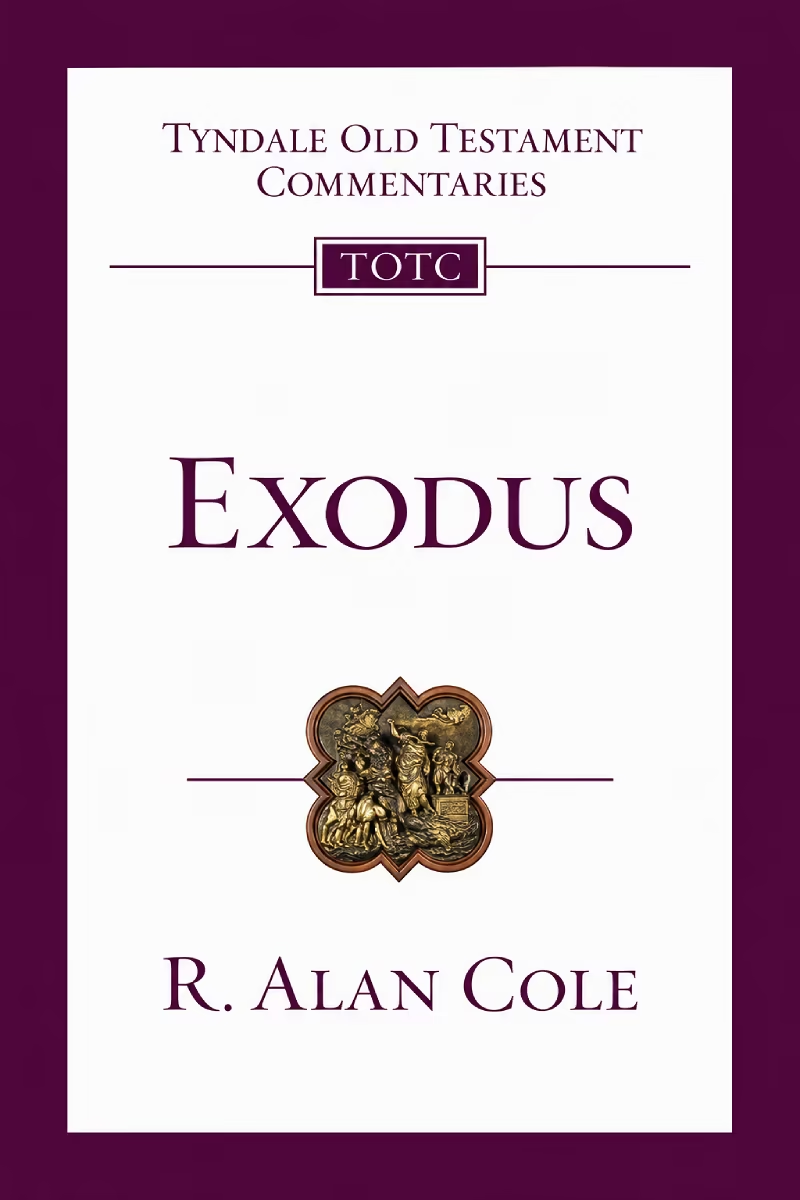
Exodus: An Introduction and Commentary
R. Alan Cole explains Exodus as the Old Testament’s great narrative of divine deliverance, covenant, law, worship, and God’s presence. His commentary follows Israel from slavery through Passover and the Red Sea to Sinai, the covenant, priesthood, and tabernacle, while showing how Exodus prepares readers to understand redemption in Christ.
Available Instantly
About This Book
Exodus: An Introduction and Commentary by R. Alan Cole is a compact but substantial exposition of the book of Exodus in the Tyndale Old Testament Commentary series. Cole treats Exodus as a theological center of the Old Testament because it narrates God’s saving deliverance of Israel, the institution of Passover, the formation of the covenant at Sinai, the giving of the law, and the establishment of worship around the tabernacle and priesthood. His introduction includes a dedicated discussion of the theology of Exodus, and the commentary then works through the biblical text section by section.
Redemption and deliverance are governing themes. Cole explains Israel’s bondage in Egypt, Moses’ call, the confrontation with Pharaoh, the plagues, the Passover, the death of the firstborn, the exodus from Egypt, and the crossing of the sea as the supreme Old Testament example of God’s saving acts. The narrative shows God remembering His promises to the patriarchs, revealing His name, judging Egypt’s gods and power, and creating a people for Himself through deliverance. The miracles of Exodus therefore function not as isolated wonders but as acts of revelation and redemption.
Passover receives major theological attention because it joins judgment, substitution, blood, deliverance, remembrance, and worship. Cole also emphasizes the significance of Exodus for Christian readers, noting that the New Testament presents Christ as fulfilling the great saving patterns of the book: deliverance, Passover, covenant blood, and mediation. This Christological relationship is important to the commentary but grows out of Exodus’ own theology rather than replacing its historical setting.
The Sinai covenant forms another major center. Cole discusses the arrival at the mountain, God’s covenant claim upon Israel, the Ten Commandments, the covenant code, the covenant ceremony, and the blood that seals the relationship. The law is treated as the ordering of a redeemed people’s life under God rather than as an unrelated legal collection. Exodus 19–24 therefore receives substantial attention as a unified movement from divine revelation to covenant obligation and covenant ratification.
The latter chapters on priesthood, sanctuary, and tabernacle are also integral to the book’s theology. Cole explains the ark, table, lampstand, curtains, altar, priestly garments, consecration, incense, Sabbath, and construction of the tabernacle. These chapters answer the question created by the exodus itself: how can the holy God who redeemed Israel dwell among them? The tabernacle, priesthood, sacrifice, and divine glory show that redemption is ordered toward God’s presence and worship. The golden calf crisis in Exodus 32–34 demonstrates both the seriousness of covenant breaking and the necessity of intercession, mercy, and renewed covenant relationship.
Moses remains central throughout as prophet, mediator, leader, and intercessor. Cole also gives significant attention to Aaron, the first high priest, and to the way Exodus establishes institutions and patterns that continue through the Pentateuch and the rest of Scripture. The book helps readers understand why Exodus is foundational for biblical ideas of salvation, covenant, law, priesthood, worship, holiness, and God’s dwelling with His people.
Major passages include Exodus 3 and the divine name, Exodus 7–12 and the plagues, Exodus 12 and Passover, Exodus 14 and the sea crossing, Exodus 19–24 and the Sinai covenant, Exodus 20 and the Ten Commandments, Exodus 25–31 and 35–40 on the tabernacle and priesthood, and Exodus 32–34 on the golden calf and covenant renewal. Readers asking what biblical redemption means, why Passover matters, how law relates to salvation, why the tabernacle occupies so much of Exodus, or how Exodus anticipates the New Testament will find those questions addressed within Cole’s exposition.
Book Details

Reading Fit
STUDY LEVEL
Intermediate
STUDY SCOPE
Individual Book, Old Testament
BOOKS INCLUDED

Edition & Format
PUBLISHED
March 2, 2016
AVAILABLE FORMATS
paperback, kindle
LENGTH
316 pages

Topics Covered
You Might Also Like