
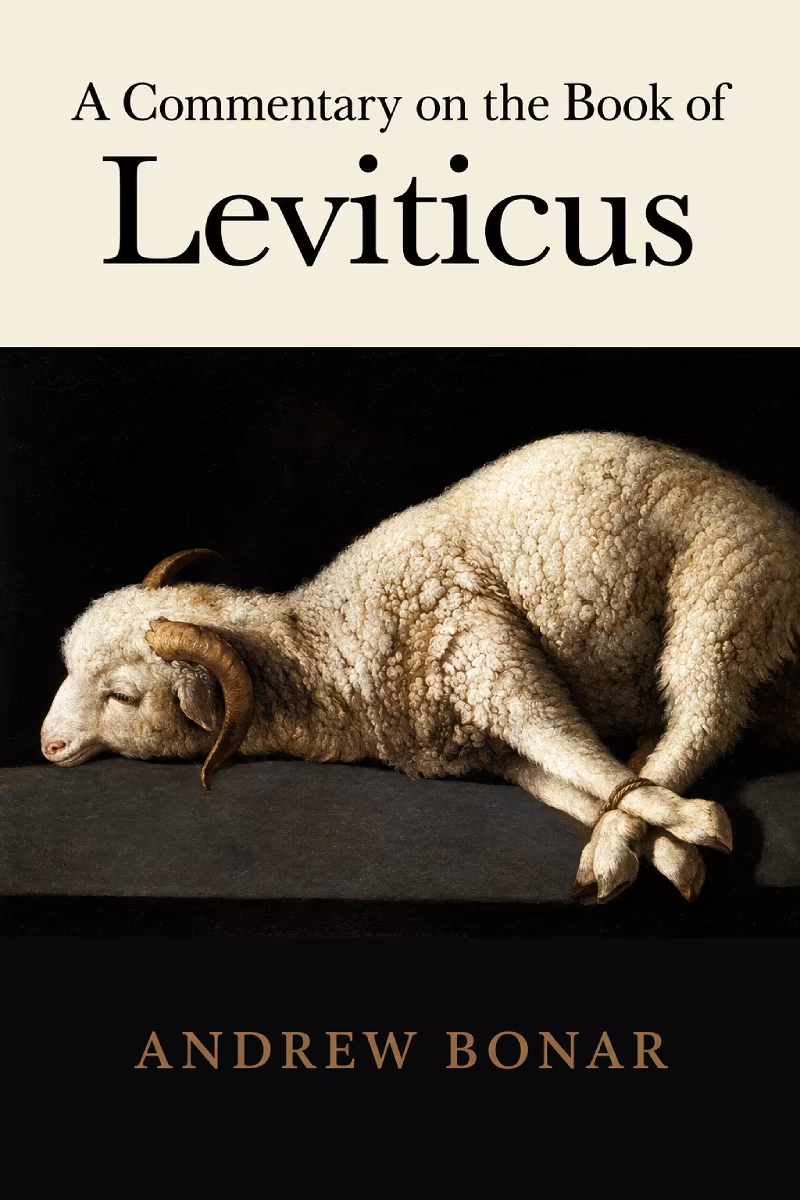
A Commentary on the Book of Leviticus
Andrew Bonar reads Leviticus as a book of holiness, sacrifice, priesthood, blood, and atonement that continually points beyond its ceremonies to Christ. His exposition explains the offerings, cleansing laws, Day of Atonement, feasts, and priestly ministry while drawing practical spiritual application from their meaning.
Available Instantly
About This Book
A Commentary on the Book of Leviticus by Andrew Bonar is an expository and practical study of Leviticus distinguished by sustained attention to the spiritual and Christological meaning of Israel’s sacrifices, priesthood, purity laws, feasts, and holy ordinances. Bonar works closely through the text of Leviticus while repeatedly relating its ceremonies, sacrifices, and priestly institutions to the person and work of Jesus Christ. Publisher descriptions of the work rightly emphasize that its governing plan is not merely to explain ancient ritual but to show how the Levitical sacrifices and types point to the true sacrifice, the atonement, and the mediatorial work of Christ.
The sacrificial system receives central treatment. Bonar explains the burnt offering, grain offering, peace offering, sin offering, and trespass offering, drawing attention to the worshipper, the victim, the altar, blood, substitution, acceptance, consecration, fellowship, guilt, and forgiveness. The repeated shedding and presentation of blood becomes a major theological line through the commentary. Bonar uses these ordinances to illuminate the seriousness of sin, the need for atonement, and the way access to God depends upon sacrifice rather than human merit.
The priesthood is another governing subject. The consecration of Aaron and his sons, priestly garments and duties, the distinction between holy and common, and the responsibility of those who approach God are explained both in their Old Testament setting and in relation to Christ’s priestly and mediatorial work. Bonar’s treatment of Leviticus 16, the Day of Atonement, is especially important. He explains the high priest’s entrance within the veil, the blood of the sin offering, the two goats, the removal of guilt, and the annual cleansing of the sanctuary as a concentrated picture of atonement and mediation.
Holiness runs through the entire commentary. The clean and unclean laws, food regulations, leprosy laws, bodily uncleanness, priestly restrictions, moral commandments, and repeated command to be holy are treated as part of Leviticus’ larger concern with life in the presence of a holy God. Bonar’s exposition is therefore relevant not only to readers asking what the Levitical laws meant, but also to readers seeking to understand biblical holiness, defilement, cleansing, consecration, and the difference between common and holy things.
The feasts and sacred calendar also receive substantial attention. Sabbath, Passover-related themes, the Feast of Weeks, Trumpets, the Day of Atonement, Tabernacles, sabbatical years, and Jubilee are explained within Israel’s worship and frequently connected to larger redemptive patterns. Bonar has a particular interest in biblical types and pictures, yet his typology normally arises from the details of the text rather than from detached speculation. Sacrifices, priests, the sanctuary, cleansing, blood, and sacred times become means of tracing the Gospel through Leviticus.
The commentary repeatedly addresses practical Christian-life questions. What does it mean for a sinner to approach a holy God? Why is blood central to atonement? How do sacrifice and priesthood relate to forgiveness and access? What do clean and unclean distinctions teach about holiness? How does consecration affect the whole life of the worshipper? Bonar’s applications are devotional and pastoral as well as exegetical, making the work useful to readers who find Leviticus difficult or remote.
The principal biblical book studied is Leviticus. Major passages include Leviticus 1–7 on the offerings, Leviticus 8–10 on priestly consecration and worship, Leviticus 11–15 on cleanness and uncleanness, Leviticus 16 on the Day of Atonement, Leviticus 17 on blood, Leviticus 19 on holiness, and Leviticus 23–25 on feasts, sabbatical patterns, and Jubilee. Across these sections Bonar’s recurring concerns are Christ, sacrifice, atonement, blood, priesthood, holiness, cleansing, worship, and the spiritual meaning of biblical types.
Book Details

Reading Fit
STUDY LEVEL
Advanced, Intermediate
STUDY SCOPE
Individual Book, Old Testament
BOOKS INCLUDED

Edition & Format
PUBLISHED
July 16, 2013
AVAILABLE FORMATS
paperback, hardcover, kindle
LENGTH
412 pages

Topics Covered
You Might Also Like