
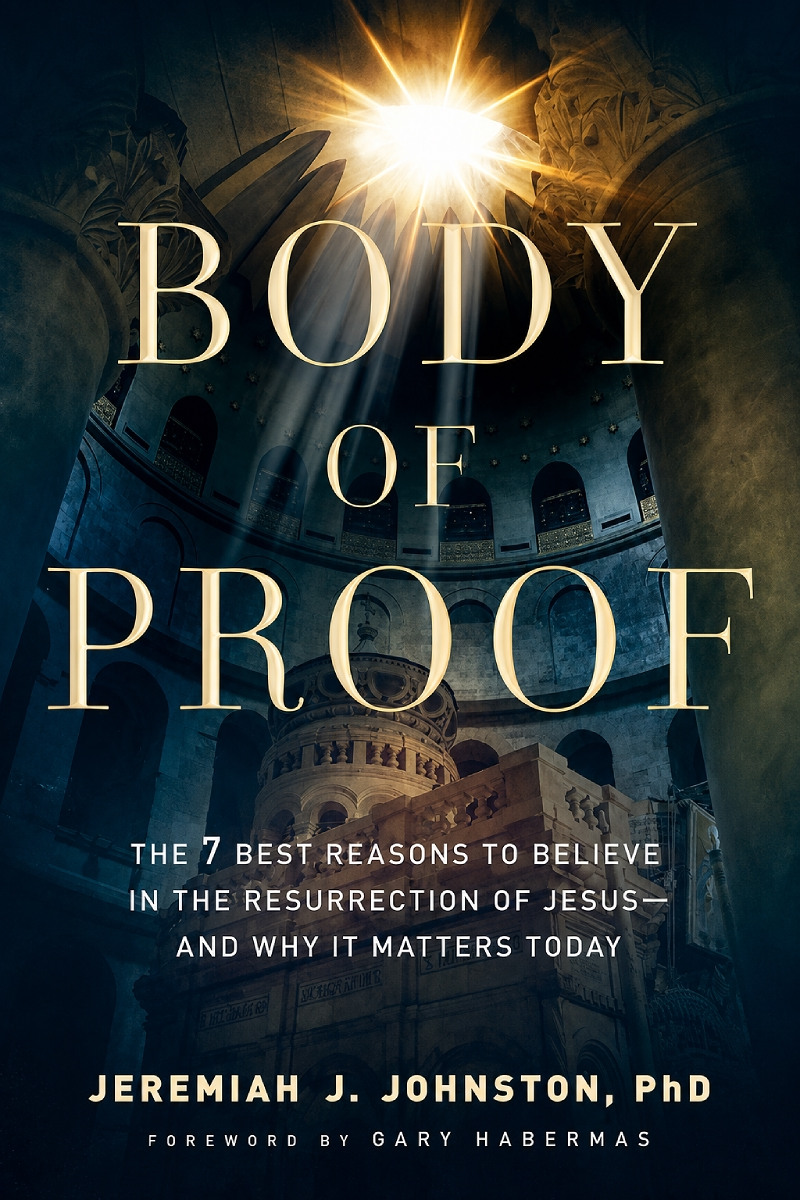
Body of Proof: The 7 Best Reasons to Believe in the Resurrection of Jesus
Jeremiah J. Johnston builds a practical historical case for Jesus’ bodily resurrection through seven lines of evidence, from Jesus’ predictions and resurrection miracles to the empty tomb, archaeology, eyewitness testimony, and the conversions of Paul and James. He also shows how resurrection answers suffering and grounds the believer’s future hope.
Available Instantly
About This Book
Body of Proof: The 7 Best Reasons to Believe in the Resurrection of Jesus—and Why It Matters Today is Jeremiah J. Johnston’s historical and apologetic case for the bodily resurrection of Jesus. Written for Christians who want reasons for their faith as well as readers weighing skeptical alternatives, the book asks whether the resurrection is best understood as history, legend, deception, mistaken experience, or something else. Johnston treats the event not only as a claim about what happened to Jesus after crucifixion but as the foundation of Christian hope, endurance, and the expectation of future bodily resurrection.
The opening portion gives skeptical objections substantial attention before defining the Christian claim. Resurrection is distinguished from the survival of the soul, a vision of a dead person, and temporary restoration to mortal life. Jesus is presented as having risen physically and immortally. First Corinthians 15 supplies an important biblical framework because Paul makes Christ’s resurrection indispensable to the gospel and connects His resurrection with the future resurrection of believers. This allows the book to address both “Did Jesus really rise from the dead?” and “Why does the resurrection matter for my life and future?”
Johnston then develops seven principal reasons. The first considers the transforming effects associated with Christianity wherever the gospel of the crucified and risen Christ has been received. The second examines Jesus’ repeated predictions of His death and resurrection, especially the Gospel statements that He would rise on the third day. Mark 8–10 and related Gospel passages receive attention, while Hosea 6:2 contributes to the discussion of third-day language. The third reason studies Jesus’ demonstrated authority over death through the raising of Jairus’s daughter, the widow of Nain’s son, and Lazarus in Mark 5, Luke 7, and John 11. These episodes are treated as resuscitations that anticipate but differ from Jesus’ immortal resurrection.
Another major question is whether Jesus’ followers had reason to invent an individual bodily resurrection before the general resurrection expected at the end of the age. Johnston explores Jewish expectations, the cultural setting of the claim, and the personal cost borne by the earliest witnesses. He then turns to written and archaeological evidence connected with the Gospel narratives. The empty tomb, first-century Jewish burial practice, Jerusalem archaeology, early testimony, the role of women as the first witnesses to the empty tomb, and the post-resurrection appearances are brought together as mutually related historical considerations. The later discussion of proposed locations for Jesus’ tomb extends this archaeological and geographical dimension.
The conversion of people who were not previously followers of Jesus provides another line of evidence. Paul’s movement from persecutor to apostle and James’s movement from skepticism to leadership in the Jerusalem church are treated as changes requiring historical explanation. First Corinthians 15, Acts, and Galatians contribute to the discussion of Paul, James, early resurrection testimony, and claimed appearances of the risen Jesus.
The final major reason connects resurrection with suffering and hope. Present pain and death are not treated as the believer’s final condition because Christ’s resurrection points toward resurrection life and a future transformed body. Romans 8 and related New Testament teaching connect present suffering with future glory. The book therefore speaks directly to readers facing grief, mortality, fear of death, or the question of whether suffering can have meaning within Christian hope.
The closing chapters revisit the physical setting of Jesus’ burial and features of the Gospel accounts that would be unusual choices if the story had simply been manufactured. Taken together, the book addresses questions about the empty tomb, eyewitnesses, apparent discrepancies, skeptical theories, archaeological evidence, resurrection appearances, Paul and James, the third day, and the believer’s future. Its central concern is to connect a reasoned historical defense of Jesus’ resurrection with the practical confidence Christians draw from the claim that death has been decisively overcome.
Book Details

Reading Fit
STUDY LEVEL
Fundamental, Intermediate
STUDY SCOPE
New Testament, Topical
BOOKS INCLUDED

Edition & Format
PUBLISHED
March 14, 2023
AVAILABLE FORMATS
paperback, kindle, audiobook
LENGTH
165 pages
· 5h 10m audio

Topics Covered
You Might Also Like