
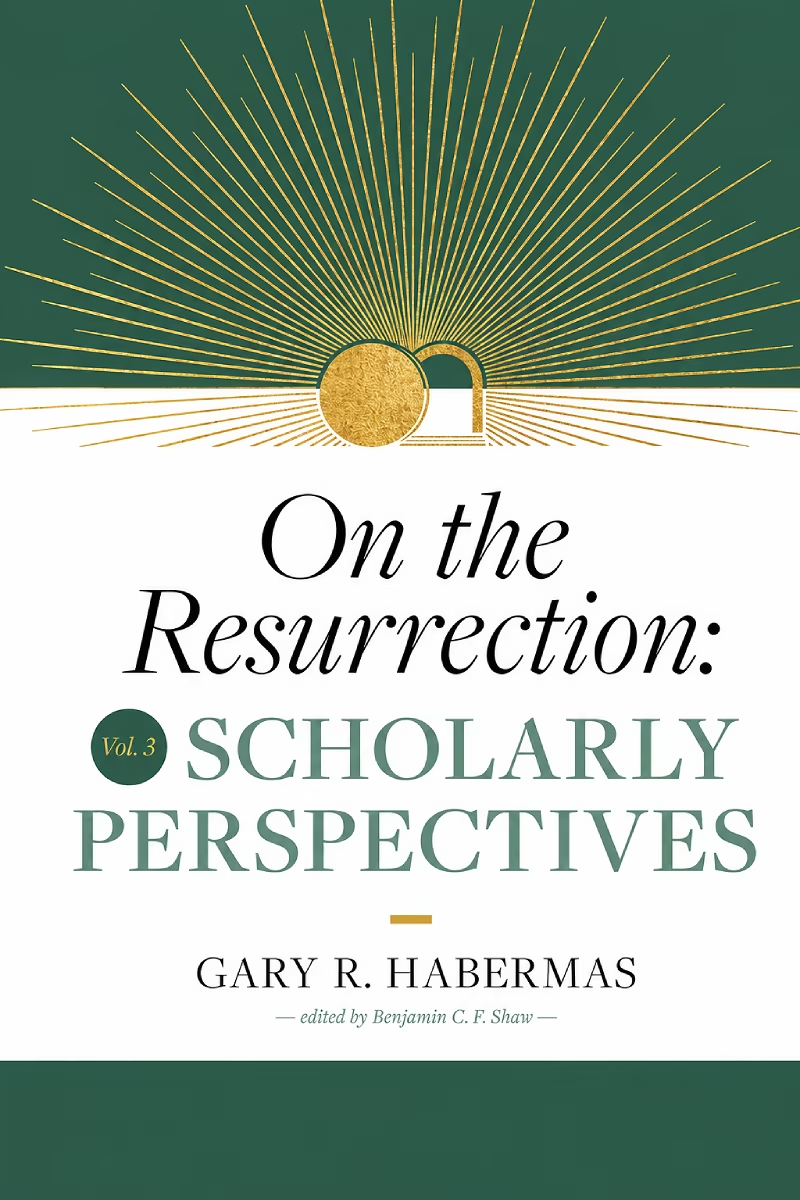
On the Resurrection: Scholarly Perspectives Vol 3
Habermas maps the modern scholarly landscape surrounding Jesus’ resurrection, surveying thousands of academic arguments and positions on historical method, minimal facts, the empty tomb, appearances, alternative theories, bodily resurrection, and theological implications. The volume shows where scholars agree, disagree, and why, while tracing the evidence and debates in exceptional depth.
Available Instantly
About This Book
On the Resurrection, Volume 3: Scholarly Perspectives is Gary R. Habermas’s extensive mapping of contemporary academic discussion surrounding the resurrection of Jesus. Rather than functioning primarily as another presentation of positive evidence or as a direct refutation of alternative theories, the volume surveys how thousands of scholarly arguments, positions, qualifications, and disagreements shape the modern field. Habermas identifies areas of consensus, minority positions, contested questions, methodological assumptions, and theological implications so that readers can see the present landscape of resurrection research in detail.
The opening section establishes historical and New Testament preliminaries. Habermas examines philosophy of history, historiography, the relationship of faith and reason, interpretive models, criteria used in historical research, and the value assigned to extrabiblical and New Testament sources. Paul receives special attention because his genuine letters provide early evidence, especially 1 Corinthians 15. The volume also surveys scholarly discussion of sources such as Q, the Gospel of Thomas, the Gospel of Peter, and the Shroud of Turin, as well as questions surrounding the phrase “the third day” and different forms of minimal-facts reasoning.
A second preliminary section concerns Jesus as a historical figure and miracle worker. Habermas reviews scholarly responses to doubts about Jesus’ existence and surveys discussion of Jesus’ miracles and exorcisms. The work then moves into a long treatment of the historical facts most frequently discussed in resurrection research. Jesus’ death by crucifixion receives substantial attention, followed by the disciples’ claimed experiences of the risen Jesus. Early proclamation and early creedal traditions form an especially large part of the analysis, including material preserved in 1 Corinthians 15 and traditions reflected in Acts. The transformation of the disciples, James’s conversion, and Paul’s conversion are examined as separate historical considerations.
The empty tomb receives another major treatment, including burial traditions and the reasons scholars accept, reject, or qualify the evidence. Habermas also surveys the disciples’ despair, the Jerusalem setting of resurrection proclamation, the rise of the church, Sunday worship, and the centrality of resurrection belief in earliest Christianity. These matters are not all given equal evidential weight; the purpose of the volume is precisely to show how different scholars judge them.
A major section then addresses questions arising from the Gospels and Acts. Topics include Gospel reliability, higher criticism, Jesus’ predictions of His death and resurrection, alleged discrepancies among resurrection accounts, the historical reliability of passion and resurrection narratives, Acts 1:3, the ending of Mark, reported appearances, ascension, exaltation, and the deity of Jesus. The canonical Gospels, Acts, and Paul’s letters therefore provide recurring textual frameworks throughout the volume.
Alternative theories and scholarly responses to them occupy two further sections. Habermas surveys the range of proposed explanations for resurrection belief and then analyzes the responses scholars have offered. This discussion draws together fraud, legend, psychological, visionary, naturalistic, and agnostic approaches without making the volume merely a repetition of Volume 2. Its distinctive concern is how scholars position themselves, which arguments they consider persuasive, and where current trends have moved.
The bodily nature of Jesus’ resurrection receives a separate major section. Habermas maps arguments for and against bodily resurrection, Jewish and Greco-Roman background, resurrection language, 1 Corinthians 15, distinctions between visions and appearances, near-death experiences, and philosophical questions involving dualism and physicalism. This gives the volume substantial value for readers searching specifically for scholarly debate about whether Jesus’ resurrection was bodily rather than merely spiritual, visionary, or symbolic.
The final large section asks how resurrection conclusions move into theology and Christian thought. Habermas surveys implications for Christology, divine judgment, salvation, forgiveness, justification, overcoming sin, fear of death, believers’ resurrection and immortality, the intermediate state, the kingdom of God, worldview, discipleship, ethics, evil, counseling, incarnation, creation, ecclesiology, the Holy Spirit, the Second Coming, and everyday Christian existence. These implications are not all developed equally, but they show the breadth of theological questions scholars connect with resurrection.
The volume addresses readers asking what scholars actually agree about, which resurrection facts are most widely accepted, why 1 Corinthians 15 matters, how the empty tomb is assessed, what specialists say about the bodily nature of the resurrection, how alternative theories are treated in current research, and how historical conclusions about Jesus’ resurrection connect with Christian theology. Its distinctive search value is the depth with which it organizes the modern scholarly conversation rather than reducing that conversation to a single evidential argument.
Book Details

Reading Fit
STUDY LEVEL
Advanced
STUDY SCOPE
New Testament, Topical
BOOKS INCLUDED

Edition & Format
PUBLISHED
May 15, 2025
AVAILABLE FORMATS
hardcover, kindle
LENGTH
992 pages

Topics Covered
You Might Also Like