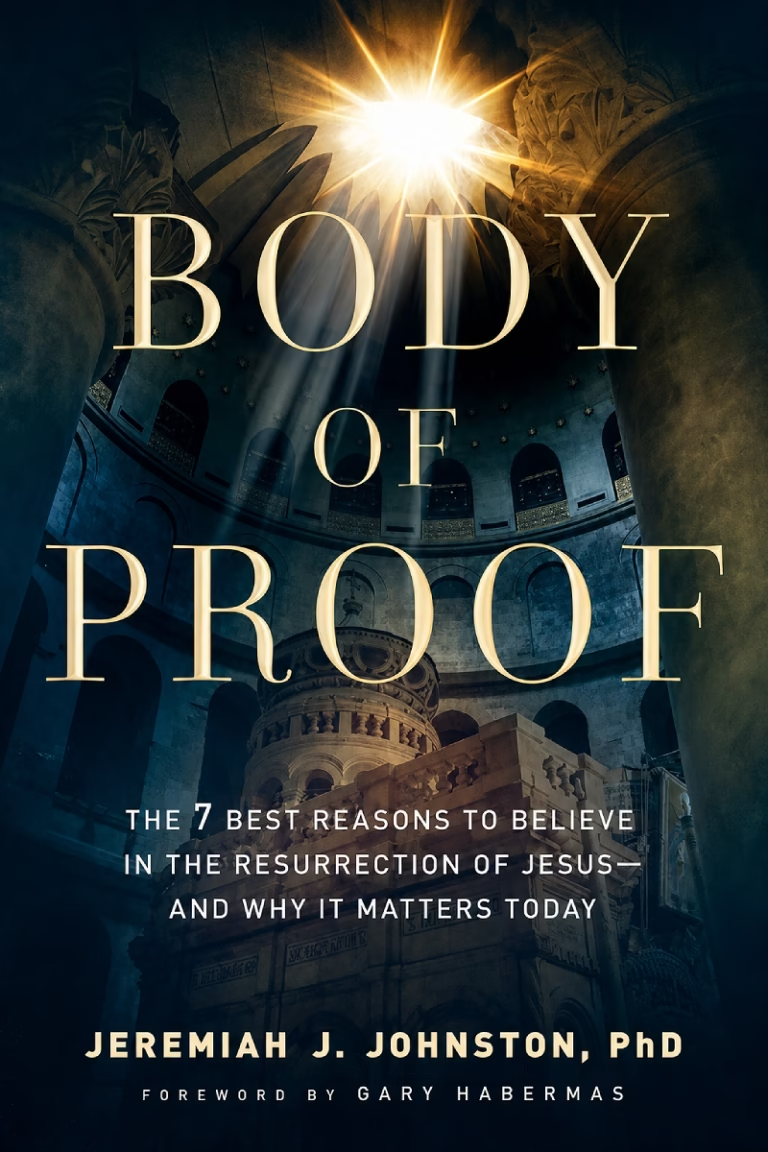
Body of Proof: The 7 Best Reasons to Believe in the Resurrection of Jesus
Jeremiah J. Johnston
4.6(891)


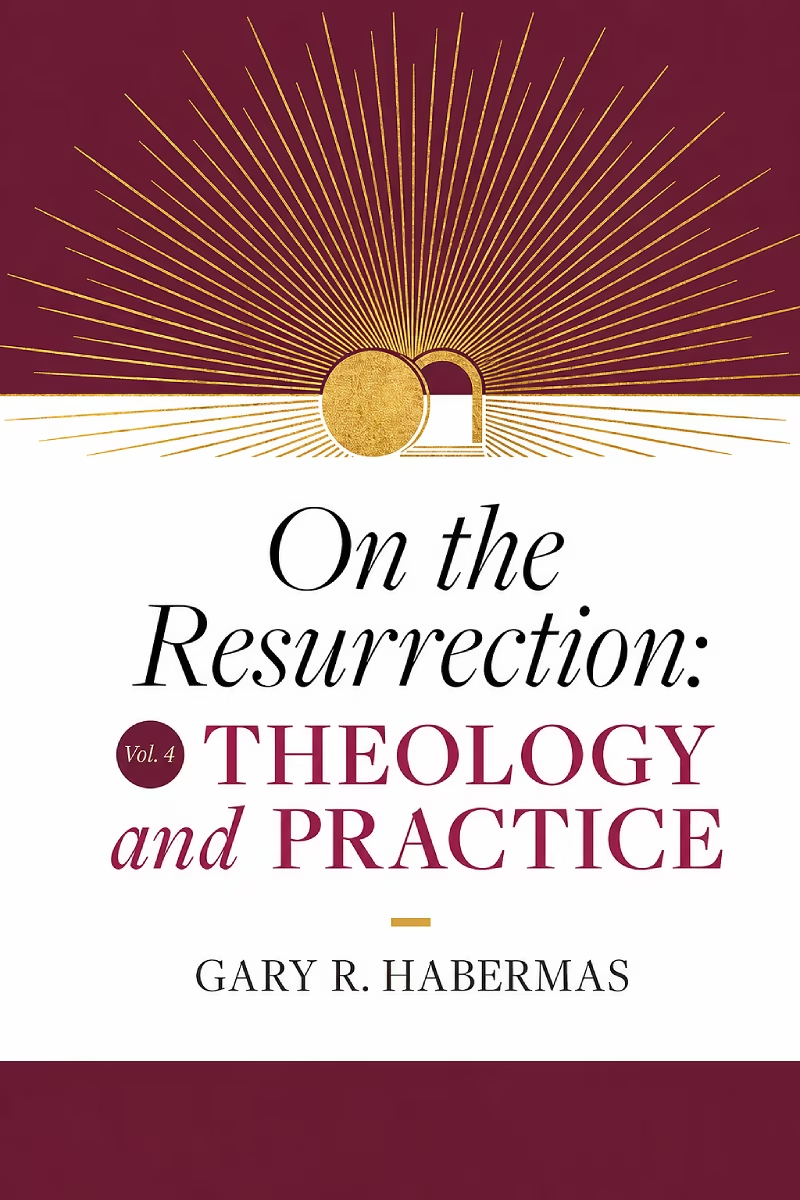
The final On the Resurrection volume asks what Jesus’ resurrection means for Christian belief and life. Habermas connects the risen Christ with God’s existence, Jesus’ deity, miracles, the kingdom, salvation, eternal life, the church, evangelism, suffering, doubt, fear of death, daily spiritual power, radical commitment, hope, heaven, and the resurrection-centered message of the New Testament.
Available Instantly
On the Resurrection: Theology and Practice Vol 4 is Gary R. Habermas’s concluding study of what the resurrection of Jesus means for Christian theology, Christian life, and ministry. Rather than adding another large body of historical evidence or another survey of alternative theories, the volume asks what follows if Jesus was raised from the dead. Its two-part structure moves deliberately from doctrine to practice: the first section develops major theological implications of the resurrection, and the second applies those implications to the life, hope, witness, suffering, and commitment of believers.
The theological section begins with the claim that Jesus’ resurrection points beyond an isolated miracle to a theistic universe in which God acts in history. Habermas then develops the relationship between the resurrection and the deity of Jesus Christ, treating the resurrection as divine confirmation of Jesus and His claims. A separate chapter considers miracles, connecting the resurrection with the wider question of divine action. The book then turns to the kingdom of God, showing how the risen Jesus belongs within the biblical proclamation of God’s reign and the Christian expectation shaped by His victory over death.
Salvation and radical commitment are presented together as two central responses to the resurrection. The resurrection is related to the saving work of Christ and to the believer’s call to live in wholehearted allegiance to Him. Eternal life receives its own substantial treatment, connecting Jesus’ resurrection with the believer’s future and with the Christian conviction that death does not have the final word. These chapters make the resurrection a theological center from which doctrines concerning God, Christ, miracle, kingdom, salvation, discipleship, and eternal life are viewed.
The practical half begins with the transformation of Jesus’ earliest followers and the birth of the church. Habermas connects resurrection conviction with the change from fear and disillusionment to public witness and with the emergence of the earliest Christian community. Acts therefore supplies an important biblical framework for the church’s beginning and its proclamation of the risen Christ. The next chapter develops early evangelism, treating resurrection proclamation as central to the church’s outward mission rather than as a doctrine reserved for private belief.
Habermas then addresses suffering through a personal account shaped by the resurrection. The risen Christ provides a framework for grief, pain, and circumstances that cannot be resolved merely by explanation. A separate chapter addresses religious doubt, asking how the historical and theological reality of the resurrection can function when faith is challenged by intellectual or emotional uncertainty. Fear of death receives sustained attention because resurrection directly confronts mortality and gives Christian hope a concrete object rather than an undefined optimism.
The chapters on daily power and praise and on applying total commitment move the resurrection into ordinary Christian living. Habermas treats the resurrection as relevant to present spiritual strength, worship, perseverance, priorities, and the believer’s daily response to Christ. The chapter on a foretaste of heaven develops resurrection hope toward the believer’s future with God, while preserving the connection between future hope and present Christian life.
The final chapter presents the resurrection as a center of the New Testament message. First Corinthians 15 is especially important to the book’s theological framework because Paul connects Christ’s resurrection with the gospel, believers’ resurrection, Christian hope, and the consequences that follow if Christ has not been raised. The Gospels, Acts, and Pauline teaching provide the wider New Testament setting through which Habermas relates resurrection to Jesus’ identity, the kingdom, salvation, the church, evangelism, suffering, eternal life, and the believer’s future.
The book addresses readers asking what the resurrection proves about God and Jesus, how it relates to miracles and the kingdom of God, what it means for salvation and eternal life, why it transformed the first disciples, how it should shape evangelism, what hope it provides in suffering and doubt, how it answers fear of death, and how resurrection faith should affect daily Christian commitment. Its governing emphasis is that the resurrection is not only an event to defend historically but a reality with theological and practical consequences for the whole Christian life.

STUDY LEVEL
Advanced
STUDY SCOPE
New Testament, Topical
BOOKS INCLUDED

PUBLISHED
August 15, 2026
AVAILABLE FORMATS
hardcover, kindle
LENGTH
717 pages