
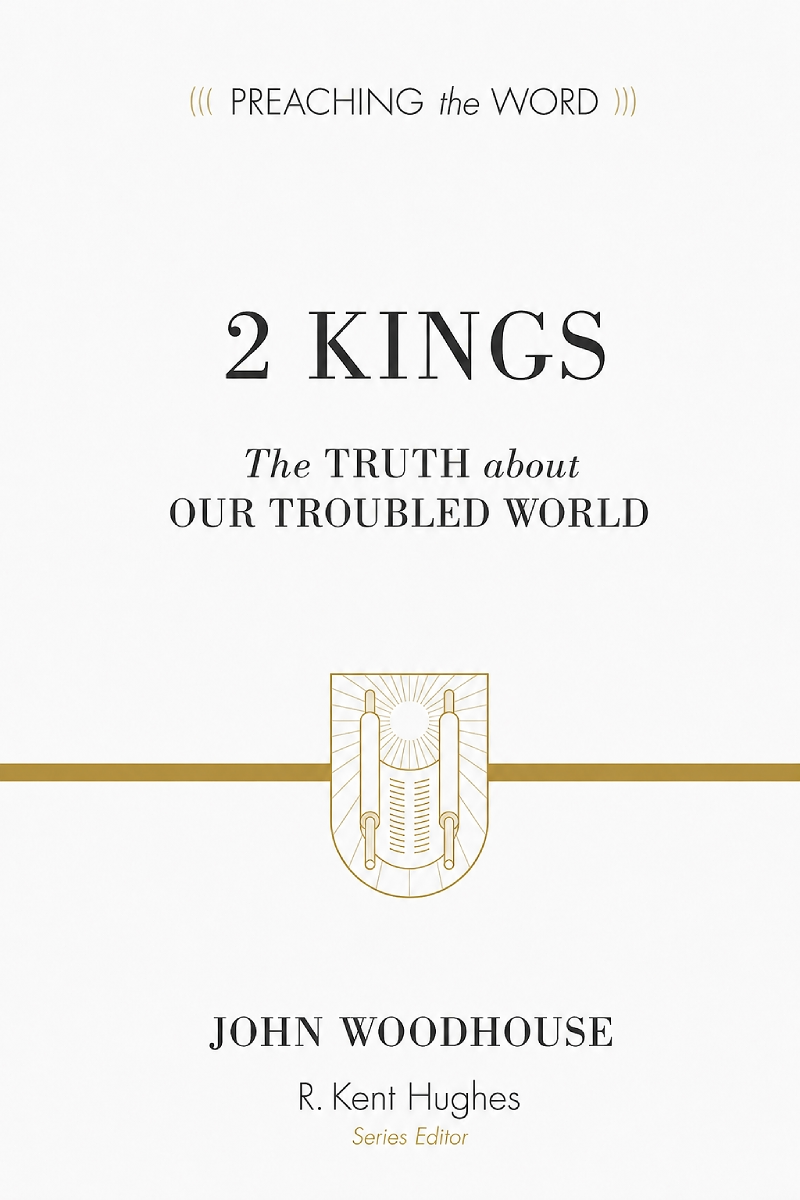
2 Kings: The Truth about Our Troubled World
John Woodhouse’s expansive exposition of 2 Kings follows the collapse of Israel and Judah through idolatry, failed kings, prophetic warning, judgment, and exile, while continually asking where hope can be found in a troubled world. Through Elisha, Hezekiah, Josiah, Naaman, and the fall of both kingdoms, he highlights God’s word, justice, mercy, faithfulness, and power to save.
Available Instantly
About This Book
John Woodhouse’s 2 Kings: The Truth about Our Troubled World is a large-scale expositional commentary on the full book of 2 Kings, tracing the decline and fall of the northern kingdom of Israel and the southern kingdom of Judah. Woodhouse treats the narrative as more than a record of political collapse. The succession of failed kings, the persistence of idolatry, the ministry of prophets, the fulfillment of God’s warnings, and the final exiles expose what is wrong with the world while also showing where genuine hope can be found.
A major portion of the commentary follows Elisha in 2 Kings 2–13. Woodhouse presents the prophet as the man of God whose ministry repeatedly demonstrates that the Lord is present, speaks, judges, gives life, provides food, cares for the vulnerable, and can save in situations beyond human power. The stories of the widow’s oil, the Shunammite woman, the raising of her son, the feeding miracles, Naaman’s cleansing in 2 Kings 5, the floating axe head, the blinded Arameans, and the siege of Samaria are interpreted as revelations of God’s character and the reliability of his word. In the Naaman narrative, proud human expectations are humbled by a simple divine promise; the true God is shown to be Lord not only of Israel but of all the earth.
Woodhouse repeatedly returns to the word of God as the decisive reality in the apparent chaos of history. Prophetic announcements may look impossible, delayed, or politically irrelevant, yet events turn on what God has said. Second Kings 13 makes this explicit in the commentary’s insistence that everything depends on the word of God. This theme continues through the rise and fall of rulers, the judgment on Ahab’s house, the collapse of Israel in 2 Kings 17, Hezekiah’s crisis, Josiah’s discovery of the Book of the Law, and the final destruction of Jerusalem.
The fall of the northern kingdom receives theological interpretation in 2 Kings 17. Woodhouse asks what is wrong with the world and follows the biblical explanation through covenant unfaithfulness, idolatry, refusal to hear God’s messengers, and persistent rebellion. Judgment is therefore neither arbitrary nor merely geopolitical. The same moral seriousness appears in the accounts of Jehu, Manasseh, and the final kings of Judah. The commentary does not evade the wrath of God; it asks why divine judgment is real, right, and necessary in a world corrupted by evil.
Yet judgment is not the only theme. Woodhouse consistently looks for the mercy, promises, and saving action of God. The Hezekiah chapters, 2 Kings 18–20, form a sustained case study in trusting God when fear is intensified by threatening words. Hezekiah’s faith is tested by Assyria and vindicated when the Lord acts. Josiah’s reforms in 2 Kings 22–23 show the disruptive power of rediscovered Scripture: hearing the book leads to repentance, covenant renewal, and decisive action against false worship. Even after Jerusalem falls in 2 Kings 25, the release and elevation of Jehoiachin prevents the narrative from ending in total hopelessness; the end is not simply the end.
The commentary’s modern reader-intent is explicit. Woodhouse connects 2 Kings with questions people ask in divided, unstable, frightening times: Is there really a God who rules history? Why does evil persist? Can political rulers save us? What does divine judgment mean? How should believers respond to suffering, fear, false religion, pride, and national decline? Where can hope be found when institutions collapse? His answer is developed from the narrative itself: human power repeatedly fails, but God’s word does not; God judges evil, keeps his promises, shows mercy, and calls people to trust him.
Readers studying Elisha, Naaman, 2 Kings 17, Hezekiah, Josiah, idolatry, prophetic ministry, the word of God, divine judgment, miracles, faith, or hope amid cultural and political disorder will find sustained treatment. The book is especially strong for readers seeking to understand how Old Testament history exposes human failure while directing attention to the righteousness, faithfulness, and saving purposes of God.
Book Details

Reading Fit
STUDY LEVEL
Intermediate
STUDY SCOPE
Individual Book, Old Testament
BOOKS INCLUDED

Edition & Format
PUBLISHED
March 17, 2026
AVAILABLE FORMATS
hardcover, kindle
LENGTH
1121 pages

Topics Covered
You Might Also Like