
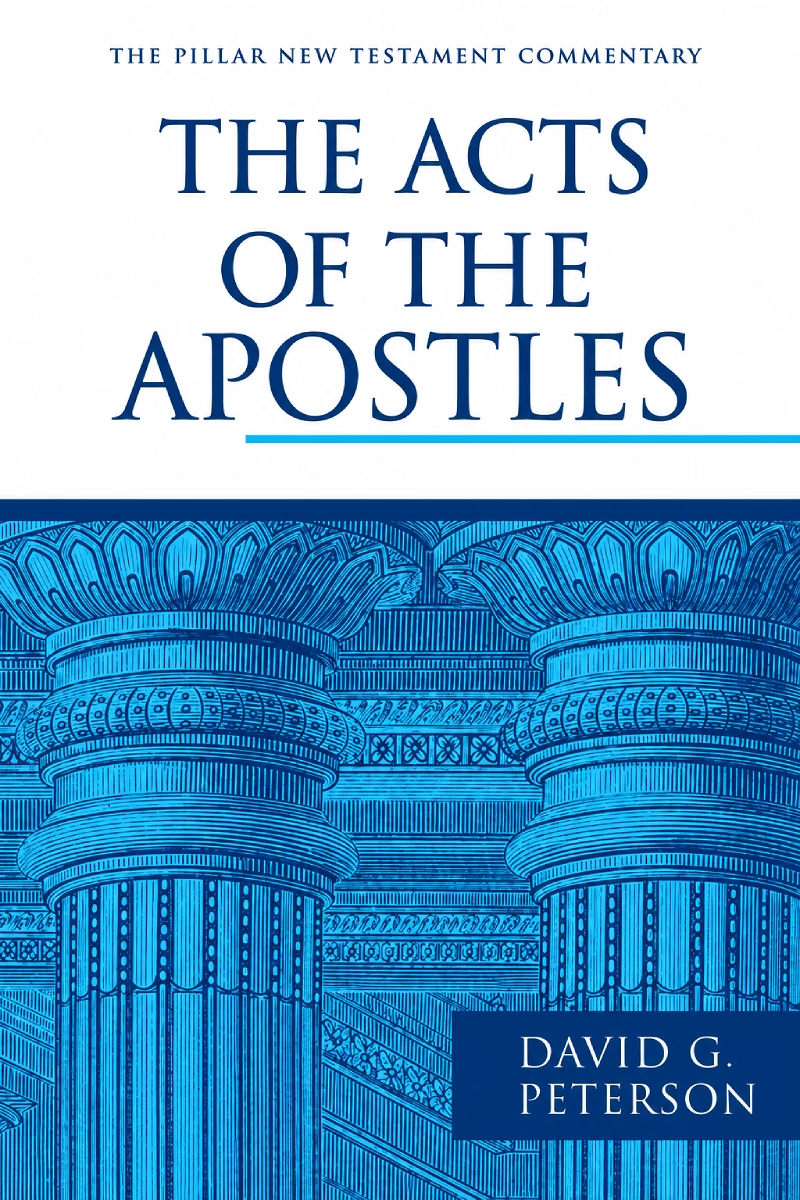
The Acts of the Apostles (The Pillar New Testament Commentary
David G. Peterson’s major commentary follows Acts from Jerusalem to Rome with close exegesis, historical context, theological depth, and practical application. He traces God’s saving plan through the risen Jesus, the Holy Spirit, the spread of the word, apostolic witness, mission, miracles, persecution, and the growth of the church, connecting Luke’s narrative with Christian life and ministry.
Available Instantly
About This Book
David G. Peterson’s The Acts of the Apostles is a comprehensive exegetical and theological commentary on Acts that follows Luke’s narrative from Jerusalem to Rome while continually asking what the book means for the church’s life and gospel ministry. Peterson combines detailed treatment of the text with historical and social background, literary and narrative analysis, theological synthesis, and practical application. His stated emphasis is especially theological: he wants readers not only to reconstruct what happened in the early church but also to understand why Luke tells the story as he does and how Acts should shape Christian witness today.
The commentary gives sustained attention to God’s sovereign saving plan, the identity and work of Jesus as Messiah and Lord, the ministry of the Holy Spirit, salvation, the gospel, the atoning work of Christ, witness and mission, miracles, magic and demonic opposition, and the nature of the church. These themes are first gathered in a substantial theology of Acts and then developed repeatedly throughout the verse-by-verse exposition. Peterson therefore treats Acts as a unified theological narrative rather than as a loose collection of stories about apostles.
A major structural emphasis is the advance of the word of God. The commentary follows the movement from “the word in Jerusalem” through Judea and Syria, Cyprus and Asia Minor, Europe, Ephesus, and finally Paul’s journey to Jerusalem and Rome. Acts 1:8 functions as an important programmatic statement for this expansion: the risen Christ commissions his witnesses, the Holy Spirit empowers them, and the gospel crosses geographic, ethnic, and religious boundaries. Peter, Stephen, Philip, Barnabas, Paul, and others are studied as participants in this mission, but the deeper subject is God’s continuing work through the exalted Christ and the Spirit.
Peterson gives especially careful attention to the Holy Spirit because Acts is central to Christian debates about Spirit baptism, guidance, prophecy, power, and the relationship between extraordinary events in the apostolic period and ordinary Christian experience. Pentecost in Acts 2, the Samaritan mission, the conversion of Cornelius, and later episodes of Spirit reception are interpreted within Luke’s larger theological purpose rather than isolated as disconnected models. This makes the commentary valuable for readers asking what Acts teaches about the Holy Spirit and how narrative events should be applied today.
The church is another recurring concern. Peterson examines the earliest Christian community, preaching and teaching, prayer, fellowship, leadership, persecution, generosity, discipline, the inclusion of Gentiles, the Jerusalem Council in Acts 15, and the growth of congregations across the Mediterranean world. He considers how the gospel creates a people drawn from Jews and Gentiles while remaining connected to God’s promises in the Old Testament. The commentary also addresses difficult questions about Israel, Jewish opposition and response, the role of the law, and the theological significance of the mission to the nations.
Salvation and the gospel are traced through apostolic speeches and narrative events. Peterson pays close attention to the death and resurrection of Jesus, repentance and faith, forgiveness, the lordship of Christ, and the way the apostles proclaim fulfillment of Scripture. Miracles and healings are interpreted as signs within this gospel mission, while encounters with Simon Magus, Elymas, the spirit of divination, and Ephesian magic receive attention as part of Acts’ treatment of spiritual opposition and the defeat of rival powers.
Because Peterson is concerned with both theology and application, the commentary helps readers with questions that regularly arise from Acts: What is the church’s mission? What does Spirit-empowered witness look like? How should Christians understand miracles and divine guidance? What is the relationship between the Old Testament and the gospel? How should Acts inform church gatherings, ministry priorities, and attitudes toward Jews and Gentiles? The result is an advanced but pastorally useful study of Acts as the story of the risen Christ advancing his word by the Spirit through the witness of the church.
Book Details

Reading Fit
STUDY LEVEL
Advanced, Intermediate
STUDY SCOPE
Individual Book, New Testament
BOOKS INCLUDED

Edition & Format
PUBLISHED
April 15, 2009
AVAILABLE FORMATS
hardcover, kindle
LENGTH
846 pages

Topics Covered
You Might Also Like