
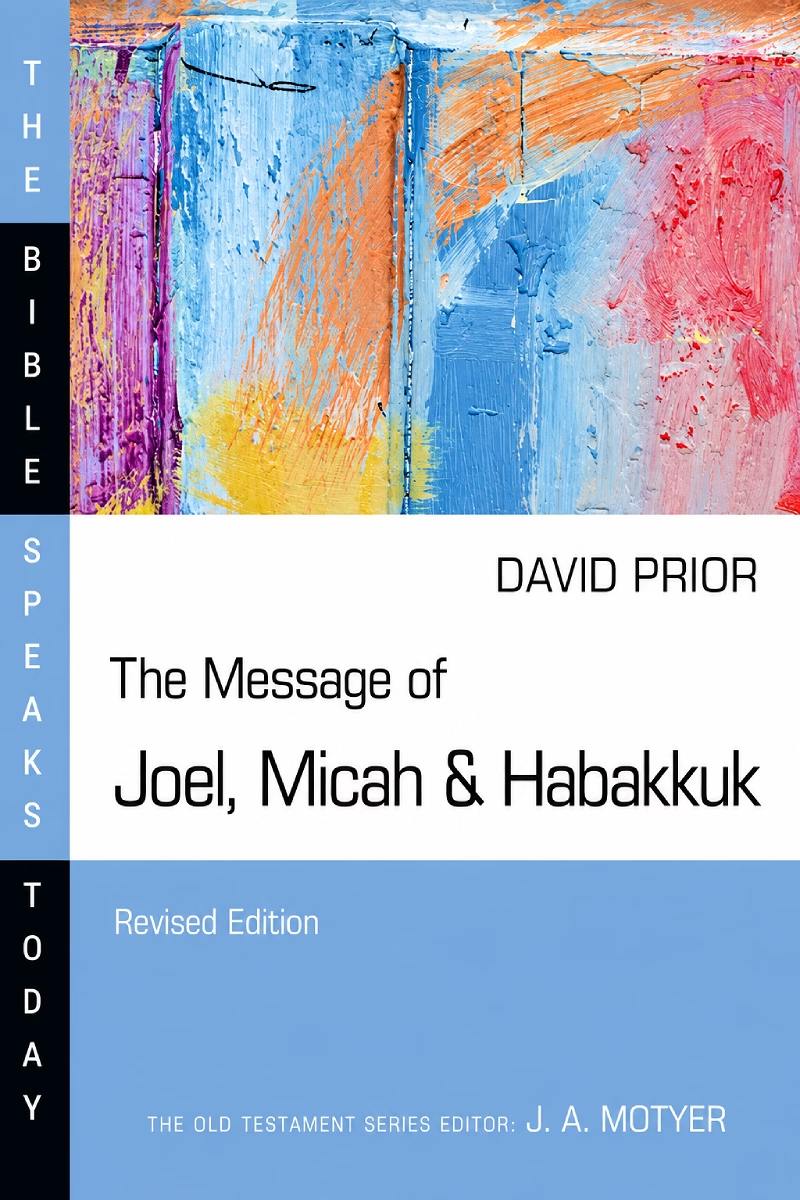
The Message of Joel, Micah & Habakkuk
David Prior expounds Joel, Micah, and Habakkuk around urgent questions of disaster, corruption, violence, judgment, and hope. Joel calls God’s people to return and anticipates the Spirit’s outpouring; Micah confronts injustice and failed leadership; Habakkuk wrestles with suffering and learns to trust God’s hidden purposes when circumstances seem to contradict his rule.
Available Instantly
About This Book
David Prior’s The Message of Joel, Micah & Habakkuk brings three prophetic books together around the urgency of hearing God’s Word when society is shaken by disaster, corruption, violence, disobedience, and fear. Prior does not collapse the prophets into one message. He preserves the distinctive burden of each book while showing that all three direct God’s people away from despair or complacency and toward repentance, faith, prayer, obedience, and hope in the sovereign God whose purposes continue even when circumstances seem chaotic.
Joel begins with national catastrophe. A devastating plague becomes a summons to cry to God and to recognize the approaching Day of the Lord. Joel 1 treats disaster as spiritually significant without turning suffering into a simplistic formula. Joel 2 intensifies the warning, then opens a path of return: God’s people are called to repent sincerely and seek him. The turning point leads to rejoicing, restoration, and the promise of Joel 2:28–32 that God will pour out his Spirit. Prior therefore presents Joel as a movement from disaster and alarm through repentance to renewed hope, divine presence, and final accountability before God.
Micah confronts a different crisis: pervasive evil within society. Prior follows the book’s three major cycles, showing how sin has infected ordinary life, political leadership, religious leadership, economic behavior, and the administration of justice. Micah 2–3 exposes exploitation and leaders who use power for themselves rather than for those they serve. Yet judgment is not the final word. Micah 4–5 looks beyond Jerusalem’s ruin toward a future shaped by God’s rule and a promised leader, while Micah 6:6–8 presses the question of what God truly requires. The book therefore speaks strongly to readers asking how God views social injustice, corrupt leadership, empty religion, and moral decay.
Micah 7 closes with a movement from darkness to hope. God remains light for his people, shepherd of his flock, ruler over the nations, and Savior who pardons sin. Prior keeps together the book’s severity and its confidence in God’s mercy. The prophetic message calls the church not merely to condemn a corrupt culture but to listen to God, practice justice, walk humbly, and bear faithful witness within it.
Habakkuk begins with a believer’s protest. Violence, injustice, and social breakdown seem unanswered, and the prophet asks why God tolerates them. God’s reply creates a second difficulty because the instrument of judgment is itself terrifying. Prior treats Habakkuk’s dialogue as a model of serious faith that brings confusion to God rather than abandoning him. Habakkuk 2 calls the prophet to watch, wait, and live by faith while God’s judgment on arrogant violence is announced. The chapter insists that apparent delay does not mean divine inactivity.
Habakkuk 3 turns argument into prayer and worship. The prophet remembers God’s saving power, trembles before coming judgment, and is spiritually transformed from perplexity into trust. Habakkuk 3:17–19 expresses faith that can rejoice even when visible supports fail. Prior thus answers the question “How can I trust God when the world seems to contradict his goodness or rule?” not by denying suffering but by directing the reader to God’s character, past acts, promised purposes, and ultimate sovereignty.
Across the three books, Prior repeatedly connects prophetic proclamation with contemporary Christian witness. The church is called to hear what God has spoken, return to him, resist moral accommodation, speak truth in public life, pray through bewilderment, and hope when judgment or suffering seems overwhelming. The volume is especially relevant to readers asking where God is in disaster, why he allows evil, how believers should respond to corrupt leadership and injustice, what the Day of the Lord means, how Joel’s promise of the Spirit fits the prophetic message, and how faith endures when God’s purposes are hidden.
Book Details

Reading Fit
STUDY LEVEL
Fundamental, Intermediate
STUDY SCOPE
Individual Book, Old Testament
BOOKS INCLUDED

Edition & Format
PUBLISHED
July 2, 2024
AVAILABLE FORMATS
paperback, kindle
LENGTH
390 pages

Topics Covered
You Might Also Like