
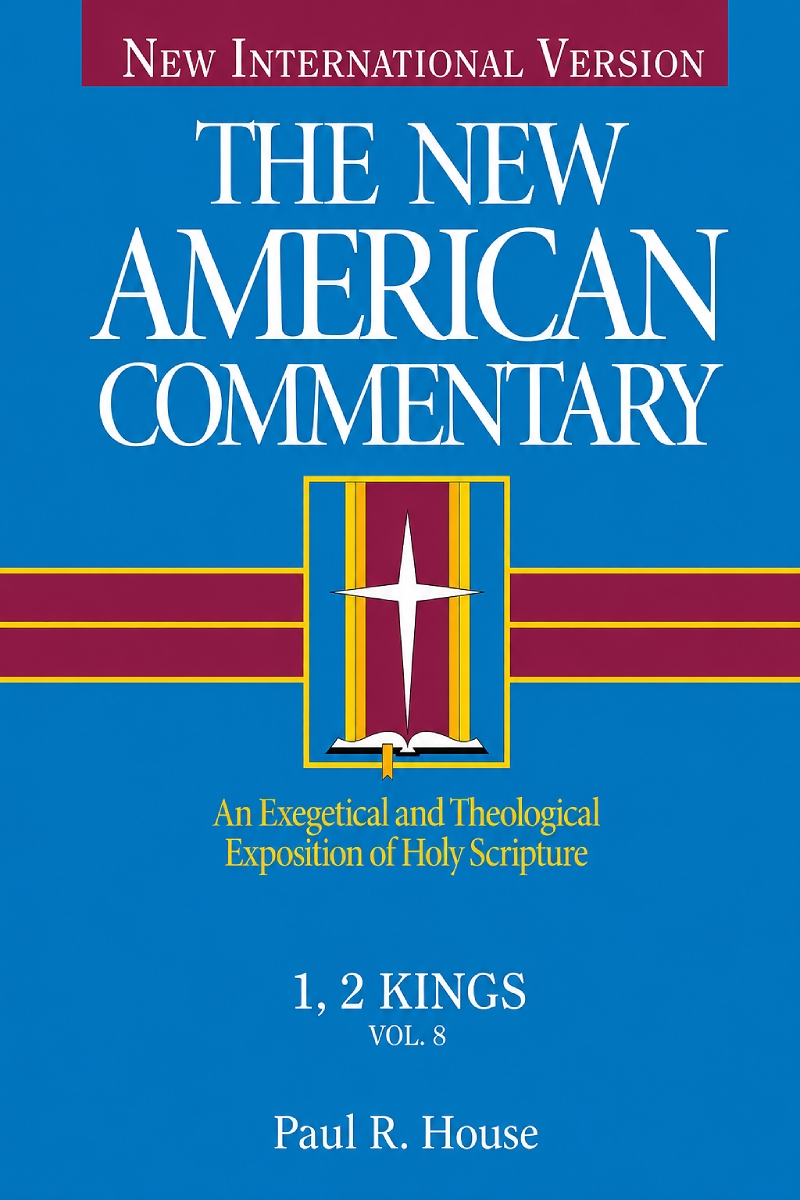
1, 2 Kings
Paul R. House’s commentary follows 1–2 Kings from Solomon’s reign to Jerusalem’s fall, tracing the divided kingdom, Elijah and Elisha, prophetic fulfillment, idolatry, reform, covenant failure, judgment, and exile. It shows how God’s word governs Israel’s history and how each king is measured by faithfulness to the Lord.
Available Instantly
About This Book
Paul R. House’s commentary provides sustained exposition of 1 Kings and 2 Kings, following Israel’s monarchy from Solomon’s accession through the division of the kingdom, the ministries of Elijah and Elisha, the decline of Israel and Judah, and the Babylonian exile. House combines literary and historical analysis with theological interpretation, emphasizing that the narrative of Kings is not simply a record of rulers and political events but an account of God’s word, covenant standards, prophetic ministry, and judgment operating through Israel’s history.
The opening chapters of 1 Kings treat the transition from David to Solomon, Solomon’s request for wisdom, the consolidation of his kingdom, and the construction and dedication of the temple. House gives substantial attention to Solomon’s prayer in 1 Kings 8 and to the covenant setting of temple worship. The early reign displays divine blessing and fulfillment of promise, but Solomon’s later compromises, foreign marriages, and idolatry expose the danger of a divided heart. His failure prepares for the fracture of the kingdom under Rehoboam and Jeroboam.
The divided monarchy becomes a sustained study of kingship evaluated by faithfulness to the Lord. House traces the repeated pattern by which rulers are assessed according to their obedience, treatment of worship, response to prophetic instruction, and relationship to the sins established by Jeroboam. The history of Israel and Judah therefore becomes a theological account of covenant faithfulness and apostasy. Political success never overrides the narrative’s spiritual standard, and reforming kings such as Hezekiah and Josiah stand out because they address idolatry, worship, and obedience to God’s word.
Prophetic ministry is one of the book’s dominant concerns. The commentary gives extended treatment to Elijah’s confrontation with Ahab and Jezebel, the drought, Mount Carmel, the conflict with Baal worship, and Elijah’s encounters with the word of the Lord. House shows how these narratives demonstrate that Yahweh, not Baal, rules rain, life, death, and Israel’s future. Elisha’s ministry continues this prophetic witness through miracles, healings, judgments, royal counsel, and international encounters such as Naaman’s healing. The prophets repeatedly interpret events before they happen or as they unfold, reinforcing the reliability and governing authority of God’s word.
House also follows the relationship between prophecy and fulfillment across the two books. Announcements of judgment against dynasties, rulers, cities, and kingdoms are repeatedly brought to completion, making the fulfillment of God’s word an organizing theological feature of the narrative. Idolatry, injustice, covenant rebellion, and rejection of prophetic warning lead eventually to the fall of the northern kingdom to Assyria and the fall of Judah and Jerusalem to Babylon. Exile is therefore presented as the historical result of persistent covenant unfaithfulness rather than an unexplained political disaster.
The temple remains an important thread from Solomon through its desecration, reform, plundering, and destruction. House treats the competing worship centers established by Jeroboam, the rise of Baal worship under Ahab and Jezebel, and later reform movements as crucial indicators of Israel’s spiritual condition. The confrontation between true and false worship is inseparable from the question of who truly rules Israel and whose word deserves obedience.
The commentary addresses major reader questions such as: Why did Israel divide after Solomon? Why are some kings judged so differently from others? What role do Elijah and Elisha play in the theology of Kings? Why does the narrative devote so much space to prophecy and its fulfillment? How did idolatry and covenant rebellion lead to exile? What do Hezekiah’s and Josiah’s reforms show about repentance and worship? How can God remain faithful to his promises while bringing severe judgment on his people?
House’s exposition therefore presents 1–2 Kings as a sustained study of kingship under God’s rule, the authority of the prophetic word, the conflict between true worship and idolatry, covenant accountability, and the long movement from Solomon’s glory to national exile.
Book Details

Reading Fit
STUDY LEVEL
Advanced, Intermediate
STUDY SCOPE
Individual Book, Old Testament
BOOKS INCLUDED

Edition & Format
PUBLISHED
February 21, 1995
AVAILABLE FORMATS
hardcover, kindle
LENGTH
432 pages

Topics Covered
You Might Also Like