

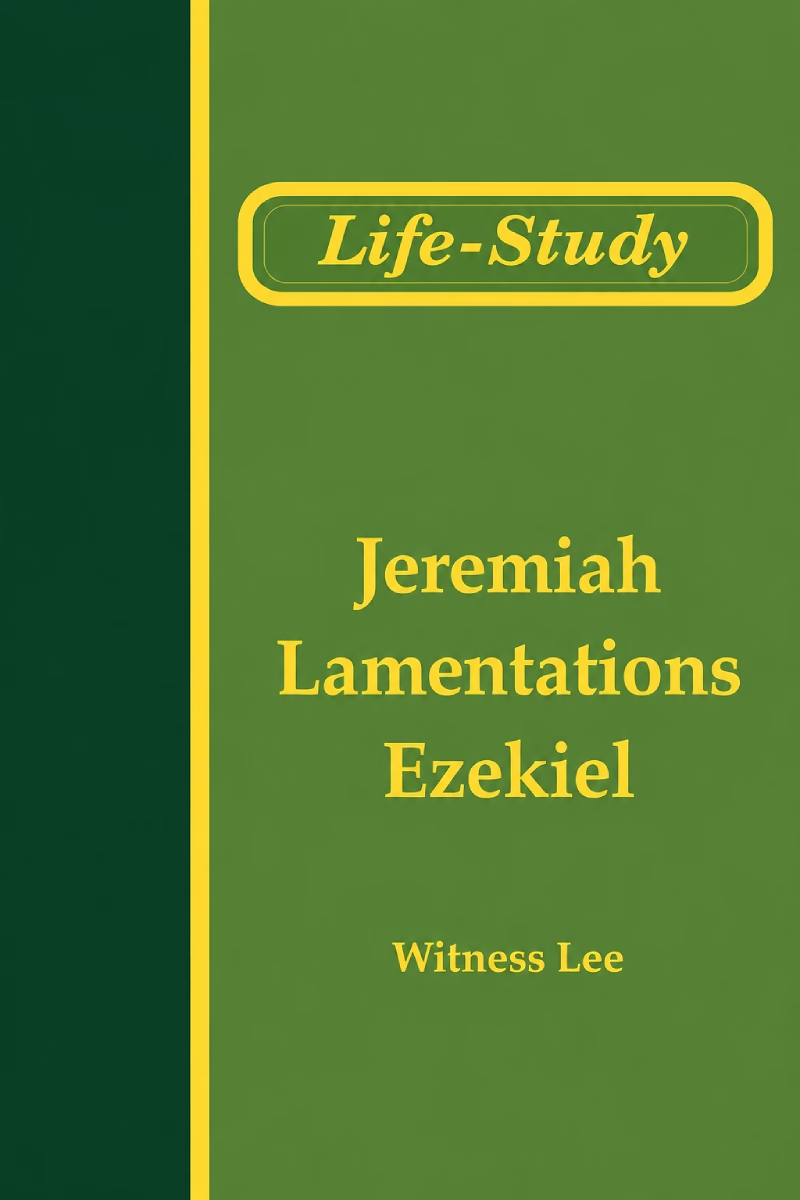
Life-Study of Jeremiah, Lamentations, and Ezekiel
Across Jeremiah, Lamentations, and Ezekiel, Witness Lee traces God's righteous and compassionate dealings with His people toward recovery by divine life. Jeremiah opens the new covenant and Christ as Jehovah our righteousness; Lamentations voices sorrow over God's people; Ezekiel moves through judgment and life-recovery to the Spirit, the river of life, God's glory, and His dwelling place.
Available Instantly
Editorial Disclaimer
About This Book
Life-study of Jeremiah, Lamentations, and Ezekiel gives sustained individual-book treatment to three prophetic books while reading them through the governing themes of God's economy, His righteous and loving dealings with His people, the imparting and recovery of divine life, and His goal of gaining a corporate dwelling place and expression.
In Jeremiah, Witness Lee emphasizes the contrast between Israel's forsaking of Jehovah as the fountain of living waters and God's intention to dispense Himself into His people. Israel's sin, idolatry, captivity, and God's judgments are examined within the larger purpose of His economy rather than as isolated historical punishments. God is presented as both tenderhearted and righteous: He chastens His elect in love and judges the nations in righteousness. Jeremiah's prophecies of restoration therefore become a setting for the revelation of Christ and the new covenant.
A central line is Christ as the righteous Shoot of David and as “Jehovah our righteousness” in Jeremiah 23:5-6 and 33:16. Lee develops this as God's answer to the fallen condition of His people: Christ becomes their righteousness and their center. Jeremiah 30–31 receives substantial attention in connection with Israel's restoration, and Jeremiah 31:31-34 is treated as the foundation of the new covenant, the covenant of life. The inward law is understood as the law and capacity of the divine life written into God's people, enabling them to know God inwardly and personally. These portions address questions about how God transforms people inwardly, how the new covenant differs from an outward law, how forgiveness and the knowledge of God belong together, and how divine life serves God's larger purpose.
Lamentations is treated as the expression of Jeremiah's sorrow and love over Jerusalem and God's people after judgment. Its laments preserve both the seriousness of God's governmental dealing and the prophet's affection for the holy city and holy people. The study also draws attention to God's eternal being and throne amid devastation, giving Lamentations a place within the volume's broader movement from judgment to hope and recovery.
Ezekiel develops that recovery in vivid visions. The opening vision of the wind, cloud, fire, electrum, four living creatures, wheels, clear sky, throne, and man upon the throne is interpreted in relation to God's glory, His move, spiritual coordination, and corporate expression. The middle sections consider the degradation of God's people and God's judgment upon both His people and the nations. The governing turn then comes with God's recovery by life. Ezekiel 37 receives substantial treatment through the dry bones, breath, Spirit, two sticks, and army as a picture of life-giving recovery, inward renewal, oneness, and corporate formation.
The closing chapters, especially Ezekiel 40–48, form another major section. The holy building, courts, altar, temple, chambers, return of God's glory, priests, offerings, river flowing from the house, holy land, and holy city are developed as a detailed picture of God's building and dwelling place. The flowing water in Ezekiel 47 is connected with the Spirit of life and the life that proceeds from God's house to produce fruitfulness and healing. The return of glory to the completed house shows the relationship between God's presence, His glory, and the building up of His dwelling place.
Across all three books, Lee connects prophecy with Christian experience. The reader is shown not only why God judges and recovers His people, but how His recovery proceeds through Christ as righteousness, the new covenant, the inward law of life, the life-giving Spirit, resurrection out of death, coordination among God's people, and building into His dwelling place. The volume is therefore especially relevant for readers studying Jeremiah, Lamentations, or Ezekiel; the new covenant; Jeremiah 31; Ezekiel 37; Ezekiel 40–48; Israel's restoration; Christ as righteousness; the Spirit and river of life; God's glory; and the spiritual meaning of God's temple and corporate dwelling.
Book Details

Reading Fit
STUDY LEVEL
Advanced, Intermediate
STUDY SCOPE
Individual Book, Old Testament
BOOKS INCLUDED

Edition & Format
PUBLISHED
May 1, 1998
AVAILABLE FORMATS
kindle
LENGTH
717 pages

Topics Covered
You Might Also Like

Favorites
Editorial Disclaimer
TUBT includes this book because we believe it contains material that is worth reading, considering, and bringing into the wider Christian discussion. Its inclusion should not be understood as an endorsement of Witness Lee, Living Stream Ministry, the Local Church, or the “Lord’s Recovery” movement associated with his ministry.
TUBT does not recommend joining or identifying with that movement. We encourage readers to approach Lee’s writings with careful biblical discernment and to test his claims against Scripture.
Readers should also be aware that some of Lee’s writings contain strong criticisms of other Christian traditions and ministries and, at times, present distinctive claims concerning the church and the movement with which he was associated. TUBT does not share or endorse those claims.
We have chosen to include a limited number of Lee’s books because we believe portions of his work make a meaningful contribution to important theological and spiritual discussions. We recommend reading them critically, weighing what is valuable while carefully examining what should not be accepted.