

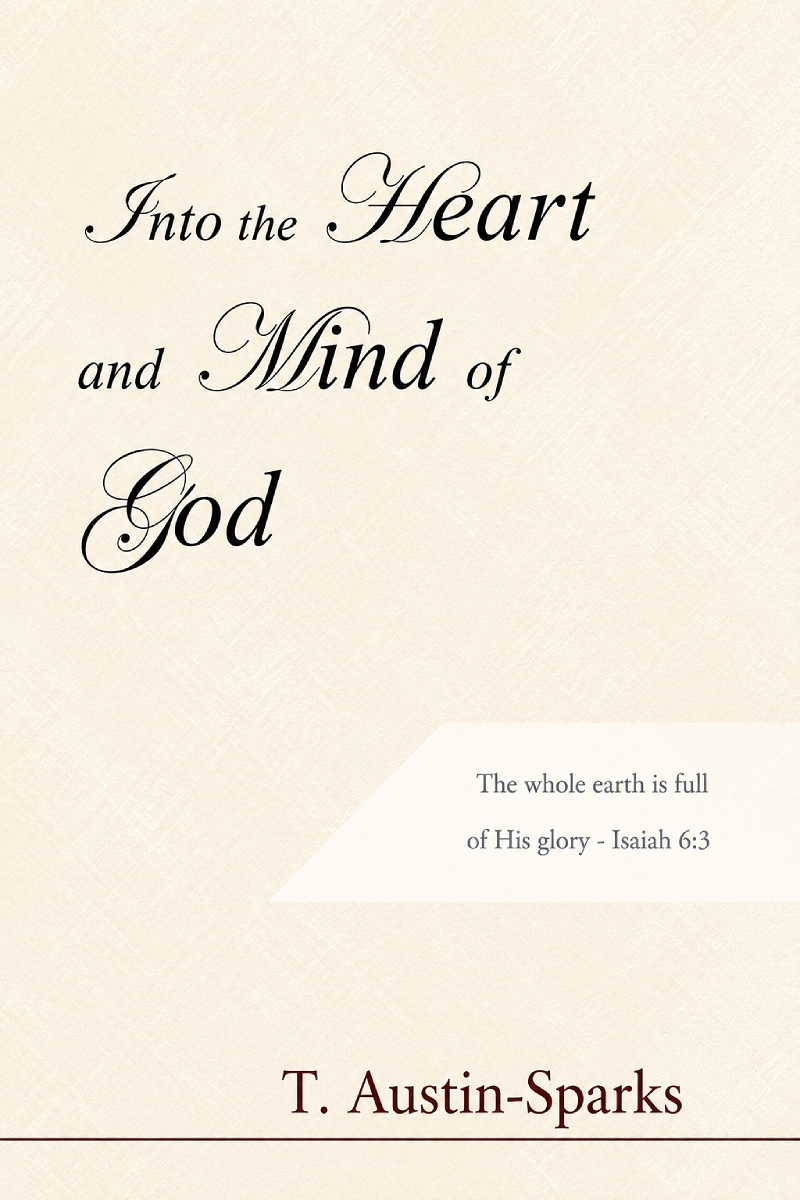
Into the Heart and Mind of God
T. Austin-Sparks traces a spiritual journey into God’s heart and mind: Abraham’s friendship with God, the Potter shaping vessels according to Christ, resurrection life, new birth, the Holy Spirit’s transforming work, and the revelation of Christ’s glory. The book asks why God leads His children through testing and how His eternal purpose forms them into the likeness of His Son.
Available Instantly
About This Book
Into the Heart and Mind of God traces T. Austin-Sparks’s extended teaching on how God brings His people into fellowship with what is in His heart and into understanding of what governs His mind. Rather than treating divine guidance, suffering, spiritual growth, and Christian service as disconnected subjects, Sparks gathers them under God’s eternal purpose in Jesus Christ. The governing question is why God deals with His children as He does and what He is seeking to produce through those dealings.
The first major line is developed through Abraham, the friend of God. Genesis becomes the record of a spiritual pilgrimage in which Abraham is called out from the world, separated unto God, tested in faith, enlarged through apparent impossibility, and progressively brought into agreement with God’s purpose. Friendship with God is therefore more than affection or private devotion. It means sharing God’s interests, accepting His ways, and coming into oneness with what He seeks. Hebrews helps Sparks interpret Abraham’s history as a life of faith directed toward heavenly realities and sustained where natural resources cannot produce the promised result.
This pilgrimage reaches a decisive point in Genesis 22. Abraham’s offering of Isaac brings him into costly fellowship with the heart of God and opens a line to the Father’s giving of His Son. Sparks relates mature fellowship with God to participation in Christ’s sufferings and to a willingness to bear spiritual cost for the fulfillment of God’s purpose. The path is not suffering for its own sake; it is a deeper sharing of the divine concern that produces spiritual fruitfulness.
Resurrection life is one of the book’s major answers to the problem of natural impossibility. Sparks repeatedly insists that God’s purpose cannot be fulfilled by natural strength. Abraham’s history and New Testament passages such as Philippians 3 and Romans 8 are used to show that God brings His people to points where the power must be of another order. The Cross brings the merely natural basis under judgment, while resurrection provides the life and power in which God’s intention can proceed.
A second large section turns to the biblical picture of the potter and the vessel. Jeremiah 18 supplies the central image: the potter begins with an intention and works the clay according to the vessel he has in mind. Sparks connects this with vessels in the New Testament, Romans 8:29, and 2 Corinthians 3:18. God’s dealings are therefore purposeful formation. Jesus Christ is the Pattern. The goal is not self-improvement but conformity to the image of God’s Son, with the Holy Spirit progressively working Christ’s character into the believer.
This formation involves a change of ground from the flesh and natural man to life under the government of the Spirit. Baptism, the Cross, death and resurrection with Christ, and the new creation all appear in this transition. The believer must learn that God is not repairing the old vessel so that natural ability can achieve spiritual ends; He is establishing what belongs to Christ and to a new order of life. Trials expose self-sufficiency and become instruments through which the Spirit forms patience, sympathy, humility, dependence, and the character of Christ.
The book then gives prolonged attention to the transfiguration of Christ and its meaning for spiritual life. Matthew 17 becomes a revelation of the King in glory, authority, and divine approval. Sparks uses the disciples’ vision of Christ to explain the need for an inward apprehension of the Lord that can sustain believers through contradiction, weakness, spiritual conflict, and discouragement. The transfiguration is also connected with 2 Corinthians 3–4: as believers behold the Lord, the Holy Spirit changes them into the same image, while pressure and adversity become part of the process by which Christ is formed and manifested in fragile vessels.
This leads to a practical view of ministry. Ministry is not primarily an office or outward activity but the expression of what the Holy Spirit has wrought into a person. Character and ministry must correspond. The impact of a Christian life comes from an inward revelation of Christ becoming embodied in conduct, endurance, relationships, and service.
A further section, “Born of God,” develops new birth from Luke, John, and 1 John. Sparks distinguishes Christ’s unique birth while drawing a correspondence between His heavenly origin and the believer’s birth from above. New birth is divine intervention, not merely a human decision or external adoption of Christianity. The Holy Spirit produces a new life from God, and this heavenly origin becomes essential to what it means to be a child of God.
The final movement centers on the glory of the Lord. Ezekiel 1 provides a major framework, joined with Ephesians and Hebrews. Sparks argues that God’s governing end in His movements and dealings is His glory. He traces this principle through Abraham, Moses, David and Solomon, Ezekiel, Christ, and the people of God. The vision of divine glory and of the Man on the throne becomes an answer to discouragement when conditions among God’s people appear confused or disappointing: God has not abandoned His purpose, and His end remains the full expression of Christ.
Across these sections, Into the Heart and Mind of God answers questions such as: What does it mean to be God’s friend? Why does God test faith and allow trials? What is His eternal purpose for believers? How does resurrection life operate where natural strength fails? What does the potter-and-clay picture mean? How does the Holy Spirit conform a believer to Christ? What does it mean to be born of God? Why is the transfiguration important to Christian growth? How can a believer endure discouragement in the Church? And how does the glory of God interpret the goal toward which His dealings are moving?
Book Details

Reading Fit
STUDY LEVEL
Advanced, Intermediate
STUDY SCOPE
Topical
BOOKS INCLUDED

Edition & Format
PUBLISHED
December 27, 2011
AVAILABLE FORMATS
paperback, kindle
LENGTH
219 pages

Topics Covered
You Might Also Like