
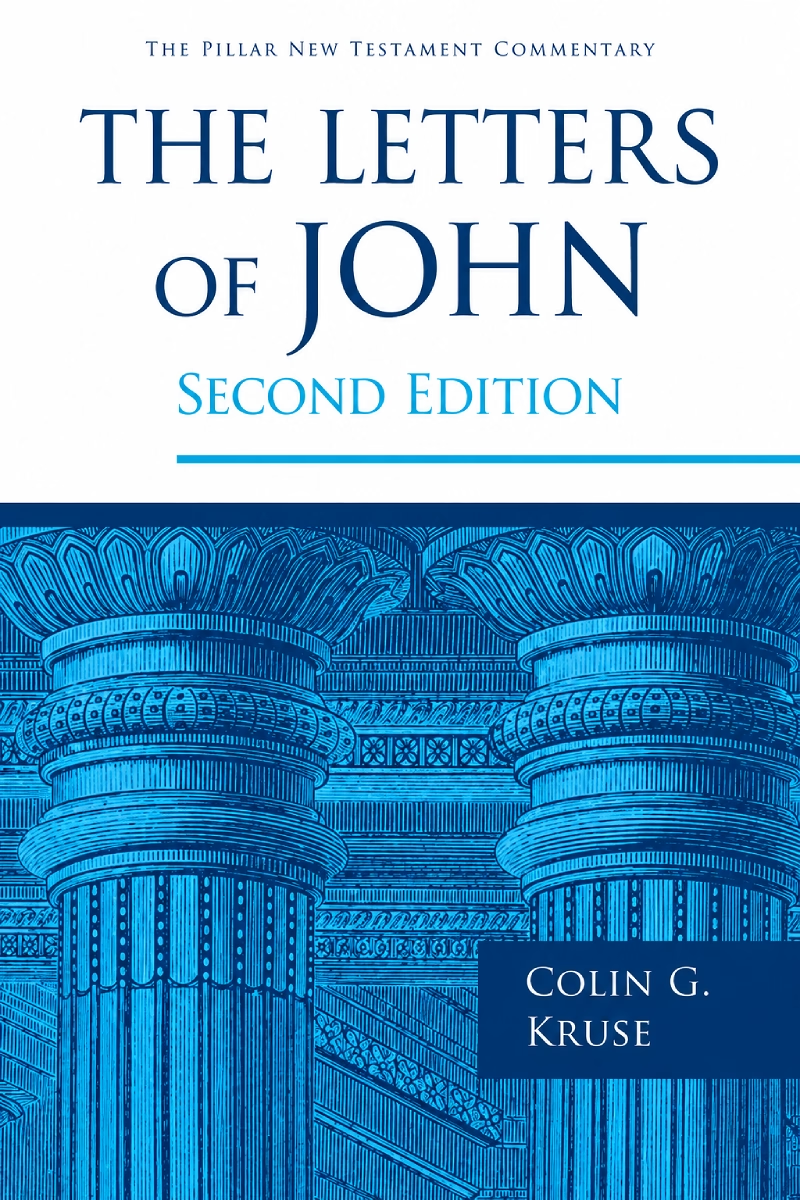
The Letters of John
Colin G. Kruse’s verse-by-verse study of 1, 2, and 3 John explores how believers can know they have eternal life, remain in fellowship with God, love one another, resist deceptive teaching, and confess Jesus Christ faithfully. Major themes include assurance, atonement, the Spirit, obedience, sin, abiding, and Christian love.
Available Instantly
About This Book
Colin G. Kruse’s revised Pillar commentary gives a verse-by-verse exposition of 1 John, 2 John, and 3 John while developing the major theological and pastoral concerns that bind the three letters together. A governing concern is assurance: how believers whose confidence has been shaken by division and deceptive teaching can know that they truly know God, possess eternal life, and remain in the truth. Kruse presents the Johannine tests of authentic Christian life not as abstract doctrinal checkpoints but as interconnected marks of fellowship with God—right belief about Jesus Christ, obedience to God, and love for fellow believers. Kruse also considers the literary and theological relationship between the letters and the Gospel of John, especially where shared language about the Word, life, truth, love, abiding, and knowing God helps illuminate the letters without collapsing their distinct situations.
The commentary gives particular weight to 1 John’s opening claim that the apostolic message rests on testimony to the Word of life who truly appeared in human history. Against teaching that undermines the reality of Christ’s incarnation, Kruse emphasizes the real humanity of Jesus Christ and the necessity of confessing the Son rightly. This Christological concern recurs in the warnings about secessionists, antichrists, and spirits that must be tested. The book therefore addresses a major reader question: how can Christians distinguish a convincing spiritual claim from teaching that departs from the apostolic confession of Christ?
Assurance and fellowship are developed through 1 John’s treatment of light, sin, cleansing, obedience, love, and eternal life. Kruse carefully explains the difference between claiming sinlessness and walking honestly before God, the provision of Christ as advocate and atoning sacrifice, and the way a believer’s attitude toward sin reveals the reality of relationship with God. The language of abiding, knowing God, fellowship, and remaining in the truth is shown to describe a durable Christian life rooted in the message heard from the beginning. This makes the commentary useful for readers struggling with questions about assurance of salvation, recurring sin, obedience, and whether genuine faith can be recognized in ordinary Christian life.
Christian love is another governing emphasis. Kruse traces the command to love one another through 1 John and 2 John, relating it to God’s own love, the giving of the Son, confidence before God, and the visible distinction between the children of God and the children of the devil. Love is not separated from truth: the letters insist that Christian fellowship must be both loving and faithful to the confession of Christ. In 2 John this becomes especially important in deciding how believers should respond to itinerant teachers who do not remain in the teaching of Christ.
The role of the Holy Spirit receives substantial attention through the anointing, the Spirit’s testimony, and the command to test the spirits in 1 John 2 and 4. Kruse explains how spiritual discernment operates within the apostolic message rather than through private claims to superior knowledge. He also treats prayer, confidence before God, the “sin leading to death,” and the testimony that God has given eternal life in his Son.
Second and Third John extend these themes into church relationships, truth, love, hospitality, authority, and conflict. The commentary therefore helps readers understand not only the theology of the Johannine letters but their practical questions: how to remain in fellowship with God, how to know one has eternal life, how to deal with sin without false assurance or despair, how to test spiritual claims, how truth and love belong together, and how Christian hospitality should be exercised without supporting deceptive teaching.
Book Details

Reading Fit
STUDY LEVEL
Advanced, Intermediate
STUDY SCOPE
Individual Book, New Testament
BOOKS INCLUDED

Edition & Format
PUBLISHED
May 14, 2020
AVAILABLE FORMATS
hardcover, kindle
LENGTH
465 pages

Topics Covered
You Might Also Like