
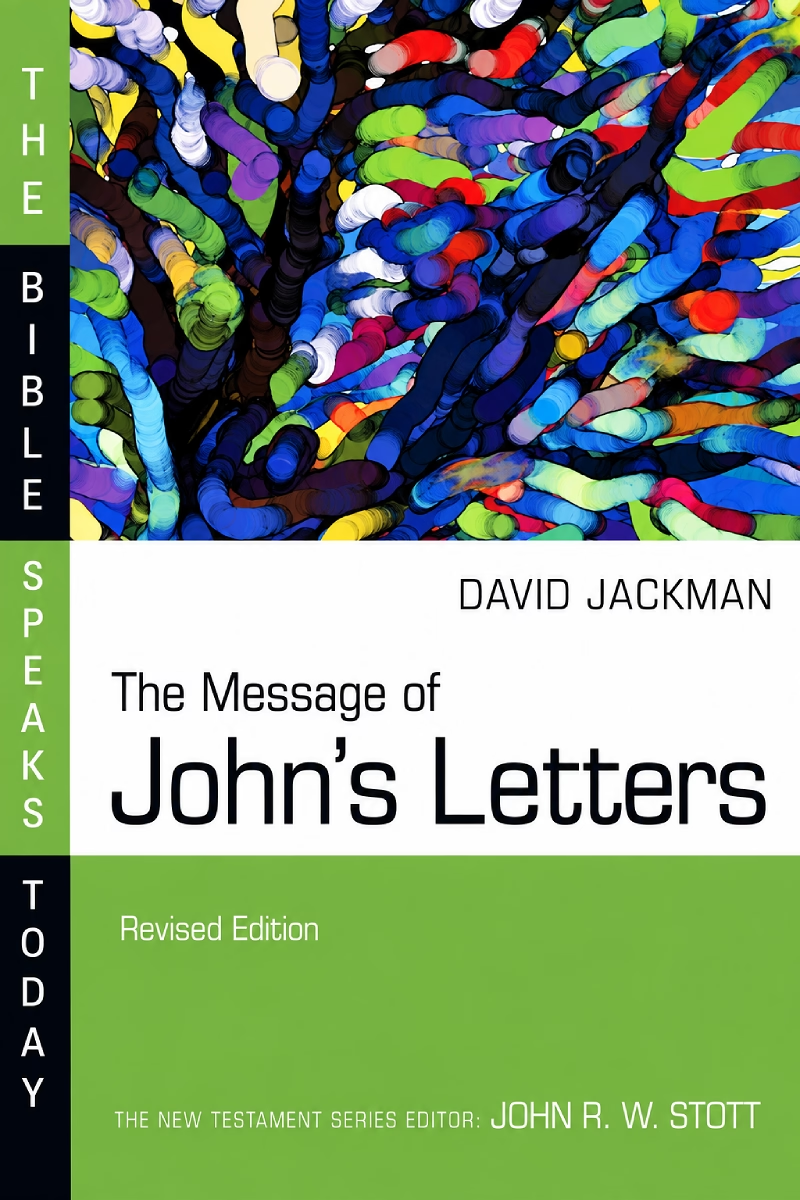
The Message of John’s Letters
David Jackman unfolds 1–3 John around the inseparable demands of truth and love. Against false teaching and moral compromise, he shows how Christians can know Christ truly, walk in God’s light, deal honestly with sin, test spiritual claims, love God’s family, overcome the world by faith, and possess grounded assurance of eternal life.
Available Instantly
About This Book
David Jackman’s The Message of John’s Letters expounds 1, 2, and 3 John as a unified pastoral summons to live in the truth and love of God. The volume gives its greatest attention to 1 John, which Jackman presents as a spiraling treatment of recurring themes rather than a straight-line argument: truth and love, mind and heart, Word and Spirit, belief and conduct continually return at deeper levels. The letters address Christians living amid moral compromise, false teaching, pressure from the surrounding world, and uncertainty about what genuine Christian faith looks like.
The exposition begins with the apostolic witness to Jesus Christ in 1 John 1:1–4. Christian assurance rests on the reality of the incarnate Son who was heard, seen, and touched, not on private spiritual speculation. Jackman then develops the claim that God is light in 1 John 1:5–2:6. Walking in the light requires honesty about sin, confession, cleansing, obedience, and trust in Christ’s advocacy and atoning work. The book therefore addresses the practical question of how believers can take sin seriously without losing confidence in God’s forgiveness.
From 1 John 2 through chapter 3, Jackman traces marks of authentic Christian life: obedience to Christ, love for fellow believers, refusal to love the world, perseverance in apostolic truth, righteous conduct, and the reality of belonging to God’s family. He treats the appearance of antichrists and false teachers as a call to remain in the message received from the beginning. Christian identity is not established by claims alone; doctrine, conduct, and love belong together as evidences of spiritual reality.
Spiritual discernment becomes especially important in 1 John 4:1–6, where believers are commanded to test the spirits rather than accept every spiritual claim as divine. Jackman relates this testing to the confession of Jesus Christ, the apostolic message, and the danger of deceptive teaching. This section gives the book clear relevance for readers asking how to distinguish genuine Christian truth from persuasive spiritual error. The Holy Spirit’s witness and the truth of the Word are held together rather than separated.
Love is equally central. In 1 John 4:7–21, Jackman explores the love of God revealed in sending his Son and the resulting obligation of Christians to love one another. God’s love provides both the source and pattern of Christian love, while mature love drives out fear and strengthens assurance. The volume thus connects doctrine about Christ with practical relationships inside God’s family.
The final chapters of 1 John focus strongly on faith, victory, testimony, eternal life, and assurance. Faith in Jesus Christ is presented as the key to overcoming the world, while God’s testimony concerning his Son gives objective grounds for confidence. In 1 John 5:13–21, Jackman emphasizes that believers can know they have eternal life. Assurance is not self-generated optimism but a conclusion grounded in the person and work of Christ, the apostolic witness, the Spirit’s work, prayer, obedience, and love.
Jackman then expounds 2 John around the priorities of truth and love, especially the need to refuse teaching that denies the true Christ while continuing to walk in love. Third John provides a contrasting set of personal examples involving hospitality, faithful service, selfish leadership, and imitation of what is good.
As a whole, the book answers questions such as: How can I know that my faith is real? How should I deal with recurring sin? How can Christians test spiritual teaching? What is the relationship between right doctrine and loving conduct? Can a believer have assurance of eternal life? Jackman’s exposition presents John’s answer as a life shaped simultaneously by the true Jesus Christ, the light and love of God, obedience, discernment, faith, and persevering fellowship.
Book Details

Reading Fit
STUDY LEVEL
Intermediate
STUDY SCOPE
Individual Book, New Testament
BOOKS INCLUDED

Edition & Format
PUBLISHED
June 22, 2021
AVAILABLE FORMATS
paperback, kindle
LENGTH
209 pages

Topics Covered
You Might Also Like