
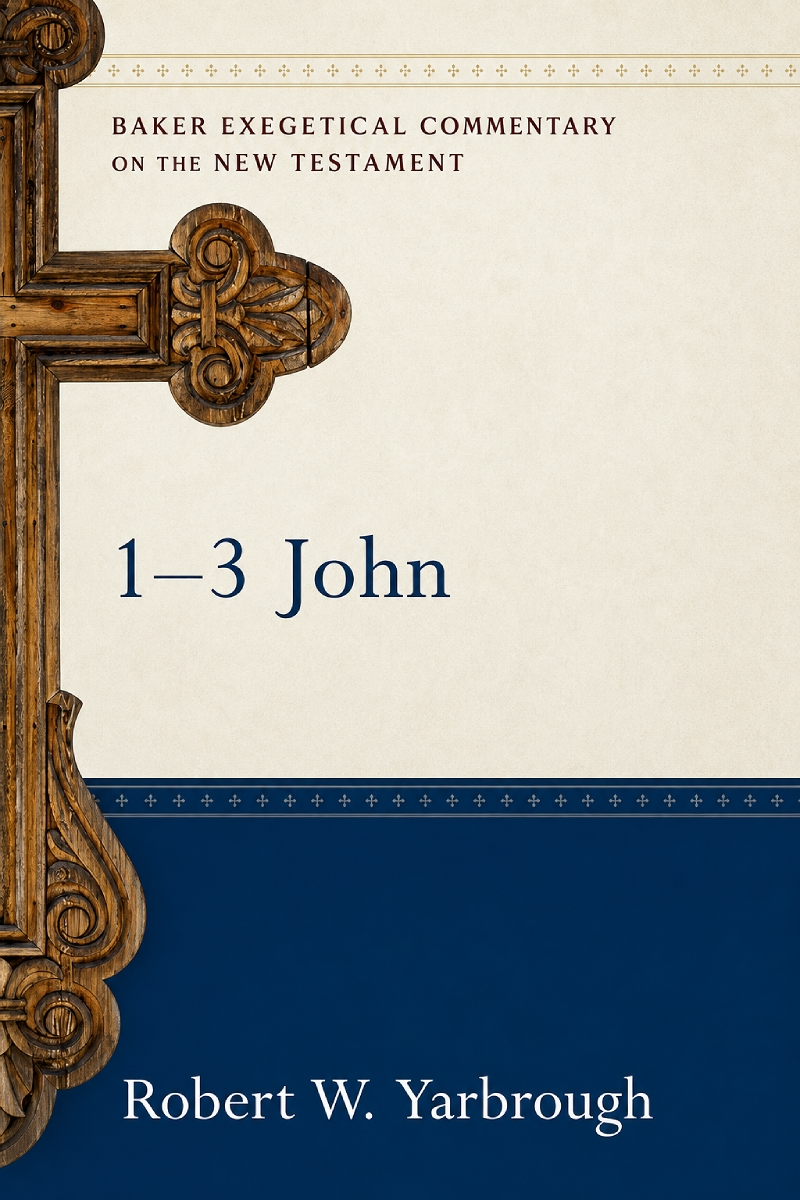
1-3 John
Robert W. Yarbrough’s commentary follows 1–3 John through their tightly connected themes of God’s light, God’s love, truth, obedience, faith in Jesus Christ, and assurance of eternal life. It shows how John helps believers recognize genuine Christian life, resist false teaching, love one another, abide in the truth, and live with confidence before God.
Available Instantly
About This Book
Robert W. Yarbrough’s commentary gives sustained exegetical and theological treatment to 1 John, 2 John, and 3 John, with detailed attention to the Greek text, literary structure, historical setting, history of interpretation, and the relationship of the Johannine letters to the work and teaching of Jesus. The volume is especially concerned with how John’s theology becomes pastoral guidance: believers are called to know what is true, recognize the marks of genuine Christian life, resist deceptive teaching, love one another, and possess assurance of eternal life.
The commentary treats 1 John 1:1–2:6 as the opening theological burden of the letter: God is light. Yarbrough explains how the apostolic witness to the Word of life grounds fellowship with God and with other believers, and how the character of God exposes false claims about sin and obedience. Walking in the light involves truthful confession, reliance on Christ’s provision for sin, and a life that does not make peace with darkness. This section therefore connects the nature of God, human sin, forgiveness, obedience, and the practical question of what genuine fellowship with God looks like.
In 1 John 2:7–17 the emphasis turns to the command to love and to the danger of loving the world. Yarbrough traces the letter’s recurring insistence that love for fellow believers is not optional evidence added to Christian faith but part of the lived reality of knowing God. He also gives substantial attention to the warning against antichrists and false teachers in 1 John 2:18–27. John’s counsel to abide in the anointing and in the truth becomes a major guide for spiritual discernment: believers must distinguish the apostolic confession of Jesus Christ from teaching that denies the Son.
The exposition of 1 John 2:28–4:6 develops assurance, righteousness, love, faith, and discernment together. Believers are identified as children of God and are called to live in a way consistent with that identity. Yarbrough carefully treats John’s strong statements about sin, obedience, and being born of God, showing how they function pastorally rather than as isolated slogans. The command to love is then joined to concrete action, while 1 John 4:1–6 directly addresses the need to test the spirits and distinguish truth from error in claims about Jesus Christ.
First John 4:7–5:15 brings God’s love to the center of the exposition. God’s love is revealed in the sending of his Son, and the love believers receive from God is to be expressed toward one another. Faith in Jesus as the Son of God, love, obedience, and eternal life are repeatedly connected. Yarbrough also treats the witness concerning Jesus Christ and the purpose statement of 1 John 5:13, where assurance of eternal life is explicitly given to those who believe in the name of the Son of God. The closing section addresses prayer, sin, shared Christian certainties, and the final warning against idols.
The treatments of 2 John and 3 John extend the same concerns into church relationships and ministry. Second John joins love with truth and warns against welcoming teachers who do not remain in the teaching of Christ. Third John commends Gaius for faithful hospitality and support of gospel workers, contrasts him with the domineering Diotrephes, and presents Demetrius as a good example. Together these letters show how truth, love, hospitality, authority, and discernment operate within Christian community.
The commentary answers questions such as: How can a believer know that he or she has eternal life? What does it mean that God is light and God is love? How should Christians deal with recurring sin without denying the seriousness of holiness? How can false spiritual claims and antichrist teaching be recognized? What does abiding in the truth look like? How do love, obedience, faith in Christ, and assurance belong together? The result is a detailed study of Johannine Christianity that joins doctrine, discernment, and everyday Christian living.
Book Details

Reading Fit
STUDY LEVEL
Advanced, Intermediate
STUDY SCOPE
Individual Book, New Testament
BOOKS INCLUDED

Edition & Format
PUBLISHED
November 1, 2008
AVAILABLE FORMATS
hardcover, kindle
LENGTH
465 pages

Topics Covered
You Might Also Like