
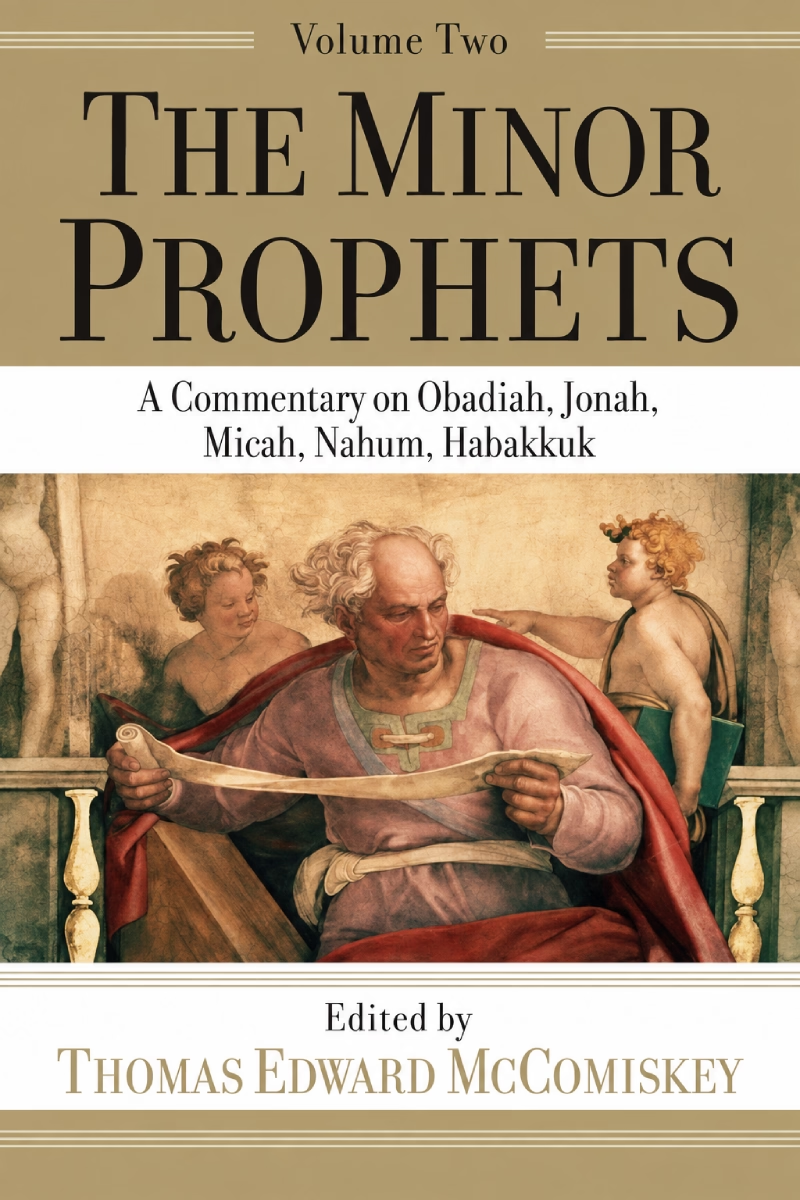
The Minor Prophets: A Commentary on Obadiah, Jonah, Micah, Nahum, Habakkuk
Five major scholars guide readers through Obadiah, Jonah, Micah, Nahum, and Habakkuk with close Hebrew exegesis, historical background, theological exposition, and practical application. The volume traces divine judgment and mercy, covenant faithfulness, prophetic hope, God’s rule over nations, messianic promise, and the distinct message of each prophet.
Available Instantly
About This Book
Thomas Edward McComiskey’s edited commentary volume gives sustained, book-level treatment to Obadiah, Jonah, Micah, Nahum, and Habakkuk. Individual sections by Jeffrey J. Niehaus, Joyce G. Baldwin, Bruce K. Waltke, Tremper Longman III, and F. F. Bruce combine close work in the Hebrew text with literary structure, historical setting, theology, and exposition. The result is a technical but usable study of five Minor Prophets rather than a general survey of all twelve.
Obadiah is read against the long history of Jacob and Esau and the relationship between Judah and Edom. The commentary develops the prophet’s covenant lawsuit against Edom, the reasons for Edom’s judgment, the Day of the Lord, retribution among the nations, deliverance in Zion, restoration, and the concluding declaration that the kingdom belongs to the Lord. This section helps readers understand why Edom’s violence against Judah is treated as covenant treachery and how Obadiah moves from historical judgment to a wider prophetic horizon.
Jonah receives attention as both prophetic narrative and theological confrontation. The commentary follows Jonah’s flight from his commission, his prayer and rescue, his preaching to Nineveh, the city’s repentance, and Jonah’s anger at its preservation. God’s sovereignty over events, his compassion toward sinners and enemies, human resistance to divine calling, repentance, and the tension between judgment and mercy are central to the exposition. Readers asking why God shows mercy to a violent pagan city, or why the prophet himself resists that mercy, receive sustained help from the text.
Micah is treated through its recurring movements between accusation, judgment, and salvation. The commentary relates the prophet’s charges to covenant obligations and curses while also developing promises connected with God’s purposes for his people. It gives substantial attention to social injustice, corrupt leadership, the remnant, restoration, and messianic hope, including the ruler associated with Bethlehem in Micah 5 and the covenantal demand of Micah 6:8. The section shows how divine justice and mercy belong together within Micah’s prophetic message.
Nahum centers on the announced fall of Nineveh and the end of Assyrian oppression. Literary structure and vivid prophetic poetry are examined alongside the portrayal of the Lord as judge and divine warrior. The commentary explains why Nineveh’s destruction is presented not as arbitrary violence but as judgment on an imperial power, while the same event means relief for those it oppressed.
Habakkuk is developed around the prophet’s questions about injustice and God’s surprising use of Babylon as an instrument of judgment. The dialogue between prophet and God leads into the contrast between arrogant self-reliance and faithful dependence in Habakkuk 2:4, followed by the taunt material against oppressive power and the prayer-theophany of Habakkuk 3. The exposition is especially useful for readers asking how faith responds when evil appears unchecked, when God’s methods are difficult to understand, or when circumstances give little visible reason for confidence.
Across all five books, the volume repeatedly connects Hebrew exegesis with theological meaning and contemporary application. Major themes include divine judgment and mercy, covenant faithfulness, God’s sovereignty over nations, repentance, faith amid crisis, prophetic hope, the kingdom of God, and messianic expectation. Historical and ancient Near Eastern background is used to illuminate Edom, Assyria, Nineveh, Judah, and Babylon without displacing the theological message of the prophets. Readers seeking serious study of these biblical books, the meaning of difficult prophetic passages, or a deeper account of how judgment, mercy, covenant, faith, and hope interact in the Minor Prophets will find those questions addressed directly in the exposition.
Book Details

Reading Fit
STUDY LEVEL
Advanced, Intermediate
STUDY SCOPE
Individual Book, Old Testament
BOOKS INCLUDED

Edition & Format
PUBLISHED
August 21, 2018
AVAILABLE FORMATS
paperback
LENGTH
426 pages

Topics Covered
You Might Also Like