
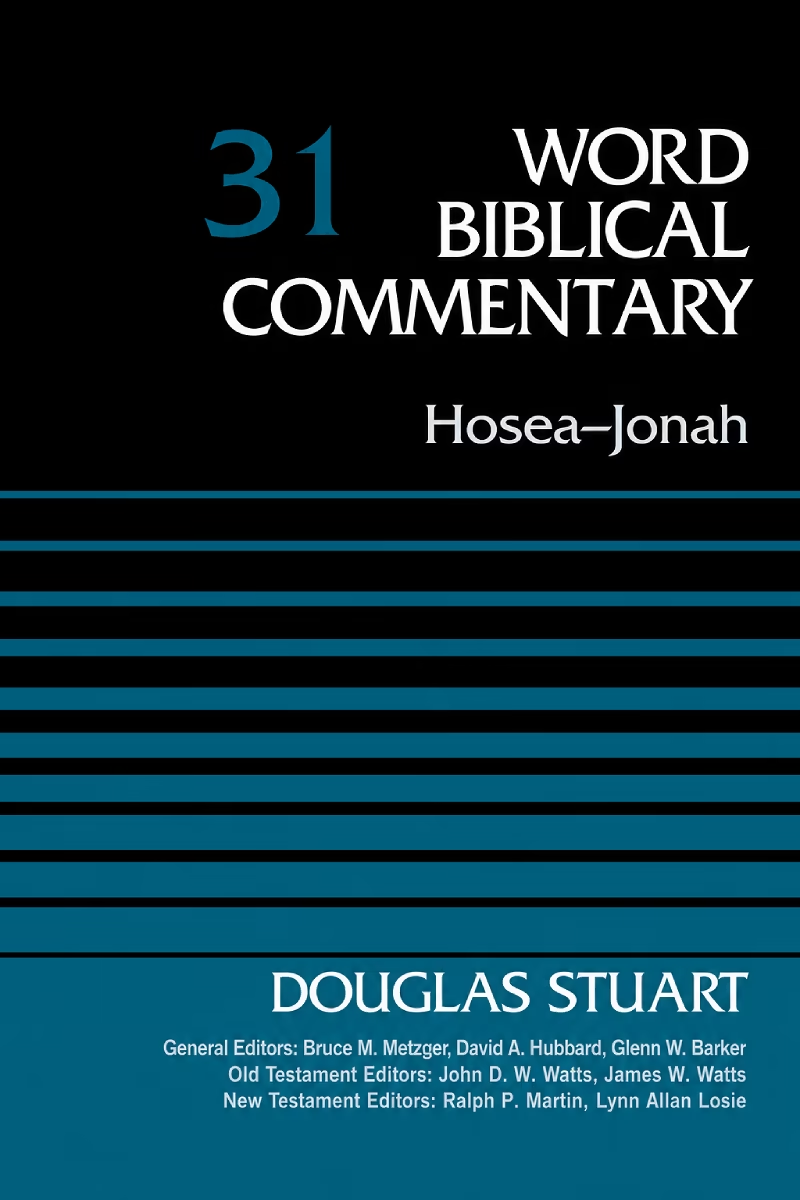
Hosea-Jonah, Volume 31
Douglas Stuart guides readers through Hosea, Joel, Amos, Obadiah, and Jonah with detailed exegesis and biblical theology. He traces the prophets’ dependence on God’s covenant, showing how sin brings judgment while repentance, grace, restoration, social justice, divine compassion, the Day of the Lord, and the promised Spirit reveal God’s sovereign purposes.
Available Instantly
About This Book
Douglas Stuart’s Hosea–Jonah is a detailed commentary on the first five books of the Minor Prophets: Hosea, Joel, Amos, Obadiah, and Jonah. The volume combines textual and linguistic analysis with historical setting and biblical theology, but its governing concern is to explain what these prophets meant within Israel’s covenant relationship with God and how their messages of judgment and hope fit the wider canon. Stuart’s general treatment highlights the prophets’ dependence on the covenant blessings and curses of the Pentateuch, providing a framework for understanding why idolatry, injustice, covenant rebellion, exile, repentance, and restoration recur so forcefully across these books.
In Hosea, Stuart develops the prophet’s marriage and family as a dramatic representation of Israel’s unfaithfulness to the Lord. Hosea 1–3 introduces judgment through the names of the children and the broken marriage, yet also promises restoration. The later chapters develop God’s covenant lawsuit against Israel, the nation’s idolatry and spiritual adultery, its political and religious corruption, coming exile, and the Lord’s persistent love for a people he disciplines. The reader is helped to see how divine judgment and covenant love belong together rather than cancel one another, and why Hosea’s final call to return to the Lord points toward grace and restoration.
Joel is interpreted through the Day of the Lord, divine sovereignty, lament, repentance, judgment, and future renewal. Stuart treats the devastation described in Joel 1–2 in relation to invading forces and covenant judgment, then follows the movement from distress to repentance and restoration. Particular attention is given to Joel 2:28–32 and the promised outpouring of the Holy Spirit, a passage later used in Acts 2. The commentary explains the coming age in which God’s Spirit is given broadly to his people and also considers the final judgment of the nations and the restoration of Judah and Jerusalem.
Amos receives sustained treatment as a prophet of covenant accountability, God’s universal sovereignty, social injustice, judicial corruption, economic oppression, idolatry, exile, and restoration. Stuart explains Amos’s denunciation of wealthy complacency and the exploitation of the poor, his warnings about corrupt leadership and worship, and his repeated insistence that Israel’s privileged relationship with God increases rather than removes covenant responsibility. The Day of the Lord becomes a warning to a sinful people who wrongly assume that God’s intervention must automatically favor them. Amos’s final promise of restoration and the rebuilding of David’s fallen house supplies hope beyond judgment.
Obadiah focuses on Edom’s violence and pride, the Day of the Lord, judgment on the nations, the restoration of Israel, and the Lord’s kingship. Stuart places Edom within its biblical history and explains how the short prophecy moves from Edom’s coming defeat to the recovery of Zion and the declaration that the kingdom belongs to the Lord.
Jonah turns from national judgment to the breadth of God’s compassion. Stuart traces Jonah’s rebellion, the storm and rescue, Nineveh’s repentance, God’s forgiveness, and the prophet’s anger at mercy shown to Israel’s enemy. Jonah 4 is especially important for exposing a narrow view of God’s love and for showing that divine compassion extends beyond Israel. Stuart also discusses the sign of Jonah in Matthew 12:39–41 and Luke 11:29–32.
Taken together, the volume helps readers understand why the Minor Prophets combine severe warnings with remarkable hope. It addresses questions such as why God judges covenant unfaithfulness, how repentance relates to restoration, why worship without justice is condemned, how God’s sovereignty reaches the nations, why God shows mercy to enemies, and how the promised Spirit belongs to the prophets’ expectation of a new age. It is especially useful for readers seeking serious study of Hosea, Joel, Amos, Obadiah, or Jonah, or for those trying to understand the theological unity linking covenant, judgment, grace, justice, compassion, exile, and restoration in the prophetic books.
Book Details

Reading Fit
STUDY LEVEL
Advanced
STUDY SCOPE
Individual Book, Old Testament
BOOKS INCLUDED

Edition & Format
PUBLISHED
December 23, 2014
AVAILABLE FORMATS
hardcover, kindle
LENGTH
584 pages

Topics Covered
You Might Also Like