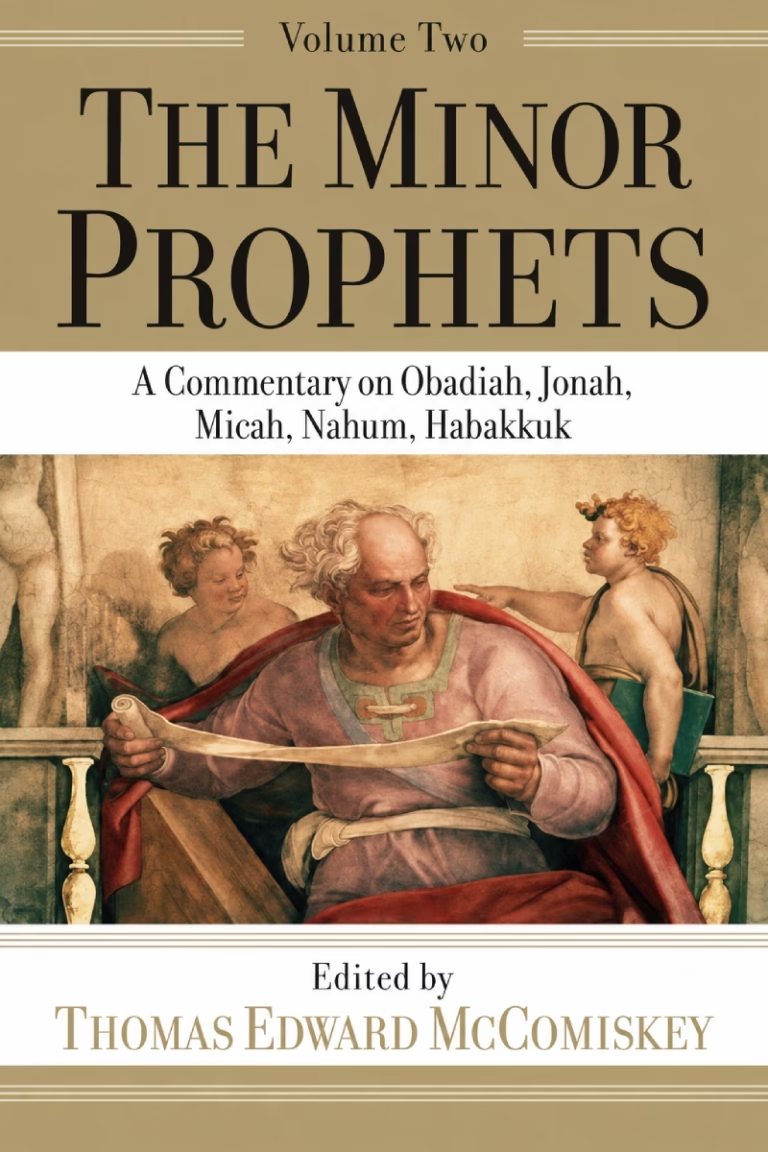
The Minor Prophets: A Commentary on Obadiah, Jonah, Micah, Nahum, Habakkuk
Thomas Edward McComiskey
4.8(19)


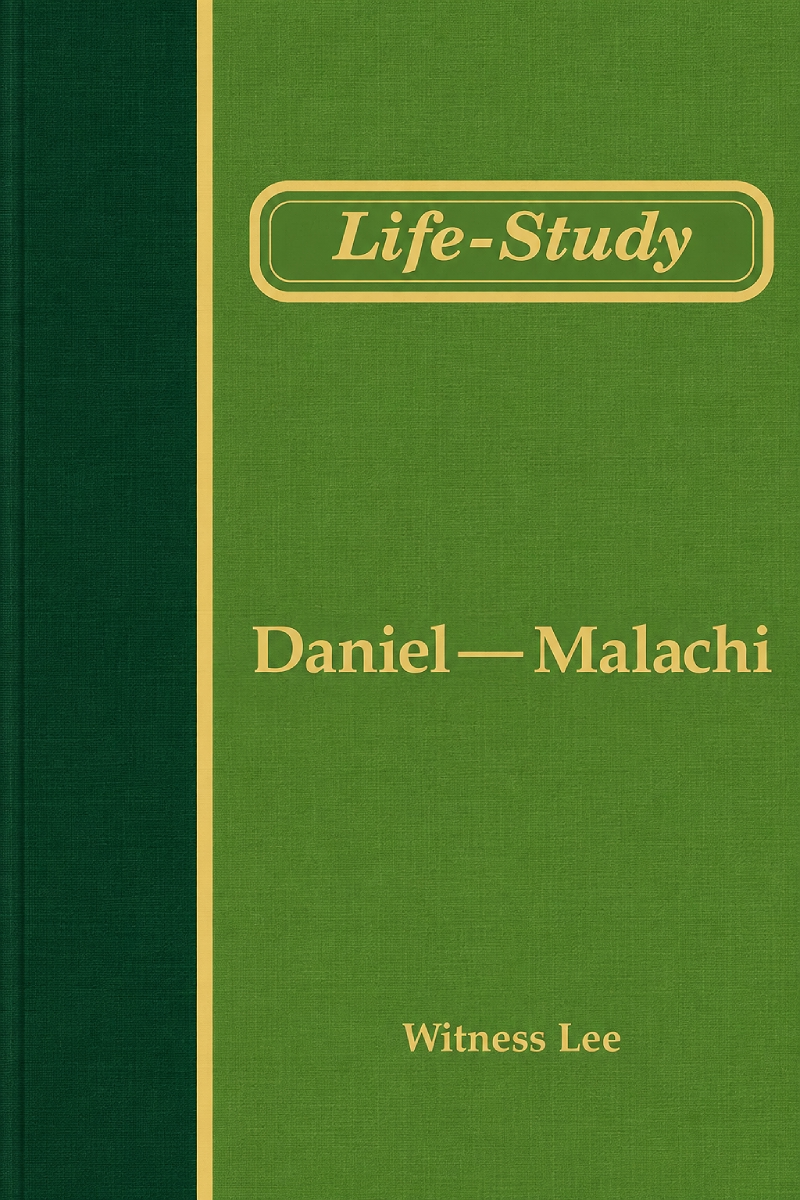
Witness Lee surveys Daniel and every Minor Prophet from Hosea through Malachi, tracing prophecy, judgment, restoration, and Christ across Israel’s history and future. The studies connect Daniel’s kingdoms and seventy weeks with prophetic visions, Jehovah’s dealings with Israel and the nations, Messiah’s coming, God’s house, and the promised kingdom.
Available Instantly
Editorial Disclaimer
Life Study of Daniel-Malachi brings together Witness Lee’s studies of Daniel and the twelve Minor Prophets, giving distinct treatment to every biblical book from Daniel through Malachi. The governing emphasis is prophetic: God sovereignly deals with Israel and the nations, exposes the course and end of human government, preserves an overcoming testimony, reveals Christ within the prophets, and moves history toward judgment, restoration, Messiah’s coming, and the kingdom.
Daniel receives especially sustained attention. Lee treats Daniel 1–6 as a series of victories by faithful young captives over satanic devices expressed through defiling food, idolatry, pride, debauchery, and opposition to worship. Daniel 2 supplies a controlling vision of human government in the great image and its eventual crushing by the stone cut without hands, which Lee connects with Christ’s coming and the termination of rebellious human rule. Daniel 7–12 develops the prophetic visions of the beasts, the ram and male goat, the destiny of Israel, and the final conflicts surrounding the end of the age. Daniel 9 and its seventy weeks receive direct exposition as a major framework for understanding Israel’s prophetic timetable.
The Minor Prophets are read both in their own historical settings and in relation to God’s continuing purpose. Hosea develops Israel’s apostasy, Jehovah’s chastisement, His unchanging love, and restoration, with implications concerning Christ. Joel traces the devastation and restoration of Israel, the day of Jehovah, and the eventual defeat of human government by Christ. Amos addresses divine judgment upon Israel and the nations together with restoration. Obadiah concerns God’s dealing with Edom and the issue of the kingdom. Jonah presents Jehovah’s salvation reaching the Gentile city of Nineveh. Micah combines reproof and restoration with prophetic revelation concerning Christ, while Nahum announces judgment on Nineveh.
Habakkuk brings the prophet’s dialogue with Jehovah into focus and highlights Habakkuk 2:4, “the righteous one will live by his faith,” in relation to God’s salvation. Zephaniah again joins judgment with salvation and restoration. Haggai centers on the rebuilding of God’s house and the coming Messiah. Zechariah receives a large, separately developed study: its visions of consolation and promise, its call from empty ritual to a godly life, its prophecies in chapters 9–14, the restoration and destiny of Israel, Armageddon, the millennium, and the unveiling of Christ all receive substantial treatment. Malachi addresses Jehovah’s dealings with the priests and people, His love, Christ in His two comings, and the need for revival.
Across these books, Lee repeatedly connects prophecy with Christ rather than treating prediction as an end in itself. The studies ask how the rise and fall of kingdoms fit under God’s sovereignty, how Israel’s chastisement relates to restoration, where Christ appears in the Minor Prophets, what Daniel’s seventy weeks mean, how the second coming ends rebellious human government, and how the prophetic books point toward God’s kingdom. They also address the practical side of prophetic study: how believers remain faithful when surrounded by an opposing age, how worship is preserved under pressure, and how a knowledge of God’s purpose should shape present spiritual life.
For readers searching the prophetic books individually, this volume provides genuine book-level study of Daniel, Hosea, Joel, Amos, Obadiah, Jonah, Micah, Nahum, Habakkuk, Zephaniah, Haggai, Zechariah, and Malachi. For readers approaching them thematically, it offers a connected framework for Bible prophecy, Israel in prophecy, human government, judgment and restoration, Christ in the prophets, the second coming, spiritual conflict, redemption, revival, and the coming kingdom.

STUDY LEVEL
Advanced, Intermediate
STUDY SCOPE
Individual Book, Old Testament
BOOKS INCLUDED

PUBLISHED
January 21, 2026
AVAILABLE FORMATS
kindle
LENGTH
pages

Editorial Disclaimer
TUBT includes this book because we believe it contains material that is worth reading, considering, and bringing into the wider Christian discussion. Its inclusion should not be understood as an endorsement of Witness Lee, Living Stream Ministry, the Local Church, or the “Lord’s Recovery” movement associated with his ministry.
TUBT does not recommend joining or identifying with that movement. We encourage readers to approach Lee’s writings with careful biblical discernment and to test his claims against Scripture.
Readers should also be aware that some of Lee’s writings contain strong criticisms of other Christian traditions and ministries and, at times, present distinctive claims concerning the church and the movement with which he was associated. TUBT does not share or endorse those claims.
We have chosen to include a limited number of Lee’s books because we believe portions of his work make a meaningful contribution to important theological and spiritual discussions. We recommend reading them critically, weighing what is valuable while carefully examining what should not be accepted.