
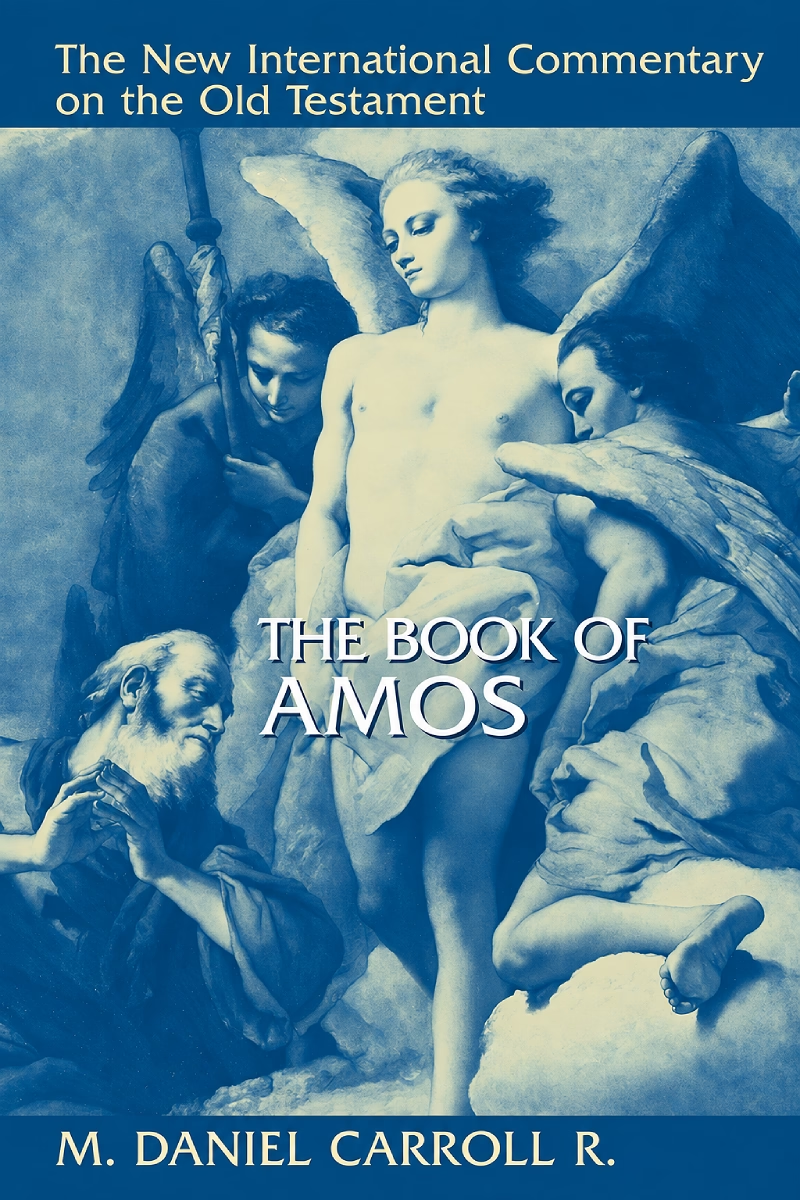
The Book of Amos
M. Daniel Carroll R.’s commentary offers a close reading of Amos in its eighth-century setting while keeping the prophet’s theological and ethical force in view. It explores divine judgment, justice and righteousness, worship, exploitation of the vulnerable, the Day of the Lord, prophetic conflict, and Israel’s final hope, with sustained attention to Hebrew, poetics, and canonical form.
Available Instantly
About This Book
M. Daniel Carroll R.’s The Book of Amos is a full-scale commentary on Amos that combines close reading of the Hebrew text with historical, literary, theological, and ethical interpretation. Rather than making a reconstructed editorial history the controlling framework, Carroll gives sustained attention to the canonical form of Amos against its eighth-century setting. His introduction addresses historical background, authorship, composition, structure, poetics, religion and theology, reception in early Judaism and the New Testament, and the message of Amos for contemporary readers before proceeding through the text in detail.
The commentary makes clear that Amos is fundamentally a book about God: His moral authority over Israel and the nations, His demand for righteousness, His opposition to exploitation, and His justice in judgment. Amos 1–2 establishes that divine judgment reaches the surrounding nations and then turns with greater force upon Judah and Israel. Israel’s election does not exempt the covenant people from accountability; privilege intensifies responsibility. Carroll therefore gives sustained attention to the relation between divine justice and human ethics, including the economic and social practices by which the wealthy oppress the poor and vulnerable.
Justice and righteousness are especially important in the interpretation of Amos 5. Carroll treats Amos 5:24 within its immediate context of worship, showing that Israel’s religious activity cannot be separated from the kind of society its worshipers create. Sacrifices, assemblies, songs, and visits to sanctuaries cannot substitute for seeking God, doing good, and establishing justice. This makes the commentary particularly relevant to readers asking what biblical worship has to do with everyday ethics, why God rejects religious observance that coexists with injustice, and how the prophets connect worship with responsibility toward other people. The book also addresses religious complacency, false security, prosperity that ignores suffering, and the assumption that outward religious identity guarantees divine approval.
Another substantial theme is the Day of the Lord. Amos overturns confident expectations that the day will automatically bring light and victory to Israel; for an unrepentant people it becomes darkness and judgment. Carroll follows the prophetic rhetoric that exposes false expectations and calls readers to reckon with God’s character. The visions of Amos 7–9, the conflict with Amaziah at Bethel, and the prophet’s disputed status and authority receive detailed treatment, as do the book’s images of unavoidable judgment.
The commentary does not end with destruction. Amos 9 turns toward hope for Israel, including the raising of David’s fallen shelter and a future in which the people rebuild and enjoy life in the land. Carroll treats this ending as part of the book’s theological message rather than an embarrassment to its judgment oracles. Judgment is necessary to the book’s vision of justice, but judgment is not the final word.
Readers looking for a rigorous study of Amos, the biblical meaning of justice and righteousness, prophetic criticism of economic exploitation, the relationship between worship and social responsibility, the Day of the Lord, judgment on Israel and the nations, or the hope at the end of Amos will find those questions developed from the text itself. Carroll’s attention to Hebrew language, literary form, rhetorical strategy, historical context, and present ethical significance also makes the volume useful for advanced study, teaching, preaching, and anyone seeking to understand why Amos’s ancient prophetic message continues to confront religious communities today.
Book Details

Reading Fit
STUDY LEVEL
Advanced
STUDY SCOPE
Individual Book, Old Testament
BOOKS INCLUDED

Edition & Format
PUBLISHED
November 19, 2020
AVAILABLE FORMATS
hardcover, kindle
LENGTH
640 pages

Topics Covered
You Might Also Like