
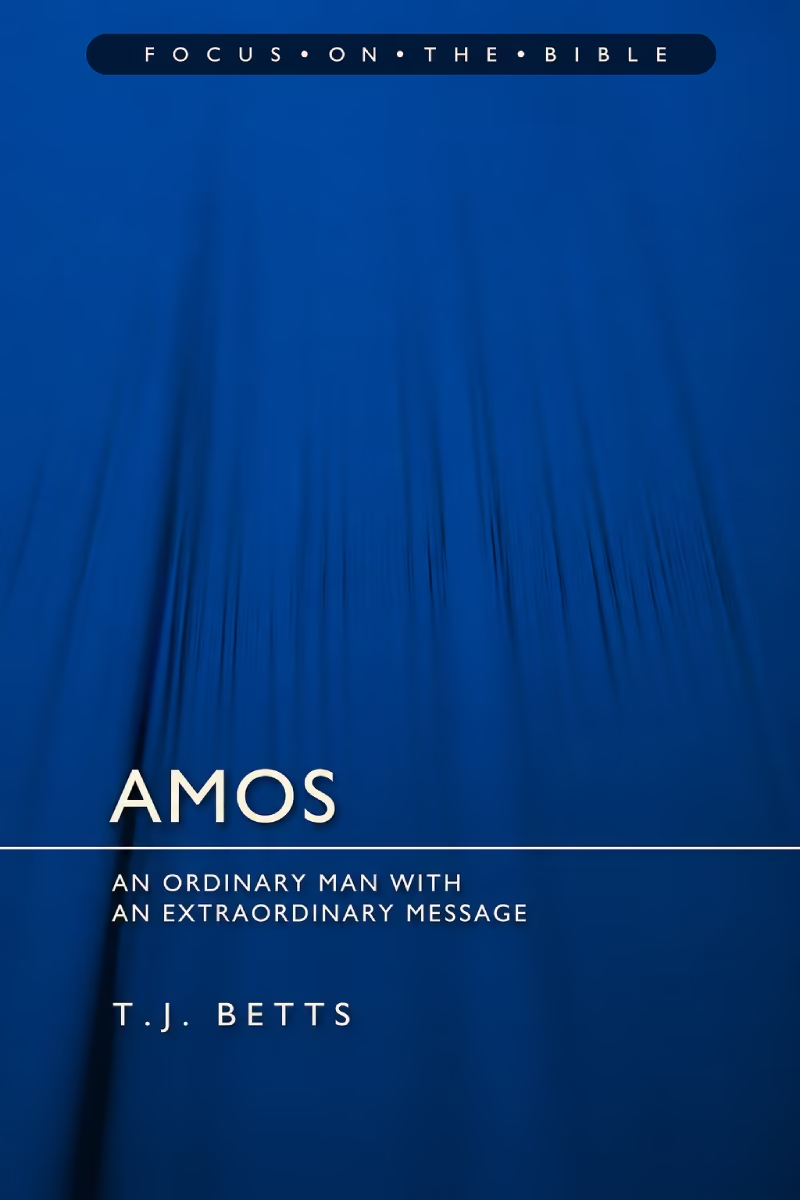
Amos : An Ordinary Man with an Extraordinary Message
T. J. Betts guides readers through Amos’s warning to a prosperous but spiritually complacent Israel. With historical context, verse-by-verse exposition, and practical application, he traces God’s justice, covenant responsibility, empty worship, judgment, repentance, the famine of God’s Word, and the promised restoration of Israel through the Messiah.
Available Instantly
About This Book
T. J. Betts’s Amos: An Ordinary Man with an Extraordinary Message is a verse-by-verse exposition of the prophecy of Amos that combines historical background, theological interpretation, and direct application to contemporary Christian life. Betts presents Amos as an unlikely messenger called by God from ordinary work in Judah to confront the prosperous northern kingdom of Israel. The book explains both what Amos’s message meant in its eighth-century setting and why the same moral and spiritual issues remain searching for readers today.
A central theme is the relationship between privilege and responsibility. Israel enjoyed covenant blessings, economic prosperity, military success, and intense religious activity, but Betts shows that these advantages had produced dangerous assumptions about divine favor. The people treated past grace as a guarantee of present security while living in disobedience. Amos therefore exposes spiritual complacency, self-centeredness, self-deception, self-reliance, and entitlement. Betts applies this pattern to readers who may mistake outward success, religious activity, or inherited spiritual privilege for evidence that their lives are pleasing to God.
Justice and righteousness stand near the heart of the commentary. The opening oracles against the nations condemn violence, exploitation, contempt, broken commitments, and the treatment of people as objects for profit. When Amos turns to Israel, the same standard becomes even more searching because greater blessing brings greater accountability. Betts emphasizes the oppression and neglect of others, especially the weak and poor, and the contradiction between mistreating people and claiming to worship God faithfully. The book therefore addresses the question of what genuine worship requires in daily relationships and why religious observance cannot compensate for injustice.
God’s judgment is another governing subject. Betts traces the certainty, sovereignty, and impartiality of divine judgment through Amos’s warnings, visions, and declarations. Israel’s confidence in the Day of the Lord is overturned: the day they expected to mean triumph and deliverance would instead expose their unfaithfulness. Yet Betts also treats the announcement of judgment as an act of grace because God warns before he acts and calls people to respond. The repeated summons to seek the Lord, seek good, and live gives the prophecy a strong call to repentance rather than reducing it to a catalogue of doom.
The commentary also stresses the authority and necessity of God’s Word. Christian Focus highlights Amos’s image of a famine, not of food, but of hearing the words of the Lord in Amos 8:11–12. Betts uses this to remind readers that disregard for God’s message eventually leads to the terrible consequence of no longer hearing it. Amos himself illustrates the opposite response: an ordinary man becomes God’s messenger because divine calling and the authoritative Word, not status or formal prestige, give him his commission.
The final movement of Amos prevents judgment from being the last word. Betts treats Amos 9:11–15 as a promise that God will restore his people when the fallen booth of David is repaired, connecting that restoration with the coming Messiah. The prophecy therefore moves from accountability and judgment to hope grounded in God’s future action. Throughout the book, Betts helps pastors, teachers, and ordinary readers understand how Amos speaks to questions of injustice, false security, empty worship, repentance, spiritual complacency, the authority of Scripture, and hope after judgment.
Book Details

Reading Fit
STUDY LEVEL
Fundamental, Intermediate
STUDY SCOPE
Individual Book, Old Testament
BOOKS INCLUDED

Edition & Format
PUBLISHED
September 20, 2011
AVAILABLE FORMATS
paperback
LENGTH
208 pages

Topics Covered
You Might Also Like