
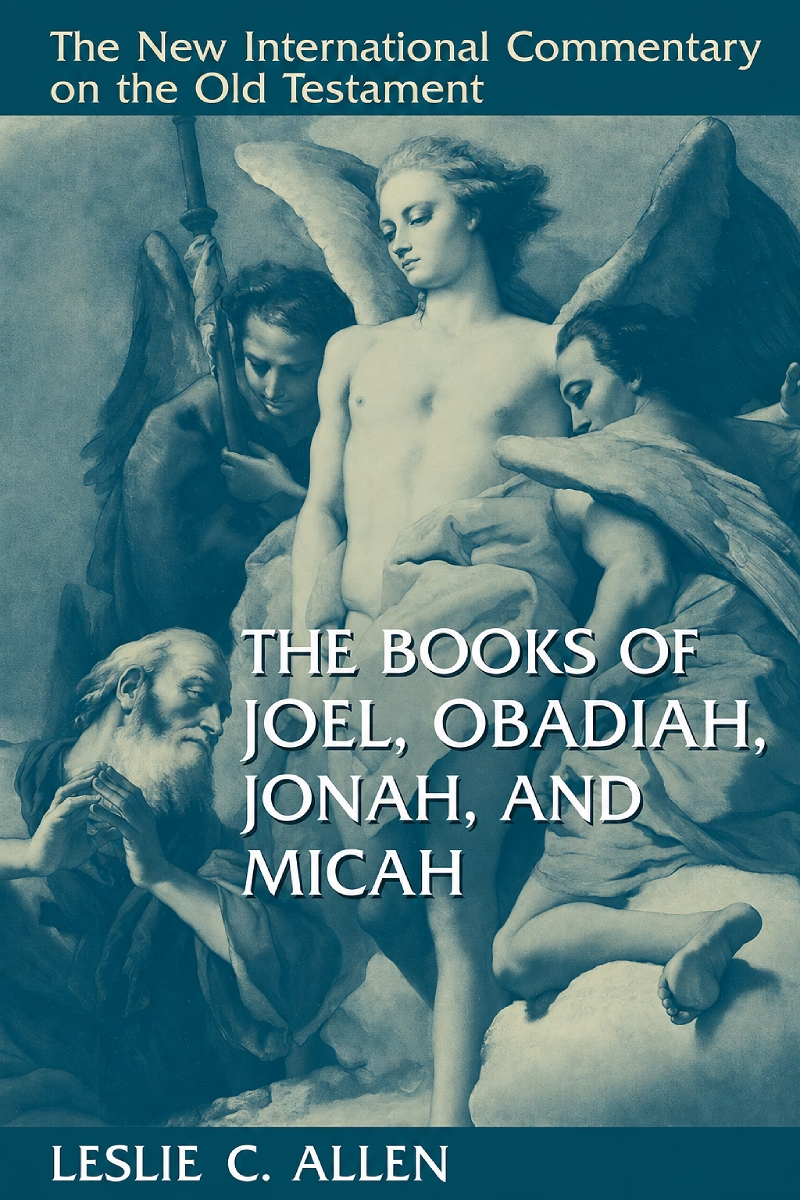
The Books of Joel, Obadiah, Jonah, and Micah
Leslie C. Allen provides a full scholarly exposition of Joel, Obadiah, Jonah, and Micah, reconstructing their historical settings while tracing prophetic judgment, repentance, mercy, social righteousness, the Day of the Lord, the Spirit, and future hope. Micah receives especially extensive treatment, with shared prophetic forms and motifs illuminated across all four books.
Available Instantly
About This Book
Leslie C. Allen’s commentary provides sustained exposition of four Minor Prophets—Joel, Obadiah, Jonah, and Micah—through substantial introductions, the author’s own translations, and detailed historical, literary, and theological commentary. Allen reconstructs the settings in which the prophetic messages were first heard and then considers their significance for Christian readers. Micah receives the most extensive treatment and functions as a major point of comparison for prophetic forms and motifs that also appear in Joel, Obadiah, and Jonah.
In Joel, Allen identifies the Day of Yahweh as the theme that dominates and unifies the book. Joel 1:2–2:17 moves from devastating locust plague and national lament to the summons to return to God in repentance before divine judgment. The prophet’s call involves priests, worship, fasting, prayer, and the whole community. Joel 2:18–27 answers judgment with restoration and renewed blessing. Joel 2:28–32 then announces the outpouring of God’s Spirit and salvation amid cosmic signs, while Joel 3 turns to the judgment of the nations and the future security of Judah and Jerusalem. Allen therefore connects catastrophe, repentance, divine pity, the Day of the Lord, the Spirit, judgment, and restoration within Joel’s prophetic theology.
Obadiah concentrates the prophetic message on Edom. Allen explains the historical hostility behind the oracle, Edom’s pride and violence, and the reversal announced by the Day of the Lord. Judgment on Edom broadens into the larger theme of God’s judgment among the nations and the vindication of his people. The short book consequently contributes significantly to the volume’s treatment of prophetic justice, national accountability, and the Day of the Lord.
Jonah is studied as a prophetic narrative centered on a reluctant messenger, Nineveh’s response, and the freedom of God to show compassion. Allen attends to the book’s literary shape as well as its theological tensions: prophetic commission and flight, deliverance from death, repentance in Nineveh, Jonah’s anger, and God’s final question concerning mercy toward a great foreign city. The commentary helps readers ask why God shows compassion to outsiders, how repentance relates to announced judgment, and why the prophet himself struggles with divine mercy.
Micah receives the fullest treatment. Allen follows its recurring movement between judgment and hope, its indictments of corrupt leadership and social wrongdoing, its concern for justice, and its promises of restoration. The commentary treats judgment on Samaria and Jerusalem, the failures of rulers and religious leaders, the future exaltation of Zion, the promised ruler associated with Bethlehem in Micah 5, the covenant-lawsuit form, and the ethical demand summarized in Micah 6:8. Social righteousness is not reduced to a modern slogan; it is located within prophetic accusations concerning exploitation, leadership, worship, covenant responsibility, and God’s own requirements.
Across all four prophets Allen gives careful attention to literary forms, prophetic motifs, Hebrew language, historical questions, and the relationship between judgment and salvation. The same prophetic patterns recur in different settings: human pride meets divine judgment, disaster calls for repentance, God may restore after judgment, nations stand accountable before him, and hope reaches beyond immediate crisis. Readers searching for the Minor Prophets, the Day of the Lord, judgment of the nations, prophetic calls to social righteousness, repentance, God’s compassion, or the outpouring of the Spirit will find those subjects developed through direct exegesis rather than detached topical discussion.
The volume is especially useful for understanding how four very different prophetic books speak to recurring spiritual questions: How should God’s people respond to calamity and sin? Why does God judge both his people and the nations? Can announced judgment give way to mercy after repentance? What does God require in public and private righteousness? How does prophetic hope move from immediate restoration toward the future rule and saving action of God? Allen’s treatment allows those questions to emerge from the texts themselves while preserving the distinctive message of Joel, Obadiah, Jonah, and Micah.
Book Details

Reading Fit
STUDY LEVEL
Advanced, Intermediate
STUDY SCOPE
Individual Book, Old Testament
BOOKS INCLUDED

Edition & Format
PUBLISHED
April 18, 2024
AVAILABLE FORMATS
paperback, hardcover
LENGTH
427 pages

Topics Covered
You Might Also Like