
A Series of Special Lectures on the Revelation
J. A. Seiss expounds Revelation as the unveiling of Jesus Christ and the prophetic disclosure of his coming triumph. Moving through the churches, seals, trumpets, beasts, Babylon, Christ’s return, the Millennium, final judgment, and New Jerusalem, the lectures present a detailed futurist reading that joins prophecy with watchfulness, endurance, and hope.
Available Instantly
About This Book
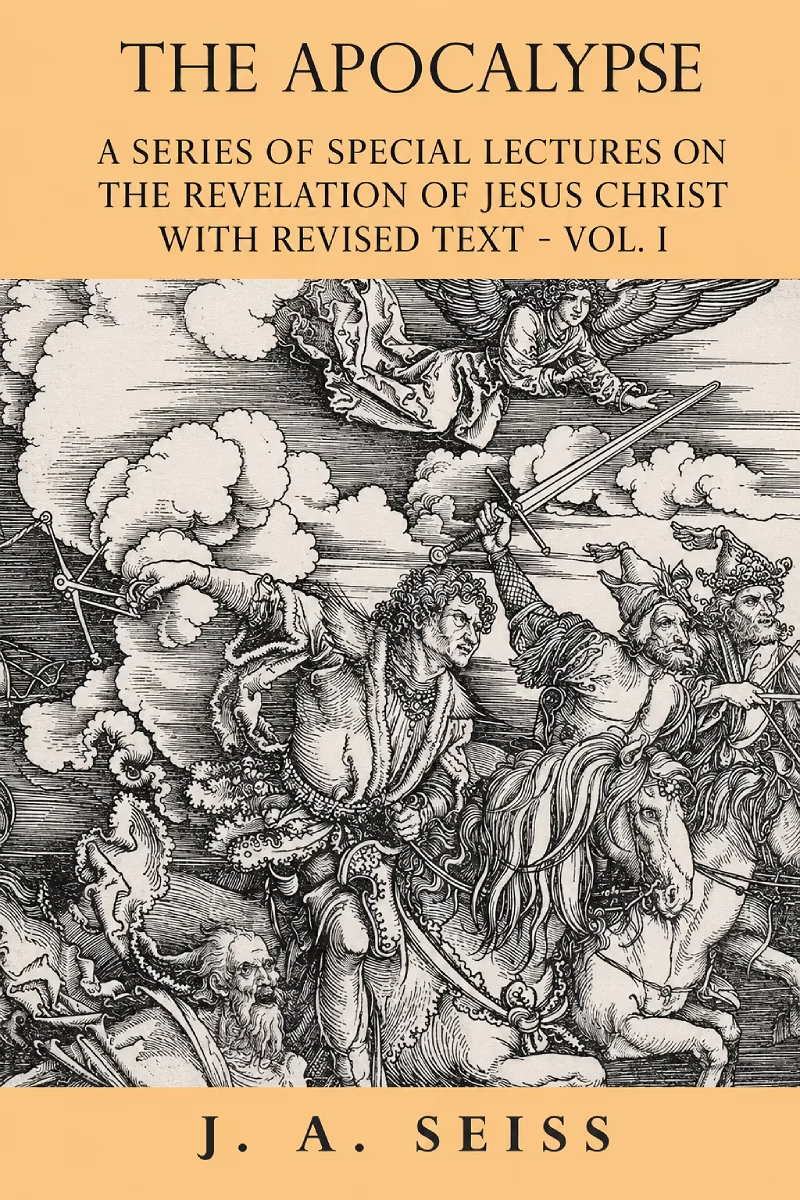
J. A. Seiss’s A Series of Special Lectures on the Revelation, historically published as The Apocalypse, is a sustained exposition of the book of Revelation. Seiss treats the Apocalypse as a unified prophetic disclosure centered on Jesus Christ: not merely a collection of disasters or symbols, but an unveiling of the risen Lord, his future appearing, his judgments, his kingdom, and the final consummation of redemption. The lectures proceed through Revelation in sequence and employ a consistently futurist interpretation of its major prophetic visions.
The opening lectures establish Christ as the great subject of the book and examine Revelation 1, the character of the Apocalypse, and the vision of the glorified Son of Man. Revelation 2–3 is then treated through the seven churches of Asia. Seiss discusses their historical messages and also gives them prophetic significance in relation to the course and completion of the church age. These chapters contribute to his practical emphasis on hearing Christ’s word, overcoming, watchfulness, and readiness.
From Revelation 4 onward, the lectures enter the heavenly throne scene and the sealed book. Seiss follows the opening of the seven seals through conquest, war, famine, death, persecution, cosmic disturbance, the sealing of the 144,000, and the great multitude. The seven trumpets of Revelation 8–11 continue the judgment sequence, including the prayers of the saints, the abyss, the mighty angel, the measuring of the temple, the holy city, the two witnesses, their death and resurrection, and the seventh trumpet. Israel, Jerusalem, and Jewish expectation receive recurring attention within this prophetic framework.
Revelation 12–13 receives extended treatment. The woman, dragon, male child, war in heaven, Satan’s opposition, the beast, Antichrist, and the false prophet are interpreted as parts of an end-time conflict between Christ’s rule and counterfeit powers. Seiss develops the activity of Satan and the deceptive religious and political system associated with the beasts, including miraculous signs, worship, and the mark of the beast. These lectures give the work substantial relevance to searches concerning spiritual conflict, end-time deception, Antichrist, and the relationship between Satanic opposition and the return of Christ.
The judgments intensify through the harvest and the seven bowls of wrath. Seiss then devotes multiple lectures to Great Babylon in Revelation 17–18, its character, judgment, and place in the prophetic drama. Revelation 19 brings the marriage of the Lamb, Christ’s visible appearing, Armageddon, and the defeat of the beast and false prophet. Christ’s Second Coming is therefore not an isolated subject but a major structural goal toward which the preceding visions move.
Revelation 20 is treated through the binding of Satan, the enthronement of the saints, the first resurrection, the thousand-year reign, Satan’s final release, Gog and Magog, and the great white throne judgment. Seiss’s millennial interpretation is a major part of his prophetic system. Revelation 21–22 then opens the eternal state: the new heaven and new earth, the New Jerusalem, God’s dwelling with his people, and the everlasting reign. Several lectures are devoted to the holy city itself, making the New Jerusalem and final renewed creation substantial subjects rather than brief closing references.
Throughout the work, Seiss compares Revelation with other prophetic portions of Scripture, especially Daniel, and uses passages such as Matthew 24 and 1 Thessalonians 4 in developing his eschatological framework. His scheme distinguishes the present church period, a coming period of judgment, Christ’s manifestation and defeat of Antichrist, the millennial kingdom, final rebellion and judgment, and the eternal state. The book thus addresses readers asking how the visions of Revelation fit together, what the seals, trumpets, beasts, and Babylon represent, how Revelation portrays Christ’s return and kingdom, what happens in Revelation 20 and 21–22, and why the book repeatedly calls believers to vigilance, endurance, and readiness for Christ.
Book Details

Reading Fit
STUDY LEVEL
Advanced, Intermediate
STUDY SCOPE
Individual Book, New Testament
BOOKS INCLUDED

Edition & Format
PUBLISHED
March 6, 2018
AVAILABLE FORMATS
paperback, hardcover, kindle
LENGTH
459 pages

Topics Covered
You Might Also Like