
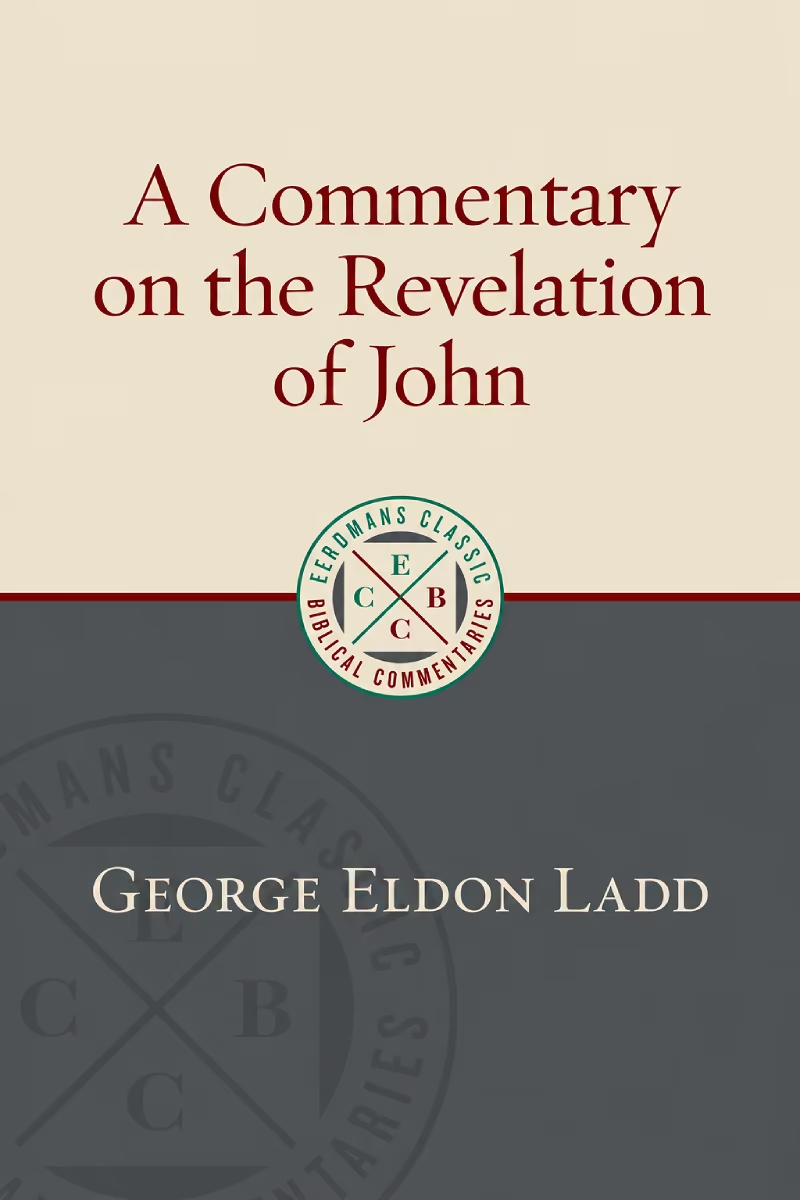
A Commentary on the Revelation of John
George Eldon Ladd offers a verse-by-verse exposition of Revelation that combines historical setting, apocalyptic symbolism, Old Testament background, and future prophecy. He traces the seven churches, seals, trumpets, beasts, Babylon, Christ’s coming, resurrection, kingdom, and final consummation, explaining Revelation as a message of faithful witness and ultimate divine victory.
Available Instantly
About This Book
George Eldon Ladd’s A Commentary on the Revelation of John is a sustained verse-by-verse exposition of the book of Revelation. Written for serious readers without making technical discussion the controlling feature, it combines attention to the first-century setting, apocalyptic literature, Old Testament background, symbolic imagery, and the book’s future prophetic dimension. Ladd begins with questions of authorship, date, historical setting, structure, and major approaches to interpretation, then follows the Apocalypse through all twenty-two chapters.
The commentary gives full treatment to Revelation 1 and the vision of the risen Christ, followed by the letters to the seven churches in Revelation 2–3. These letters establish a recurring practical concern: churches are called to faithful witness, perseverance, repentance, and victory in a world where loyalty to Christ is tested. Ladd treats the Apocalypse as prophecy that speaks beyond its first-century circumstances while still taking those circumstances seriously.
Revelation 4–5 moves to the heavenly throne and the sealed scroll, where God’s sovereignty and the Lamb’s redemptive authority frame the judgments that follow. Ladd then traces the seals, trumpets, and interludes, including the sealed people of God, the two witnesses, and the developing conflict between divine rule and hostile powers. He gives substantial attention to the symbolic and theological meaning of the dragon, the beasts, persecution, martyrdom, worship, and the perseverance of the saints.
The commentary’s treatment of Revelation 12–18 develops the cosmic conflict involving Satan, the beastly powers, false worship, and Babylon. Ladd interprets these visions within Revelation’s larger theology of evil, judgment, and faithful discipleship. Babylon’s fall is not an isolated symbol but part of the divine overthrow of powers opposed to God. The book therefore has strong relevance for readers searching for the meaning of Revelation’s beasts, Satanic opposition, the Antichrist, Babylon, tribulation, and the church’s faithfulness under pressure.
Revelation 19–20 brings the coming of Christ, the defeat of hostile powers, resurrection, judgment, and the messianic reign into focus. Ladd’s premillennial reading treats the second coming as the climactic intervention of Christ in history and understands the millennial kingdom as a real stage within the consummation of God’s redemptive purpose. The closing chapters, Revelation 21–22, present the new creation and New Jerusalem as the final fulfillment of God’s dwelling with His people.
Throughout the commentary, Ladd compares Revelation with earlier Scripture, especially Old Testament prophetic imagery and New Testament teaching about the kingdom and the coming of Christ. His approach helps readers see how Revelation’s symbols function within the Bible’s broader redemptive story rather than as detached puzzles.
This commentary is especially valuable for readers seeking a substantial study of Revelation itself: how its symbolism works, how its visions relate to the first-century church and future fulfillment, what it teaches about Christ’s return and kingdom, why the saints are called to endure, and how judgment, resurrection, new creation, and the New Jerusalem complete the biblical story.
Ladd also pays attention to competing interpretive approaches without allowing methodology to overshadow the text itself. That makes the commentary useful to readers trying to understand why Revelation combines first-century historical reference, symbolic vision, theological proclamation, and future expectation in one book.
Book Details

Reading Fit
STUDY LEVEL
Advanced, Intermediate
STUDY SCOPE
Individual Book, New Testament
BOOKS INCLUDED

Edition & Format
PUBLISHED
September 11, 2018
AVAILABLE FORMATS
paperback, hardcover, kindle
LENGTH
310 pages

Topics Covered
You Might Also Like