
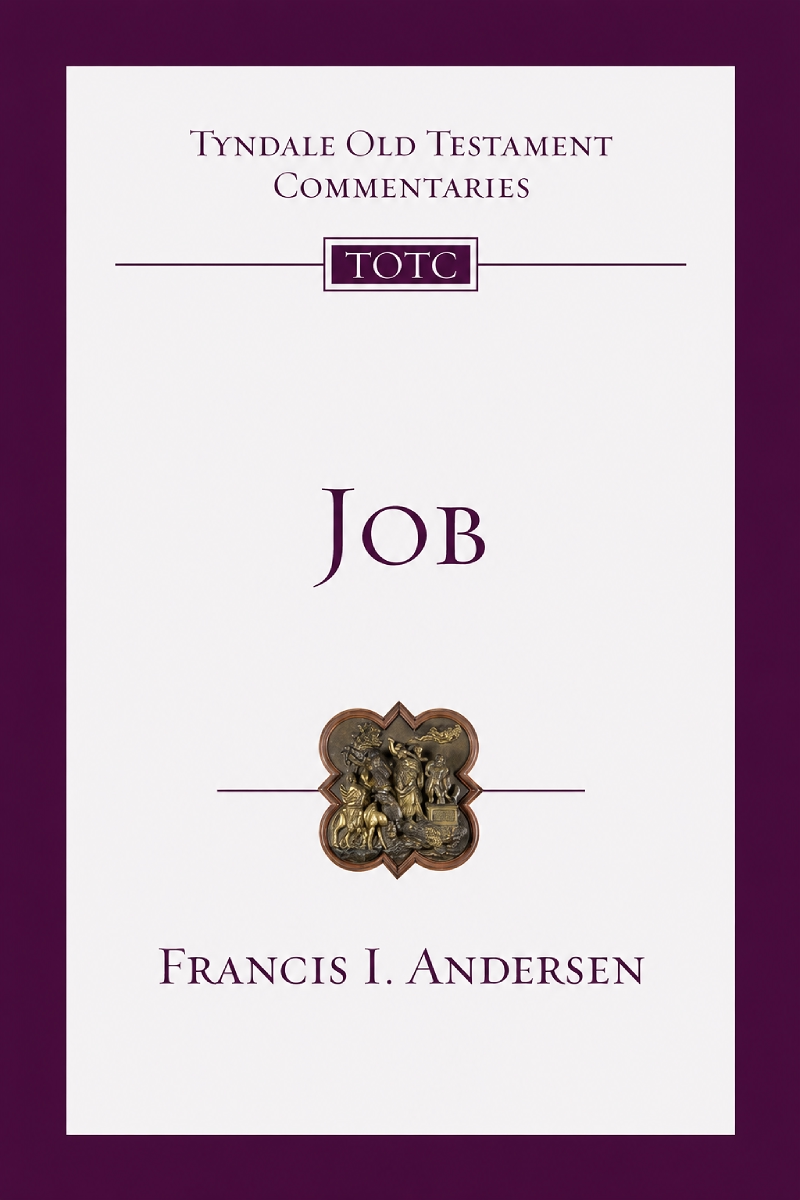
Job: An Introduction and Commentary
Francis I. Andersen guides readers through Job’s anguish, debates, poetry, and encounter with God. His commentary wrestles with innocent suffering, divine justice, faith, wisdom, and human limits, showing how Job’s search for explanation finally opens onto the mystery, sovereignty, greatness, and trustworthy wisdom of God beyond simple formulas about suffering.
Available Instantly
About This Book
Francis I. Andersen’s Job: An Introduction and Commentary is an exegetical study of one of the Bible’s most searching treatments of suffering. Andersen gives substantial attention to the book’s literary design, poetry, language, ancient background, composition, and theological questions, but the governing issue is the agony of a righteous man whose suffering cannot be explained by the simple formula that pain is always punishment for personal sin. The commentary follows Job from catastrophe and bewilderment through debate, protest, divine encounter, and final restoration.
The opening chapters establish the problem. Job is introduced as a righteous man, yet he loses possessions, children, health, and security. The heavenly scene involving Satan shows that the reader knows something Job and his friends do not: Job’s suffering is not the direct result of hidden wickedness. This creates the central tension that drives the book. Why does a faithful person suffer severely? Can God still be trusted when experience appears to contradict ordinary expectations about divine justice?
Andersen carefully follows the long dialogues between Job and his friends. Eliphaz, Bildad, and Zophar defend variations of a retribution principle in which suffering reveals guilt and prosperity confirms righteousness. Job refuses their accusations because he knows that their explanation does not fit his case. His speeches move through grief, lament, protest, longing for vindication, questions about death and Sheol, and a persistent desire to bring his case before God. The commentary helps readers distinguish between Job’s genuine faith and the overreach that sometimes appears in his self-defense.
Wisdom is a major concern throughout the book. Andersen treats Job not as a puzzle solved by one neat proposition but as a profound challenge to human attempts to explain God’s ways completely. Job 28 and the surrounding debates expose the limits of human wisdom, while the speeches of God in Job 38–42 bring that limitation into sharp focus. When the Lord answers from the whirlwind, he does not give Job a detailed explanation of the heavenly causes behind his losses. Instead, he confronts Job with the vastness, complexity, order, and mystery of creation. Human beings who cannot govern the natural world are not in a position to judge the whole moral administration of God.
This climax makes God’s sovereignty and wisdom central to the commentary’s answer to suffering. The book does not deny the reality of anguish, excuse shallow comfort, or teach that every painful event can be traced to a specific sin. It instead dismantles the confidence of Job’s friends and leads Job toward a humbler encounter with the living God. Divine justice is real, but it cannot be reduced to an immediate mechanical system in which every righteous person prospers and every sufferer must be guilty.
Andersen also attends to the spiritual experience inside Job’s speeches: prayer, lament, faith under pressure, longing for an advocate, the desire for vindication, and the tension between questioning God and continuing to address him. Job’s perseverance is not passive resignation. He wrestles, protests, and seeks God even when he cannot understand God.
The commentary therefore addresses enduring reader questions: Why do righteous people suffer? Does suffering always mean God is punishing someone? How should believers respond when familiar explanations fail? Can faith survive unanswered questions? What can human wisdom know about God’s purposes? How do God’s sovereignty and justice relate to painful experience? What does it mean to trust God without receiving a complete explanation?
For readers studying Job or facing the intellectual and spiritual problem of suffering, Andersen presents the book as a sustained encounter with human anguish, inadequate theology, limited wisdom, and the overwhelming mystery and greatness of God.
Book Details

Reading Fit
STUDY LEVEL
Advanced, Intermediate
STUDY SCOPE
Individual Book, Old Testament
BOOKS INCLUDED

Edition & Format
PUBLISHED
March 19, 2015
AVAILABLE FORMATS
paperback, kindle
LENGTH
312 pages

Topics Covered
You Might Also Like