
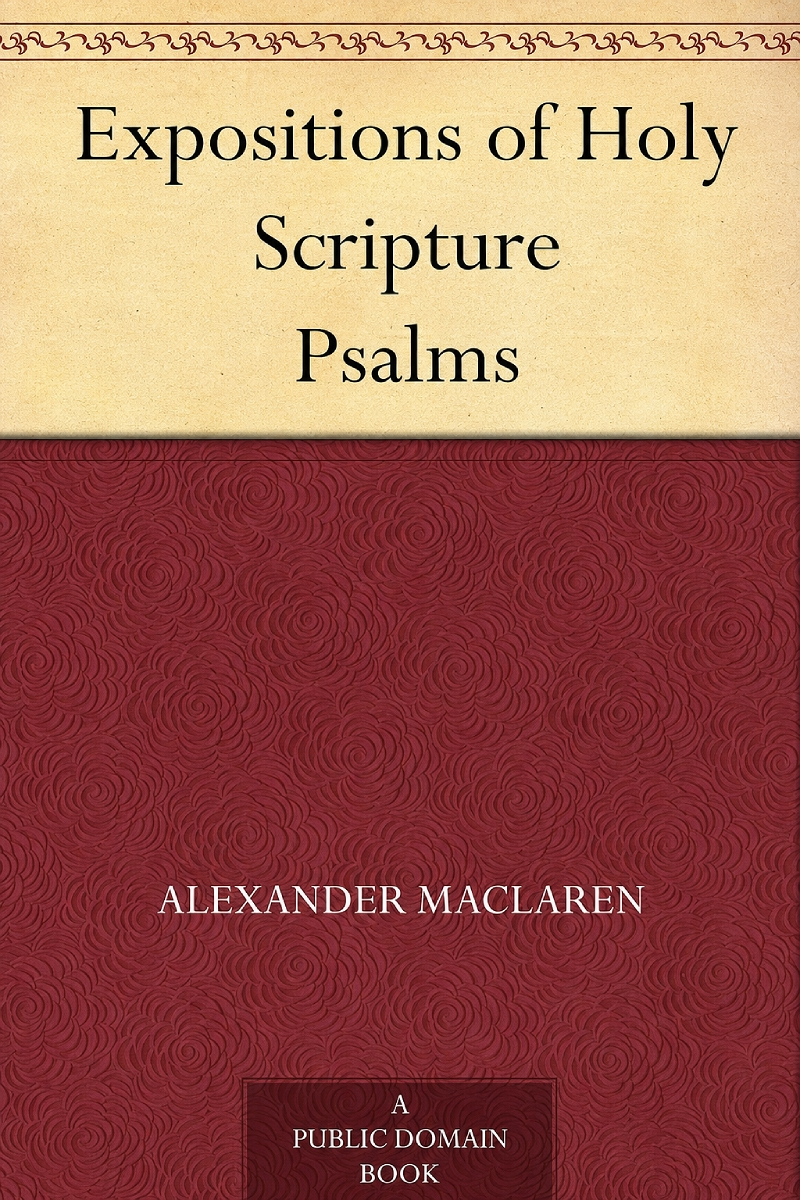
Expositions of Holy Scripture: Psalms
Alexander Maclaren’s Psalms expositions move through trust, prayer, forgiveness, worship, fear and faith, God as shepherd and refuge, spiritual thirst, deliverance, the brevity of life, pilgrimage, the Word of God, purity, and hope. Selected sermons from across the Psalter turn its poetry into practical teaching on knowing God and living before Him.
Available Instantly
About This Book
Expositions of Holy Scripture: Psalms gathers Alexander Maclaren’s selected sermons from across the Psalter, arranged in two large divisions covering Psalms 1–49 and Psalms 51–145. The work is not a continuous verse-by-verse commentary on every psalm. Instead, Maclaren chooses passages whose imagery, prayer, doctrine, and experience allow him to develop the spiritual life reflected throughout the Psalms.
The early expositions establish several themes that recur through the entire volume. Blessedness, delight in God’s law, refuge, praise, and trust appear alongside warnings about hidden and open sin. Psalm 16 becomes a setting for God as the believer’s true treasure and for the joy of living consciously in His presence. Psalm 19 supplies teaching on secret faults and deliberate sins, while Psalm 22, Psalm 23, and Psalm 24 move through sacrifice, shepherding care, worship, and the presence of God.
Prayer is one of the volume’s strongest recurring subjects. Maclaren expounds pleas for pardon, calls to seek God’s face, surrender into God’s hands, cries for guidance, and petitions arising from fear, need, and longing. Prayer is not treated as a separate technique but as the language of a life turning repeatedly toward God. The later portion of the volume includes direct expositions of short prayer petitions, the incense of prayer, and what Maclaren calls the prayer of prayers.
Faith and trust are equally prominent. The Psalms supply repeated settings in which fear is answered by confidence in God, instability by a fixed heart, and trouble by refuge in the divine character. Maclaren returns to God as shelter, burden-bearer, guide, strength, shepherd, defender, and the One whose presence gives peace. The believer’s security is repeatedly located not in favorable circumstances but in the character and nearness of God.
The volume also gives sustained attention to sin, forgiveness, and purity. Psalm 32 is used to distinguish different aspects of sin and forgiveness. Psalm 51 receives two major expositions, one on David’s cry for pardon and another on his cry for purity. Other sermons treat secret sin, open transgression, sin overcoming and overcome, forgiveness and retribution, and the cleansing of a believer’s way. Together these passages make confession, pardon, inward cleansing, and practical holiness important recurring concerns.
Several Psalms become concentrated centers of direct exposition. Psalm 23 is developed through the image of the Lord as shepherd. Psalm 51 is treated as a major prayer of repentance and renewal. Psalm 84 receives several sermons on longing for God’s dwelling, pilgrimage, and trust. Psalm 119 supplies an extended cluster of expositions on the Word of God, obedience, spiritual direction, the hidden and visible life, and the believer’s path through the world.
Worship and desire for God run through the collection. Maclaren repeatedly explores thirst for God, nearness to God, delight in His presence, praise, the temple, the city of God, and the relationship between worship and daily life. The Psalms’ emotional range allows him to address discouragement, mortality, waiting, sorrow, hope, and joy without separating those experiences from faith.
The book also makes selective Christ-centered connections. Psalms concerning sacrifice, kingship, priesthood, and the righteous sufferer are related to the fuller Christian revelation of Jesus Christ, but the dominant method of the volume remains practical exposition of the Psalter rather than a systematic study of Messianic prophecy.
Maclaren’s treatment of the Psalms is therefore especially useful for readers asking how to pray from Scripture, how faith responds to fear, how to seek forgiveness and cleansing, how to trust God in trouble, what Psalm 23 or Psalm 51 means, how Psalm 119 shapes life through the Word, and how the Psalms teach believers to bring desire, sorrow, sin, hope, and praise into the presence of God.
Book Details

Reading Fit
STUDY LEVEL
Intermediate
STUDY SCOPE
Individual Book, Old Testament
BOOKS INCLUDED

Edition & Format
PUBLISHED
May 12, 2012
AVAILABLE FORMATS
paperback, hardcover, kindle
LENGTH
622 pages

Topics Covered
You Might Also Like