
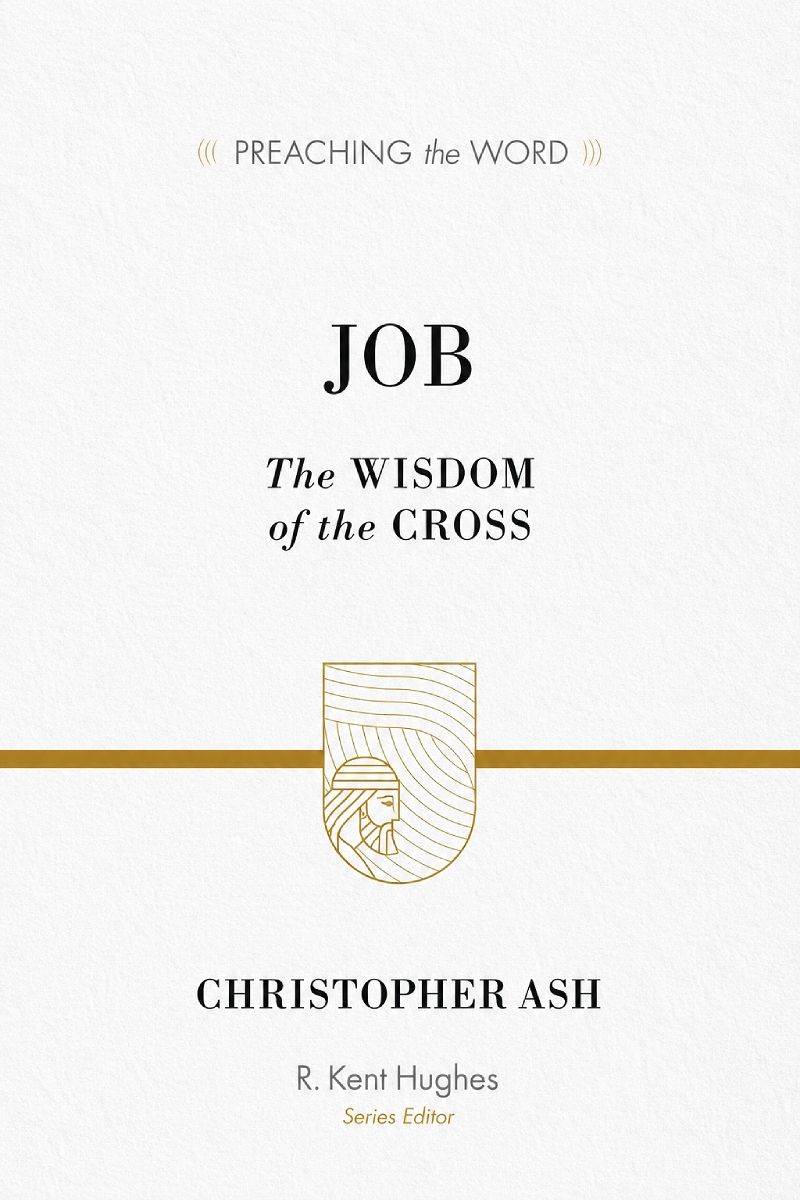
Job: The Wisdom of the Cross
Christopher Ash opens Job as a guide to trusting God when suffering seems undeserved and inexplicable. Reading Job’s losses, questions, friends, and final restoration through the wisdom of the cross, he shows how God’s sovereignty, justice, grace, and purposes in suffering find their fullest light in Jesus Christ.
Available Instantly
About This Book
Christopher Ash’s Job: The Wisdom of the Cross is a sustained exposition of the book of Job that asks how believers can understand and endure suffering that appears undeserved, bewildering, and even God-forsaken. Ash does not treat Job merely as a general study of pain. He follows the argument and drama of the whole biblical book, from the heavenly testing in Job 1–2 through Job’s lament, the speeches of his friends, the wisdom poem of Job 28, Elihu’s intervention, the Lord’s speeches in Job 38–41, and the restoration of Job in chapter 42. Throughout, he emphasizes that the deepest questions in Job concern God’s character, wisdom, justice, sovereignty, and purposes in the suffering of one who fears him.
A governing emphasis is the reality of innocent or undeserved suffering. Job’s friends repeatedly assume a simple moral system in which suffering must be direct punishment for personal sin, but Ash shows why that system cannot account for Job. The opening chapters establish Job as a genuine worshiper whose trials arise precisely in the context of his faithfulness. This makes the book especially relevant to readers asking why faithful Christians suffer, whether suffering means God is against them, why God does not explain himself, and how a believer can continue trusting God when circumstances seem to contradict his goodness.
Ash gives sustained attention to the wisdom of God. Job 28 becomes an important turning point because human beings cannot discover the hidden moral architecture of the universe by their own investigation. The Lord’s speeches then confront Job with the Creator’s knowledge, power, freedom, and wise government of a world far larger than Job can see. The answer is not a tidy explanation of every painful event but a deeper encounter with the God whose wisdom exceeds human understanding. This makes the commentary a substantial resource on divine sovereignty, providence, the justice of God, and the problem of evil.
The distinctive feature of Ash’s exposition is its deliberately Christ-centered reading of Job. He repeatedly traces Job as the righteous sufferer forward to Jesus Christ, the supremely innocent sufferer. The cross becomes the decisive answer to the friends’ assumption that the innocent never perish and the decisive assurance that a believer’s suffering is not divine punishment for sins already borne by Christ. Ash therefore develops the relationship between Job’s sufferings, the sufferings of Christ, and the sufferings of Christ’s people. Job’s longing for vindication, resurrection, a mediator, and a final setting-right of the world is read within the larger biblical movement toward Christ’s death and resurrection and the believer’s final hope.
This cross-centered approach also shapes the commentary’s pastoral application. Ash addresses how Christians should speak to sufferers, why simplistic explanations can be cruel, how to weep with those who weep, how faith is tested, and how hope can survive when God feels absent. He distinguishes biblical wisdom from a prosperity-style formula that promises immediate restoration when the right religious steps are taken. He also shows that final resolution lies beyond the present moment: Job’s end anticipates the larger Christian hope that God’s purposes will finally be seen and vindicated.
The book therefore serves readers studying Job, pastors preparing to preach it, Christians facing severe trials, and those helping others through grief, injustice, loss, unanswered questions, or spiritual darkness. Its central search intent is not simply “What does Job mean?” but also “Why does God allow faithful people to suffer?”, “Is God still for me when life collapses?”, “How should Christians respond to unexplained suffering?”, and “How does the cross of Christ change the way suffering is understood?”
Book Details

Reading Fit
STUDY LEVEL
Intermediate
STUDY SCOPE
Individual Book, Old Testament
BOOKS INCLUDED

Edition & Format
PUBLISHED
May 31, 2014
AVAILABLE FORMATS
hardcover, kindle
LENGTH
498 pages

Topics Covered
You Might Also Like