

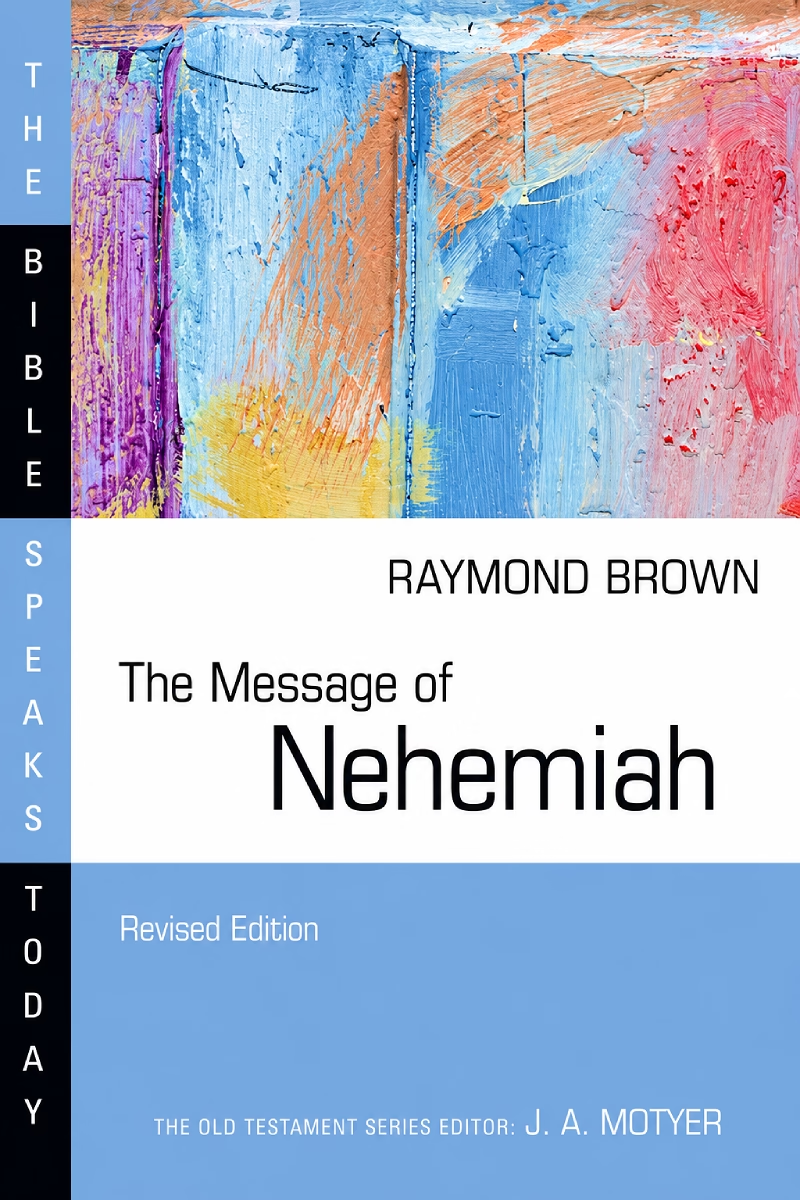
The Message of Nehemiah
Raymond Brown presents Nehemiah as a searching study in spiritual renewal and resilient leadership. The rebuilt walls are only the beginning: prayer, Scripture, worship, covenant commitment, compassion, opposition, and practical reform all shape the restoration of a community learning to honor God again in public life, work, home, and worship.
Available Instantly
About This Book
Raymond Brown’s The Message of Nehemiah is a sustained exposition of Nehemiah as a book about starting again under God. Brown follows the movement from the rebuilding of Jerusalem’s walls in Nehemiah 1–7 to the reforming of the community in Nehemiah 8–13, showing that physical reconstruction is only the visible beginning of a deeper spiritual renewal. The book’s dominant themes include Nehemiah’s understanding of God, his life of prayer, his passion for Scripture, and his example of purposeful, resilient leadership.
The opening chapters show renewal beginning with spiritual preparation rather than activity. In Nehemiah 1, news of Jerusalem’s disgrace drives Nehemiah to grief, confession, worship, and intercession. Prayer is not presented as a ceremonial preface to leadership but as a recurring feature of Nehemiah’s response to crisis, opposition, decision, and responsibility. Readers asking how to seek God in a major task, how to respond to discouraging news, or how prayer relates to practical planning find both dependence and disciplined action held together.
Nehemiah 2–3 develops guidance, strategy, and partnership. Nehemiah assesses the situation carefully, communicates the work, and mobilizes a broad range of people for rebuilding. Brown treats leadership as service carried out under God rather than personal ambition. The work requires vision, realistic planning, shared responsibility, and the ability to encourage others.
Opposition becomes a major test in Nehemiah 4–6. Ridicule, threats, internal pressure, injustice, intimidation, and attempts at distraction reveal the need for courage and discernment. Nehemiah combines prayer with practical safeguards, refuses manipulation, and continues the work. Chapter 5 also shows that success cannot be measured merely by an external project: exploitation within the community must be confronted. Compassion, justice, and integrity are necessary if rebuilding is to reflect the character of God.
The second half of the book turns explicitly to the renewal of the people. Nehemiah 8 centers on the public reading and explanation of God’s Word. Brown emphasizes the community’s hunger for Scripture, attentive listening, understanding, worship, and obedient response. Nehemiah 9 then moves from hearing Scripture to confession and a renewed understanding of God’s character. Israel’s history is retold as a contrast between repeated human unfaithfulness and God’s persistent mercy.
Nehemiah 9:38–10:39 develops covenant commitment in concrete terms. Renewal is not left as general emotion; the people bind themselves to specific patterns of obedience involving worship, family life, economic practice, Sabbath observance, and support of God’s house. Brown’s treatment therefore addresses the practical question of how spiritual renewal becomes visible in daily conduct.
Nehemiah 11–12 deals with the life of the restored city and culminates in worship and dedication. The joy of the Lord is expressed corporately as the people celebrate God’s work. Yet Nehemiah 13 prevents an idealized ending. Returning failures require renewed reform in the temple, marketplace, Sabbath practice, and home. Brown uses these final chapters to show that spiritual reform requires continuing vigilance and that leadership must sometimes confront entrenched compromise.
Throughout the volume, Nehemiah is presented as a servant leader whose effectiveness rests on conviction, prayer, knowledge of God, dependence on Scripture, courage under opposition, compassion toward people, and willingness to act. The exposition speaks naturally to readers facing seasons of rebuilding, institutional or congregational change, discouragement, conflict, moral compromise, and the need to restore biblical priorities.
The book therefore answers questions such as: How does genuine spiritual renewal begin? What does godly leadership look like under pressure? How should prayer, planning, and action work together? How does Scripture reshape a community? How should believers respond to internal injustice and external opposition? Brown’s answer is a pattern of renewal in which God’s Word, prayer, worship, covenant faithfulness, and practical obedience reform not only structures but the life of God’s people.
Book Details

Reading Fit
STUDY LEVEL
Fundamental, Intermediate
STUDY SCOPE
Individual Book, Old Testament
BOOKS INCLUDED

Edition & Format
PUBLISHED
July 19, 2022
AVAILABLE FORMATS
paperback, kindle
LENGTH
289 pages

Topics Covered
You Might Also Like