

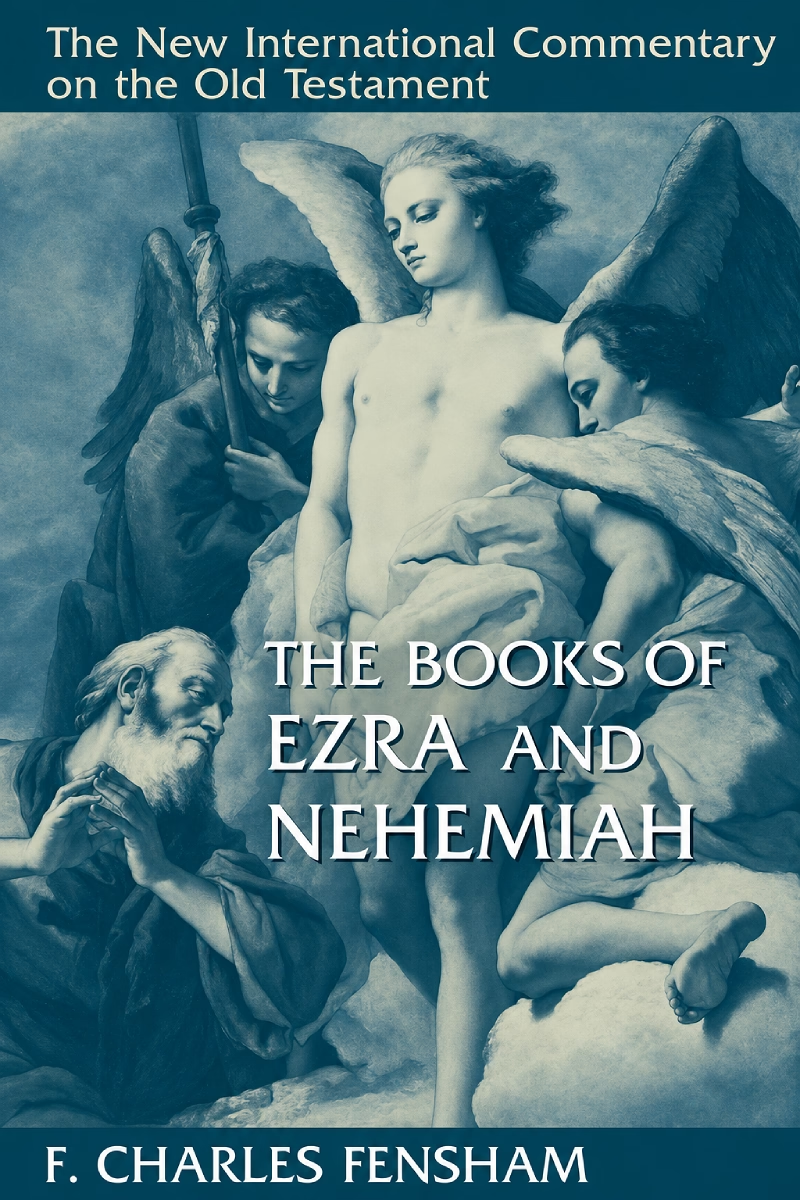
The Books of Ezra and Nehemiah
F. Charles Fensham’s commentary places Ezra and Nehemiah firmly in the Persian period and follows Judah’s postexilic restoration through return, temple rebuilding, Jerusalem’s walls, Torah-centered reform, worship, and covenant renewal. Historical and linguistic detail serves a close reading of how a restored Jewish community was rebuilt after exile.
Available Instantly
About This Book
F. Charles Fensham’s commentary studies Ezra and Nehemiah as the principal biblical witnesses to Judah’s restoration under Persian rule and to the formation of Jewish religious society in the last century of Old Testament history. The volume treats the two books in their literary relationship while following their distinct narratives of return, rebuilding, repopulation, worship, law, and reform. Fensham’s expertise in ancient Near Eastern history gives the Persian period unusual prominence: royal decrees, administrative practices, legal customs, Aramaic documents, imperial policy, and the actions of Cyrus, Darius, and Artaxerxes are repeatedly used to clarify the biblical text.
The first major movement is the return from exile and rebuilding of the temple in Ezra 1–6. Fensham examines Cyrus’s decree, the returnees and their genealogies, restoration of the altar, opposition to rebuilding, the Persian correspondence preserved in Aramaic, and the eventual completion and dedication of the temple. The commentary helps readers understand why the temple stood at the center of restored communal life and how Persian authorization and local resistance fit within the larger story of postexilic restoration.
Ezra 7–10 shifts the focus to Ezra’s return, his commission, the law of God, and religious reform. Fensham treats Ezra as a priestly scribe whose task involves the study, teaching, and practical enforcement of the Torah. The crisis of intermarriage is therefore not handled as an isolated social dispute but within the book’s concern for covenant identity, obedience, and the preservation of a distinct worshiping community. Prayer, confession, repentance, and difficult reform measures reveal the spiritual as well as institutional dimensions of restoration.
Nehemiah brings a further return and the rebuilding of Jerusalem’s walls. Fensham reconstructs Nehemiah’s position in the Persian court, the political circumstances surrounding his mission, the organization of the building work, and the opposition of neighboring leaders. The completed wall is followed by attention to repopulating Jerusalem and ordering the community. The commentary also treats Nehemiah’s leadership in economic, Sabbath, temple, and marriage reforms, showing that physical reconstruction and communal faithfulness belong together.
A major theological and reader-intent thread is the place of God’s law in renewing the restored people. Nehemiah 8–10 receives substantial attention as Ezra reads and explains the law, the people confess sin, remember God’s dealings with Israel, and enter a binding commitment to obey. Covenant renewal, public Scripture, worship, and community reform therefore connect the historical narrative to questions readers still ask: What does spiritual restoration require after failure? How do worship and obedience relate? Why were the temple, Jerusalem, and the Torah so central to postexilic identity?
Fensham also gives serious attention to names, genealogies, priestly and Levitical service, temple support, and the practical organization of the community. These details are interpreted against ancient Near Eastern evidence rather than dismissed as incidental records. The volume repeatedly shows how restoration required continuity with Israel’s past while adapting to life under Persian sovereignty.
The commentary is especially strong for readers seeking the historical setting of Ezra and Nehemiah, the beginnings of Second Temple Judaism, Persian imperial context, the return from Babylonian exile, the rebuilding of the temple and Jerusalem’s walls, Ezra’s Torah-centered reforms, Nehemiah’s administration, and the covenant renewal of the restored community. Its close exegesis and historical reconstruction make the books intelligible as a unified account of a people rebuilding sacred space, civic life, and covenant identity after exile.
Book Details

Reading Fit
STUDY LEVEL
Advanced, Intermediate
STUDY SCOPE
Individual Book, Old Testament
BOOKS INCLUDED

Edition & Format
PUBLISHED
February 24, 1983
AVAILABLE FORMATS
hardcover, kindle
LENGTH
283 pages

Topics Covered
You Might Also Like