

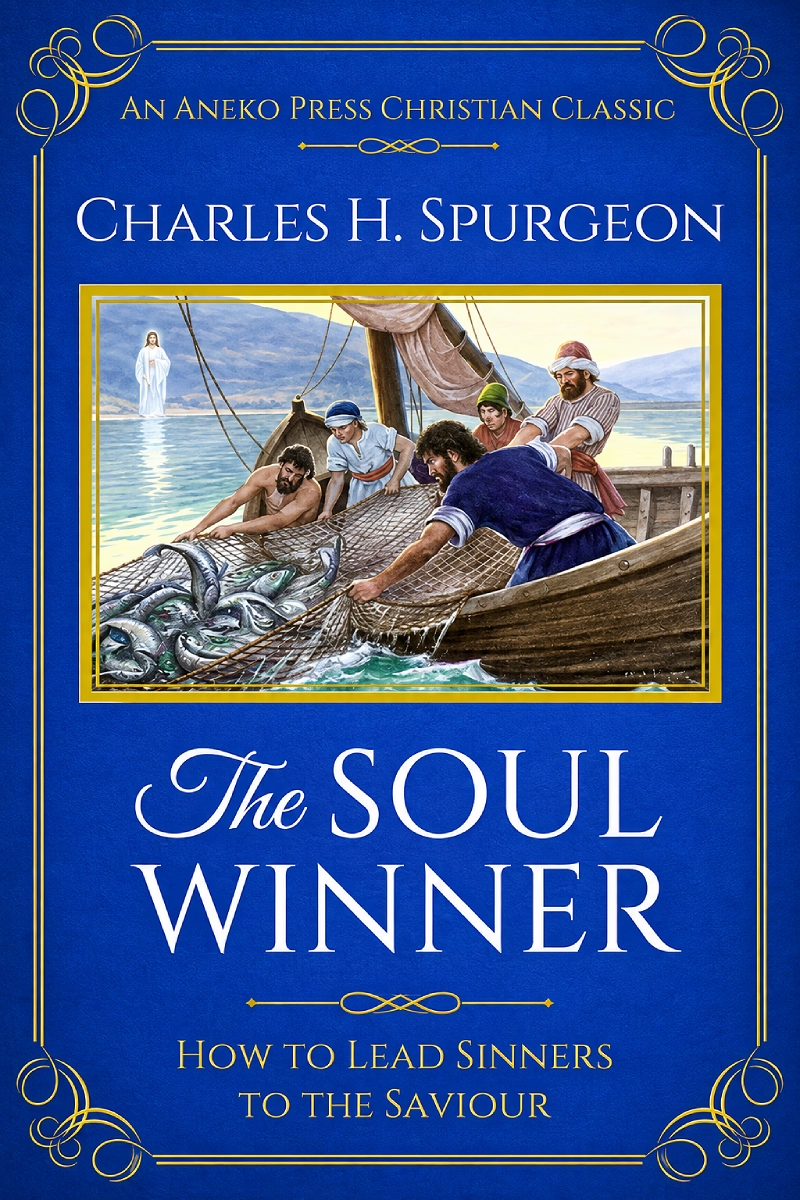
The Soul Winner
Spurgeon’s classic manual on soul winning explains what genuine conversion is and how Christians can labor wisely for it. He treats conviction of sin, saving faith, regeneration, holiness, prayer, the Holy Spirit’s power, evangelistic preaching, obstacles, perseverance, church involvement, and the spiritual character required to lead people to Christ.
Available Instantly
About This Book
The Soul Winner is Charles Spurgeon’s practical and theological manual on evangelism—what he characteristically calls soul winning. Its central question is not simply how to persuade people to make a religious decision, but what it actually means to win a soul to Christ and how a Christian worker can labor toward genuine conversion. Spurgeon treats soul winning as the chief business of Christian ministry and, more broadly, as a calling that belongs to ordinary believers as well as pastors and preachers.
The book begins by defining the goal. Genuine soul winning means bringing people to Christ, not transferring members between churches or producing temporary excitement. Spurgeon describes conversion through instruction in gospel truth, conviction of sin, repentance, simple faith in Jesus Christ, and the new birth. Conviction is not valued as emotional distress for its own sake; it is evidence that sin has been seen as sin and that the Holy Spirit is working in the conscience. Saving faith, in turn, rests in Christ for complete salvation rather than partly in Christ and partly in self. Regeneration is therefore central to Spurgeon’s understanding of evangelistic fruit: the soul winner seeks spiritual life, not superficial profession.
A large part of the book asks what kind of person God uses in this work. The chapters on qualifications “Godward” and “manward,” living faith, holiness of character, and being an example insist that effective evangelism cannot be separated from the spiritual condition of the evangelist. Dependence on God, earnestness, humility, love for people, personal holiness, faith, and prayer belong to the work itself. The Holy Spirit is indispensable because only divine power can give spiritual life. Spurgeon’s extended use of the raising of the Shunammite woman’s son in 2 Kings 4 turns the image of death and resurrection into a lesson for Christian workers: methods and instruments cannot replace the life-giving work of God.
Spurgeon also gives sustained attention to evangelistic communication. He discusses the kinds of sermons most likely to convert hearers, the need to remove needless distractions, and the importance of clear, simple, saving truth. Gospel preaching should teach people what sin is, why salvation is needed, who Christ is, and what faith and repentance mean. Proverbs 11:30—“he that winneth souls is wise”—supplies a governing biblical text for Spurgeon’s understanding of the work: zeal must be joined to wisdom in choosing means suited to the spiritual good of people.
The later chapters broaden the focus from the individual worker to the church. Spurgeon considers obstacles and discouragements, how to encourage other Christians to become soul winners, how to cultivate an atmosphere favorable to evangelism, and how to persevere when visible results are limited. Prayer for the lost, cooperation among believers, discipleship, and the example of spiritually serious Christians all contribute to a congregation in which evangelism is normal rather than exceptional. He also addresses the cost of the work, refusing the idea that soul winning is effortless or dependent on personality.
The Soul Winner therefore answers practical questions such as: How do I lead someone to Christ? What marks a genuine conversion? How should I preach or explain the gospel so people understand it? What spiritual qualities make an evangelist useful? What role do prayer and the Holy Spirit have in conversion? How can a church encourage its members to reach the lost? How should a Christian respond when evangelistic efforts seem to fail? Spurgeon’s answer combines gospel doctrine, spiritual character, dependence on God, wise communication, and persistent labor for the salvation of others.
Book Details

Reading Fit
STUDY LEVEL
Intermediate
STUDY SCOPE
Topical
BOOKS INCLUDED

Edition & Format
PUBLISHED
November 15, 2016
AVAILABLE FORMATS
paperback, kindle, audiobook
LENGTH
193 pages
· 5h 55m audio

Topics Covered
You Might Also Like