
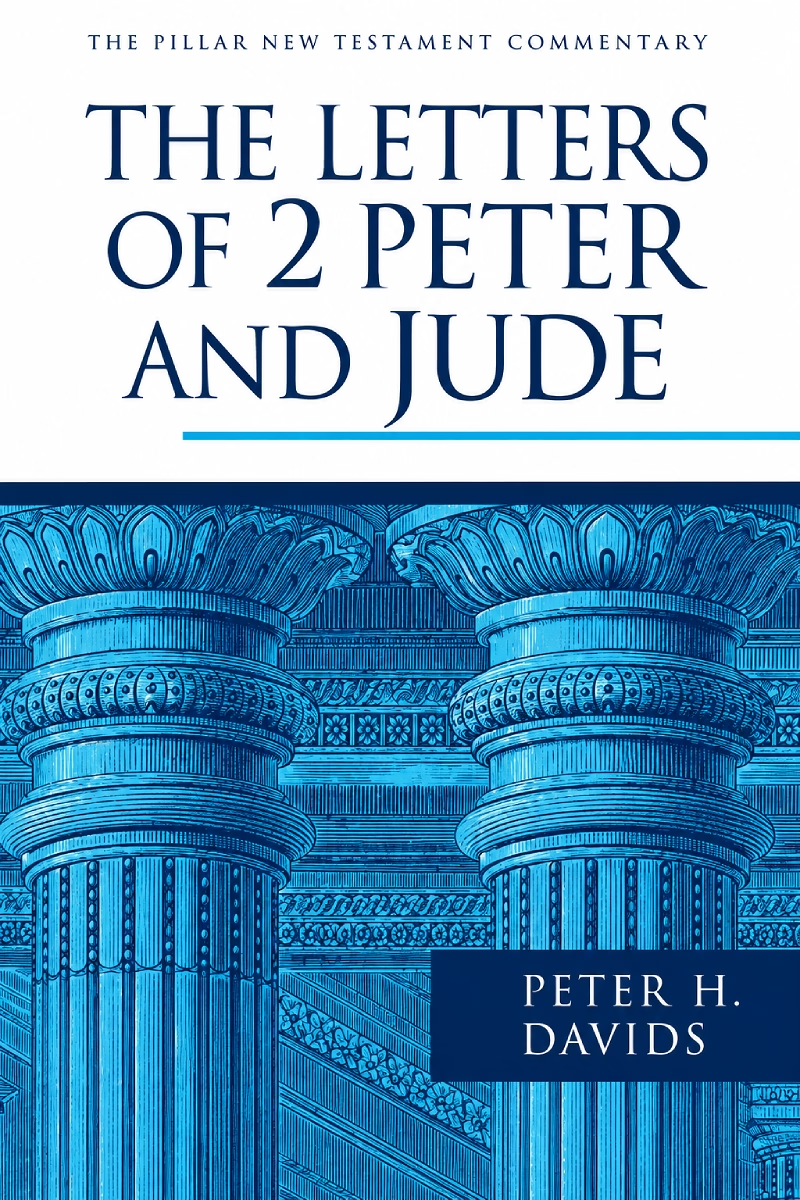
The Letters of 2 Peter and Jude
Peter H. Davids guides readers through Jude and 2 Peter, showing how both letters confront corrupt teachers, defend faithful Christian living, and anchor believers in apostolic truth, divine judgment, Christ’s return, and the promised new creation. He also explains their rich Jewish background and difficult biblical allusions.
Available Instantly
About This Book
Peter H. Davids’s commentary offers a sustained exposition of Jude and 2 Peter, treating both letters as coherent pastoral responses to teachers whose doctrine and conduct threatened early Christian communities. Davids reads the two writings in their Jewish and Greco-Roman settings and pays close attention to the way each author seeks to preserve believers from error, moral compromise, and loss of confidence in the apostolic message. A major concern throughout the volume is not simply identifying false teaching but showing how distorted belief produces distorted living and why Christians must remain faithful to the truth they have received.
In Jude, Davids emphasizes the call to contend for the faith in the face of intruders whose behavior denies the moral demands of the gospel. He explains Jude’s use of Israel’s wilderness generation, rebellious angels, Sodom and Gomorrah, Cain, Balaam, Korah, and traditions associated with 1 Enoch and other Second Temple Jewish material. These examples are used to establish the certainty of divine judgment while also clarifying Jude’s pastoral concern for believers who are wavering or endangered. Jude 20–23 therefore receives attention not only as a closing exhortation but as a pattern of perseverance, prayer, mercy, discernment, and rescue within a threatened church.
Davids then traces how 2 Peter addresses related dangers in its own way. The opening chapter calls believers to grow in Christian virtue and to make their calling and election secure through a life that reflects God’s gracious provision. The commentary gives substantial attention to 2 Peter 1:16–21, where the transfiguration, apostolic eyewitness testimony, prophecy, and Scripture establish the reliability of the message about Christ. This becomes an important foundation for the letter’s confrontation with false teachers.
Second Peter 2 receives extended treatment of the teachers’ greed, immorality, deceptive freedom, and coming judgment. Davids explores the letter’s reuse of material also found in Jude and its appeal to examples such as the angels who sinned, Noah, Sodom and Gomorrah, Lot, and Balaam. His discussion of the rebellious angels and related Jewish traditions gives the volume particular value for readers studying Genesis 6, Jude 6, 2 Peter 2:4, and the background of early Jewish interpretations of supernatural rebellion.
The final chapter of 2 Peter brings the denial of Christ’s coming into direct focus. Davids explains the scoffers’ challenge, the Day of the Lord, divine patience, final judgment, and the promise of new heavens and a new earth in 2 Peter 3. The book therefore helps readers understand why the delay of the Lord’s coming is not evidence against the promise, how eschatological hope is meant to shape holy living, and why Christians are told to remain on guard and continue growing in grace and knowledge.
Across both letters, Davids connects doctrinal fidelity, spiritual discernment, perseverance, ethical seriousness, and future hope. The commentary is especially useful for readers asking how the church should respond to teachers whose conduct contradicts their claims, how difficult passages about angels and Jewish traditions should be understood, why apostolic testimony can be trusted, and how belief in Christ’s return and final judgment should affect present Christian life.
Book Details

Reading Fit
STUDY LEVEL
Advanced, Intermediate
STUDY SCOPE
Individual Book, New Testament
BOOKS INCLUDED

Edition & Format
PUBLISHED
September 19, 2006
AVAILABLE FORMATS
hardcover, kindle
LENGTH
510 pages

Topics Covered
You Might Also Like