
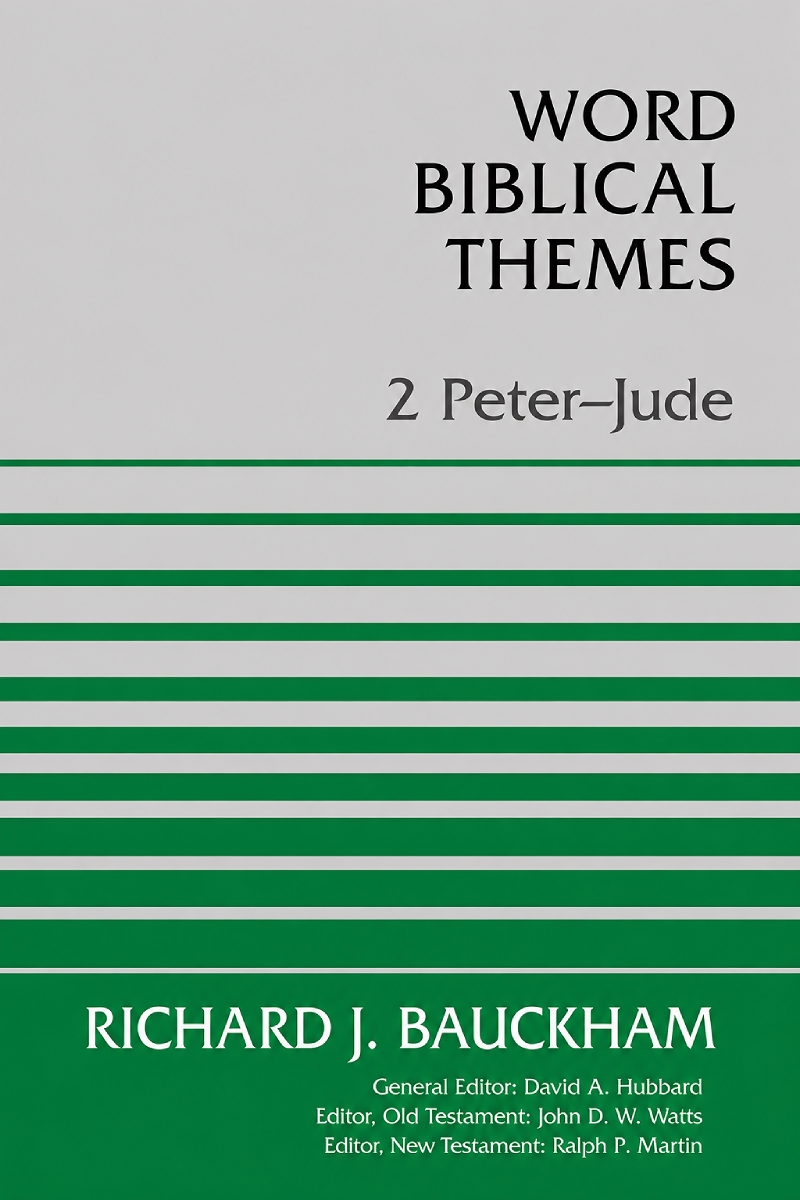
2 Peter-Jude (Word Biblical Themes)
Richard Bauckham distills the distinctive theology of Jude and 2 Peter, showing how each letter confronts moral disorder, false freedom, and coming judgment while calling believers to faithful Christian living. Separate thematic studies trace Jude’s ethics and Jesus’ lordship and 2 Peter’s righteousness, freedom, hope, and understanding of Scripture.
Available Instantly
About This Book
Richard Bauckham’s 2 Peter–Jude in the Word Biblical Themes series presents the theological message of Jude and 2 Peter rather than repeating a verse-by-verse commentary. Drawing on the detailed exegetical work behind his larger commentary, Bauckham treats the two letters separately because, although 2 Peter makes use of Jude, each addresses its own situation and makes a distinctive contribution. The volume is organized around the major themes that emerge from the texts and asks what these short letters teach about Christian belief, conduct, hope, and faithfulness.
The treatment of Jude begins with morality and judgment. Jude’s opponents are not discussed merely as people holding abstractly incorrect ideas; their teaching is bound to behavior, and the letter answers moral corruption by placing it under the certainty of divine judgment. Bauckham follows Jude’s use of biblical and Jewish examples of rebellion and punishment, showing how the letter interprets earlier sacred history and apocalyptic tradition as warnings for its present crisis. This gives readers a framework for understanding Jude’s severe language, its references to angels and ancient examples, and the connection it makes between distorted belief and ungodly life.
A second Jude theme is Christian living. The letter’s warnings lead to a positive account of how believers should remain faithful: building themselves up in faith, prayer, keeping themselves in God’s love, awaiting mercy, and responding wisely to people endangered by error. Bauckham therefore treats Jude as more than a polemic against opponents. It is also a compact guide to faithful community life under pressure. The section on Jesus the Lord explores Jude’s Christological language and the significance of confessing Jesus’ lordship in a letter concerned with authority, allegiance, salvation, and judgment.
The 2 Peter portion begins with justification and righteousness, tracing the letter’s language of God’s saving action and the righteous life expected of those who have received it. Bauckham then examines freedom, especially the contrast between true Christian freedom and the false freedom promised by teachers whose behavior leads to corruption and slavery. This theme joins doctrine and ethics and helps explain why the letter treats moral conduct as a test of the claims being made by its opponents.
Christian hope forms another major section. Bauckham considers the promised coming of Christ, the challenge created by its apparent delay, divine judgment, God’s patience, and the future for which believers wait. Second Peter 3 is central to this discussion, where eschatological hope is meant to produce holy and faithful living rather than speculation or complacency. The book therefore speaks to readers asking why the Second Coming appears delayed, how apostolic Christianity answers scoffing about the future, and how hope should shape present conduct.
The final major theme is Scripture. Bauckham examines 2 Peter’s appeal to apostolic eyewitness, prophecy, inspired speech, and the interpretation of Scripture, including the letter’s significant reference to Paul’s writings. This material contributes to questions about the authority of apostolic testimony, the prophetic word, inspiration, and the misuse of Scripture.
Across both letters, the volume shows how theology and ethics belong together. Judgment exposes false claims, Christian freedom cannot be detached from righteousness, hope calls for perseverance, Scripture anchors the community in received truth, and the lordship of Jesus demands faithful allegiance. It is particularly useful for readers seeking the theological structure of 2 Peter and Jude, the nature of their opponents, and the practical significance of their teaching for Christian faithfulness.
Book Details

Reading Fit
STUDY LEVEL
Advanced, Intermediate
STUDY SCOPE
Individual Book, New Testament
BOOKS INCLUDED

Edition & Format
PUBLISHED
December 15, 2020
AVAILABLE FORMATS
paperback, kindle
LENGTH
117 pages

Topics Covered
You Might Also Like