
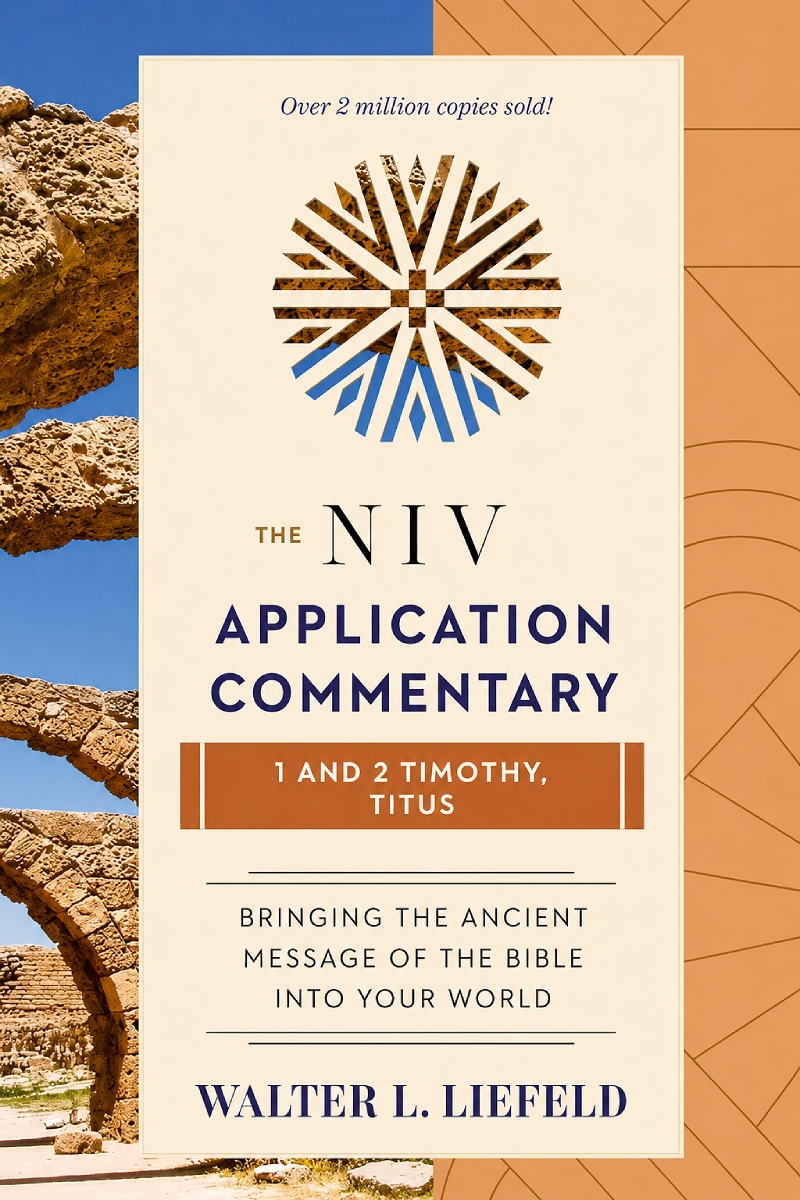
1 and 2 Timothy, Titus
Walter Liefeld brings 1–2 Timothy and Titus into the pressures of real church life, tracing Paul’s guidance on faithful ministry, church leadership, false teaching, sound doctrine, godliness, Scripture, ethics, women, widows, wealth, endurance, and good works. The commentary connects the Pastoral Epistles’ original setting with practical questions facing pastors, teachers, and congregations today.
Available Instantly
About This Book
Walter L. Liefeld’s 1 and 2 Timothy, Titus is an applied exposition of the Pastoral Epistles that brings Paul’s instructions into the concrete pressures of church leadership, teaching, ethics, and ministry. The commentary treats each passage in its historical and literary setting and then develops the enduring principles and contemporary significance for pastors, teachers, ministry leaders, and congregations.
First Timothy receives the largest portion of the volume. Liefeld follows Timothy’s commission to confront false teachers, Paul’s testimony to Christ’s mercy and grace, instruction about public prayer, the conduct of men and women in the gathered church, qualifications for elders and deacons, the nature of godliness, and Timothy’s responsibility to teach faithfully. He also gives sustained attention to relationships across age and gender lines, care for widows, treatment of elders, slavery in the ancient world, greed, wealth, contentment, and the danger of false teaching motivated by corrupt desires.
Second Timothy focuses more intensely on faithful ministry under pressure. Paul urges Timothy not to be ashamed of the gospel, to guard sound teaching, endure hardship, avoid destructive controversies, pursue holiness, and correct opponents in the hope of repentance. The letter’s warnings about difficult times and deceptive people lead into one of its most important passages, 2 Timothy 3:14–17, where Scripture is presented as God-breathed and sufficient to equip God’s servant for every good work. Paul’s final charge to preach the word, continue in ministry, and endure as his own death approaches gives the commentary a strong emphasis on perseverance and faithfulness.
Titus adds further teaching on church order and Christian ethics. Liefeld explains the appointment and qualifications of elders, the need to silence rebellious and deceptive teachers, instruction for older and younger believers, and the relationship between sound doctrine and conduct. Titus 2:11–14 and 3:3–8 receive particular importance because they ground transformed living and good works in God’s saving grace rather than self-generated moral improvement. The letter also stresses avoiding foolish controversies and dealing responsibly with divisive people.
Across all three letters, Liefeld shows that sound doctrine and godly life belong together. Church leadership is not merely organizational: character, teaching, example, relationships, and stewardship all matter. False teaching is likewise not treated as an abstract intellectual problem; it damages people, distorts conduct, creates controversy, and threatens the church’s witness. The commentary addresses difficult contemporary questions concerning leadership qualifications, the role of women, pastoral authority, discipline, money, care for vulnerable people, mentorship, endurance, and the use of Scripture in ministry.
The book therefore answers questions such as: What should churches look for in leaders? How should pastors respond to false teaching? What is “sound doctrine” and how should it shape behavior? What does Scripture equip a Christian worker to do? How should ministry leaders endure discouragement, opposition, and suffering? How should churches care for widows and other vulnerable members? What does Paul teach about women in the church? How should Christians think about wealth, greed, contentment, and good works?
Liefeld’s practical emphasis makes the Pastoral Epistles especially relevant to real congregational life while remaining anchored in the biblical text. The commentary consistently connects grace with godliness, doctrine with conduct, leadership with character, Scripture with ministry, and Christian endurance with confidence in the gospel.
Book Details

Reading Fit
STUDY LEVEL
Intermediate
STUDY SCOPE
Individual Book, New Testament
BOOKS INCLUDED

Edition & Format
PUBLISHED
March 1, 2011
AVAILABLE FORMATS
hardcover, kindle
LENGTH
385 pages

Topics Covered
You Might Also Like