
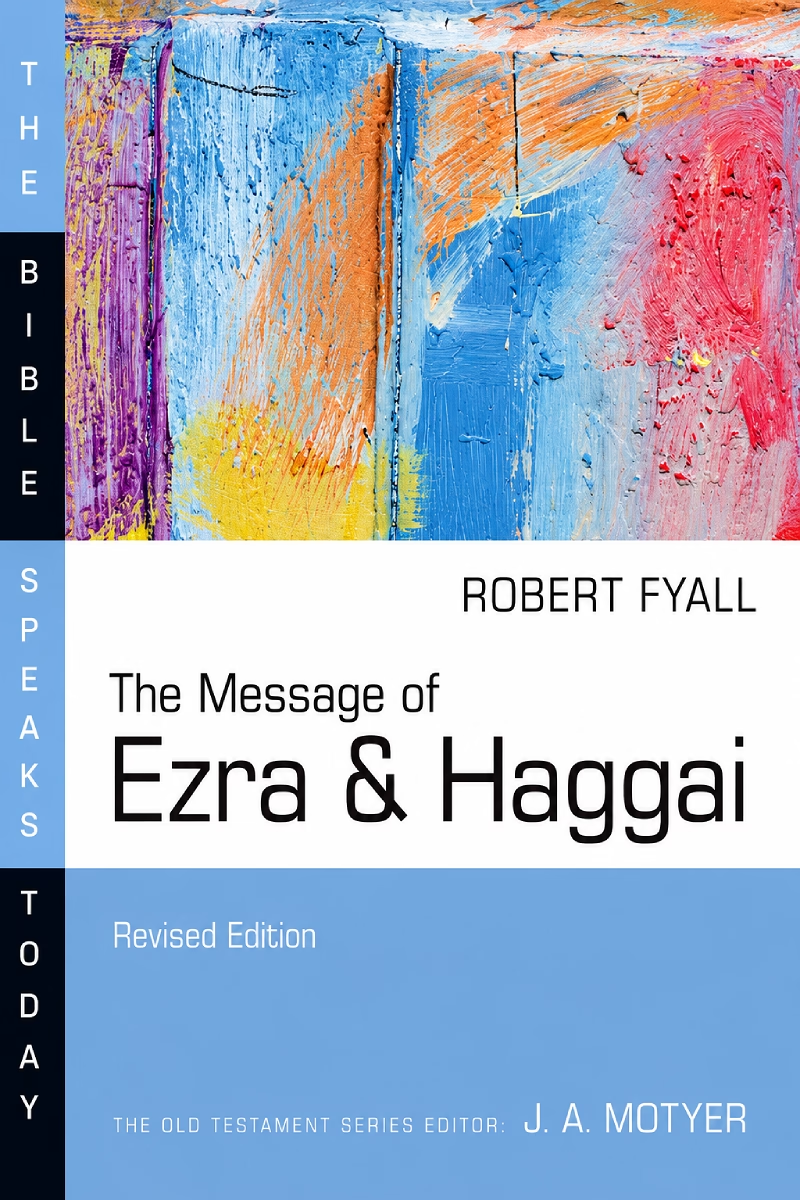
The Message of Ezra & Haggai
Robert Fyall reads Ezra and Haggai together to show God restoring his people and rebuilding his temple after exile. The study traces obedience, opposition, discouragement, renewed priorities, and God’s sovereign direction of rulers and events, calling readers to persevere in God’s work with confidence in his Word, his Spirit, and his larger purposes.
Available Instantly
About This Book
Robert Fyall’s The Message of Ezra & Haggai reads these two Old Testament books together as a coherent account of God restoring his people after the Babylonian exile and calling them to rebuild for him. Ezra supplies the historical narrative of return, worship, temple rebuilding, opposition, renewed leadership, and covenant failure; Haggai speaks prophetically into the period when the work has stalled. Fyall’s central concern is not merely ancient reconstruction but the way God advances his purposes through his Word, his Spirit, faithful obedience, and even the decisions of pagan rulers.
The Ezra section begins with Cyrus’s decree and the return of the exiles in Ezra 1. Fyall emphasizes that political events are not outside God’s rule: kings act, decrees are issued, and empires change, yet the Lord’s purpose moves forward. Ezra 2’s long list of returning families is treated as part of the reality of restoration, grounding the renewed community in remembered identity. Ezra 3 then turns to worship and priorities as the altar is restored before the temple is complete. The rebuilding project becomes a test of whether God’s people will put his purposes at the center of communal life.
Ezra 4–6 develops the problem of opposition. Resistance, accusation, delay, and imperial bureaucracy appear capable of stopping the work, but the narrative ultimately demonstrates that God’s work cannot be finally frustrated. The prophetic ministries associated with the rebuilding renew the people’s courage, and official investigation unexpectedly confirms their right to continue. Fyall draws out a practical theology of perseverance for Christians and churches facing discouragement, institutional resistance, or the temptation to conclude that difficulty means God’s work has failed.
Ezra 7–8 introduces Ezra as a man shaped by the Word of God. His commitment to study, practice, and teach the law gives the commentary a strong emphasis on obedience to God’s Word rather than religious activity detached from Scripture. The return under Ezra also echoes earlier patterns of exodus and divine guidance. God’s sovereignty does not remove human responsibility: leaders prepare carefully, the community seeks God, and the journey is undertaken in dependence on him.
Ezra 9–10 brings the book to an intentionally sobering close as the restored community confronts serious covenant unfaithfulness. Fyall does not allow the physical rebuilding of the temple to stand as proof that all is spiritually well. Restoration requires holiness, repentance, and obedience, and the unresolved tensions of the ending keep the reader from reducing God’s work to successful projects or institutions.
Haggai then addresses a people whose temple rebuilding has stopped through external pressure and internal loss of nerve. Haggai 1 challenges misplaced priorities and calls the community back to the work God has given them. The people respond, and the Lord stirs them to action. Haggai 2 looks beyond present discouragement to future glory, blessing, and the certainty of God’s larger purpose. The Spirit’s continuing presence and God’s promises provide the basis for renewed confidence.
Across both books, Fyall answers practical questions about serving God in discouraging times: What should believers do when opposition slows important work? How should God’s people recover right priorities? What role do Scripture, obedience, prayerful dependence, and the Holy Spirit play in perseverance? How can Christians trust God when political powers seem decisive? The message is that God’s people are called to faithful, Word-shaped action while resting in the sovereign purpose of the God whose work cannot ultimately be stopped.
Book Details

Reading Fit
STUDY LEVEL
Fundamental, Intermediate
STUDY SCOPE
Individual Book, Old Testament
BOOKS INCLUDED

Edition & Format
PUBLISHED
July 19, 2022
AVAILABLE FORMATS
paperback, kindle
LENGTH
201 pages

Topics Covered
You Might Also Like