
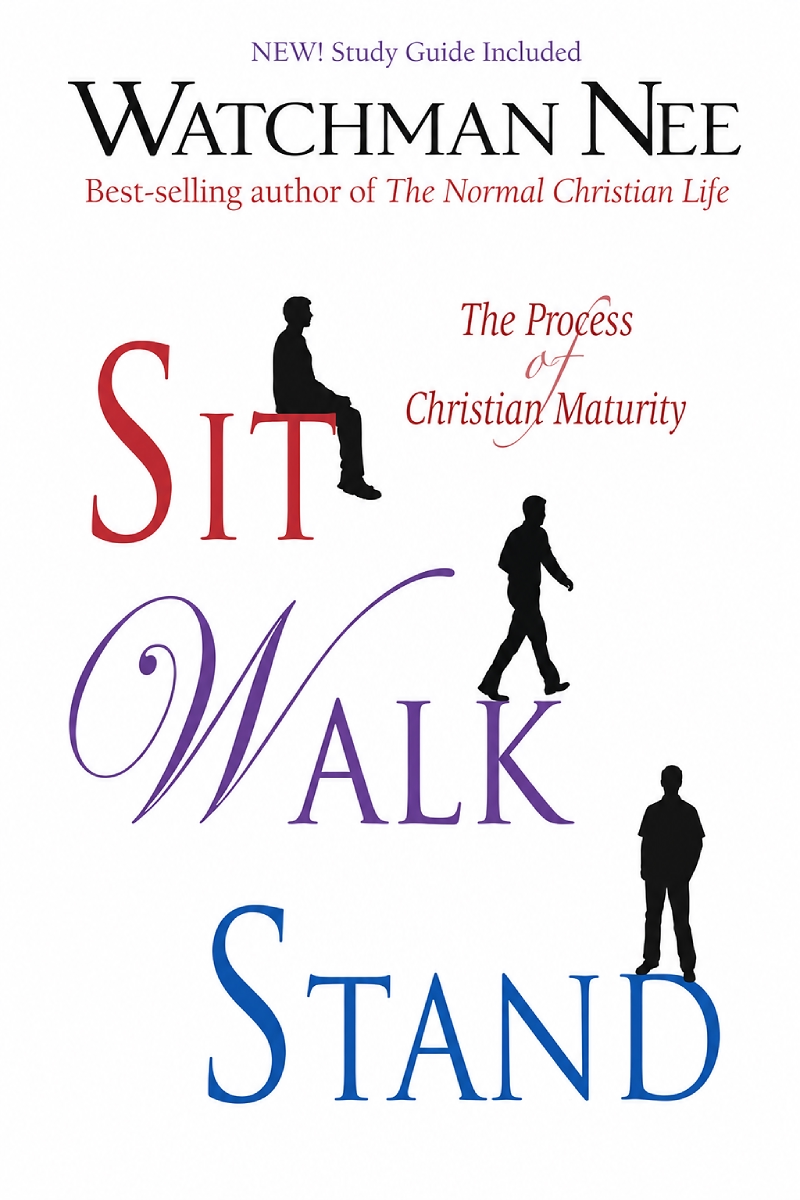
Sit, Walk, Stand
Watchman Nee traces Ephesians through three governing words: sit in what God has already accomplished in Christ, walk out that position in daily life, and stand on Christ’s victory against spiritual opposition. This compact guide to Christian maturity shows why grace and union with Christ must precede practical conduct, spiritual growth, and the believer’s use of God’s armor.
Available Instantly
About This Book
Sit, Walk, Stand is Watchman Nee’s concise exposition of the spiritual order of Ephesians. Rather than moving verse by verse, Nee organizes the epistle around three verbs that summarize the process of Christian living and maturity: “sit,” “walk,” and “stand.” Ephesians 1–3 establishes the believer’s position in Christ; Ephesians 4:1–6:9 describes the life that flows from that position in the world; and Ephesians 6:10–24 describes the believer’s attitude toward spiritual opposition. The book’s governing practical claim is that Christian conduct and spiritual warfare must begin from what God has already accomplished in Christ.
“Sit” is rooted especially in Ephesians 2:6. Believers are raised and seated with Christ in the heavenly places. Nee uses sitting as a picture of rest in completed work: salvation begins with God’s action, not human effort. Ephesians 2:8–9 supports his insistence that grace is received by faith. The believer does not labor to earn acceptance, spiritual position, or the resources of Christian life. God has acted in Christ, and the first responsibility of faith is to receive and rest in what has been given.
This position is inseparable from union with Christ. The opening chapters of Ephesians are treated as the foundation for everything that follows: believers are blessed in Christ, made alive with Christ, raised with Christ, seated with Christ, and included in God’s purpose in His Son. Nee therefore resists the instinct to begin Christian life by attempting to produce spiritual results through determination. Dependence upon Christ precedes activity for Christ.
“Walk” corresponds to Ephesians 4:1–6:9. Having received a position by grace, the believer is called to walk worthily in ordinary life. Nee connects this with relationships, love, light, wisdom, use of time, and practical conduct. Walking does not establish the believer’s standing before God; it expresses the life that has already been received. The order matters. Christian maturity is not self-improvement added to grace but the growing correspondence between the believer’s heavenly position in Christ and conduct on earth.
This makes the book a practical answer to the question, “How do I actually live the Christian life?” Nee’s answer begins with position before practice. The Christian is not told to create the life God requires from independent resources, but to live from Christ as the source. The commands of Ephesians 4–6 become workable only on the basis established in Ephesians 1–3.
“Stand” turns to Ephesians 6:10–24 and spiritual warfare. Nee emphasizes the repeated command to stand. The believer’s conflict is not an attempt to win a victory Christ failed to secure, but a defense of ground already won in Christ. Strength in the Lord, the whole armor of God, resistance to the devil, the Word of God, and persevering prayer belong to this posture. The armor is therefore not an isolated spiritual-warfare technique; it rests on the believer’s position in Christ and a walk consistent with that position.
This order—sit, walk, stand—integrates grace, faith, Christian living, maturity, and spiritual warfare. A believer who tries to walk before learning to sit substitutes effort for dependence. A believer who tries to stand without a life grounded in Christ lacks the proper basis for conflict. Nee presents the Christian life as receiving from God, expressing what has been received in daily conduct, and holding that ground when opposed.
The book serves readers asking what it means to be seated with Christ, how grace relates to obedience and conduct, how to walk worthy of the calling, why Christian maturity depends on union with Christ, what the armor of God means, why Ephesians tells believers to stand against the devil, and how spiritual warfare is related to Christ’s finished victory.
Book Details

Reading Fit
STUDY LEVEL
Fundamental, Intermediate
STUDY SCOPE
Individual Book, New Testament
BOOKS INCLUDED

Edition & Format
PUBLISHED
January 1, 2009
AVAILABLE FORMATS
paperback, kindle, audiobook
LENGTH
51 pages
· 2h 19m audio

Topics Covered
You Might Also Like