
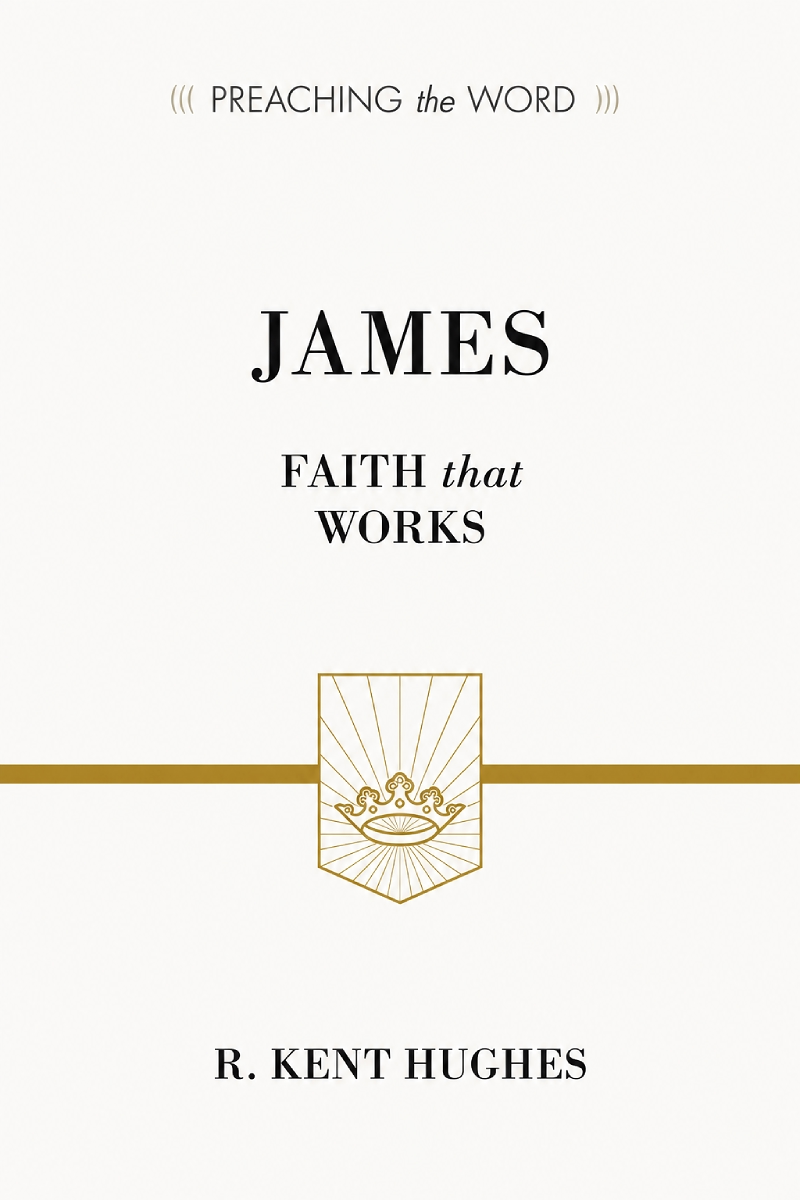
James (ESV Edition): Faith That Works
R. Kent Hughes expounds James as a practical portrait of genuine Christian faith in action. Through trials, temptation, wisdom, speech, humility, prayer, wealth, and works, he shows how true faith becomes visible in everyday obedience, perseverance, mercy, disciplined words, care for others, and humble dependence on God in the pressures of ordinary life.
Available Instantly
About This Book
R. Kent Hughes’s James: Faith That Works is a pastoral exposition of the New Testament letter of James centered on the visible outworking of genuine faith. Hughes treats James as one of Scripture’s most practical books and repeatedly connects doctrine with everyday Christian conduct. The commentary moves passage by passage through the letter, explaining not only what James teaches but how believers are meant to live when faith is tested by suffering, temptation, relationships, possessions, speech, and prayer.
James 1 establishes several governing themes. Hughes explains why trials can be counted as joy: testing produces perseverance and spiritual maturity rather than being meaningless hardship. Because suffering often leaves believers uncertain about what to do, James’s call to ask God for wisdom becomes a practical answer to the question of how to endure faithfully. Hughes also distinguishes trials from temptation, tracing temptation to sinful desire rather than to God and emphasizing God’s goodness. The later part of the chapter turns to receiving the Word with humility and becoming doers rather than hearers only. Genuine religion therefore becomes visible in obedient action, controlled speech, and care for people in need.
James 2 develops the social and moral evidence of living faith. Hughes treats favoritism toward the rich as incompatible with Christian mercy and then gives extended attention to James’s teaching on faith and works. The central issue is not whether salvation can be earned but whether a claimed faith that produces no obedient life can be considered real. Abraham and Rahab become examples of faith demonstrated through action. This section makes the book especially relevant to readers asking what true faith looks like, how belief relates to obedience, and why Christian profession must bear practical fruit.
James 3 and 4 turn to the tongue, wisdom, conflict, humility, and grace. Hughes explores the extraordinary power of speech to harm or bless and applies James’s warnings to teachers as well as ordinary believers. He contrasts wisdom from below, marked by envy and selfish ambition, with wisdom from above, which produces purity and peace. Human quarrels are traced to disordered desires, while the answer is humble submission to God. Hughes gives substantial attention to James 4:6–10 and the declaration that God gives more grace, showing how humility, repentance, resistance to pride, and dependence on God shape Christian life. He also addresses critical speech and the presumption of making plans without acknowledging the Lord’s will.
James 5 confronts the misuse of wealth, calls suffering believers to patient endurance, and points to the prophets and Job as examples of perseverance. The expectation of the Lord’s coming gives patience an eschatological horizon without turning the passage into speculative prophecy. Hughes then devotes significant attention to prayer, sickness, confession, and healing in James 5:13–18, followed by the responsibility to restore a believer who wanders from the truth.
Across the commentary, Hughes addresses major reader questions: How should Christians respond to trials? How can temptation be resisted? What distinguishes living faith from empty profession? Why does the way a person speaks matter spiritually? How should believers treat rich and poor? What does godly wisdom look like? Why does humility open the way to grace? How should Christians pray in suffering and sickness? What does patient faithfulness look like while waiting for Christ?
The result is a study of James that connects faith, works, wisdom, perseverance, speech, humility, prayer, and obedience into one coherent picture of Christian living. It is particularly useful for readers who want to understand how authentic faith becomes visible in the habits, relationships, decisions, and pressures of everyday life.
Book Details

Reading Fit
STUDY LEVEL
Fundamental, Intermediate
STUDY SCOPE
Individual Book, New Testament
BOOKS INCLUDED

Edition & Format
PUBLISHED
September 30, 2015
AVAILABLE FORMATS
hardcover, kindle
LENGTH
306 pages

Topics Covered
You Might Also Like