
Daniel
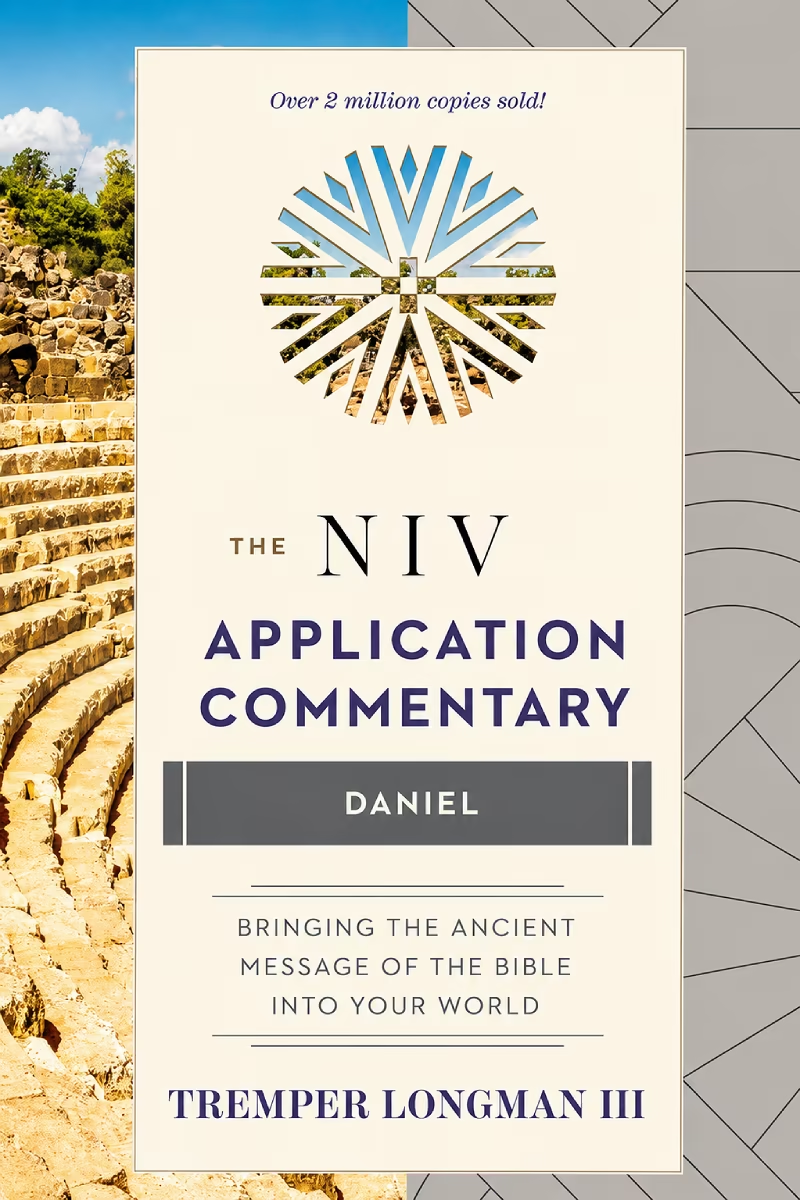
Tremper Longman III reads Daniel around its governing assurance: despite appearances, God is in control. Moving from the court stories of Daniel 1–6 to the visions of Daniel 7–12, he shows how God’s sovereignty sustains faithful living in hostile cultures, gives meaning to apocalyptic prophecy, and grounds hope amid persecution, political upheaval, and spiritual conflict.
Available Instantly
About This Book
Tremper Longman III’s Daniel in the NIV Application Commentary treats all twelve chapters as a unified witness to the sovereignty of God. Its governing message is that, in spite of present appearances, God is in control. Longman develops that conviction through the court narratives of Daniel 1–6 and the apocalyptic visions of Daniel 7–12, then repeatedly asks how the same truth shapes faith when believers live under political pressure, cultural hostility, uncertainty, and suffering.
Daniel 1–6 supplies concrete models of faithfulness to God in an alien culture. Daniel and his companions live within pagan imperial systems without surrendering their identity or loyalty to God. Their decisions concerning defilement, worship, prayer, and obedience show that faithful living is neither withdrawal from society nor accommodation to its ultimate claims. The fiery furnace in Daniel 3, Nebuchadnezzar’s humiliation in Daniel 4, Belshazzar’s judgment in Daniel 5, and the lions’ den in Daniel 6 all reinforce the same theological reality: human rulers may exercise enormous power, but they do not possess final sovereignty. God gives kingdoms, humbles the proud, preserves His servants, and remains worthy of trust whether or not deliverance comes in the way believers expect.
Longman therefore addresses a major modern reader question: how can a Christian remain faithful when the surrounding culture does not share or honor that faith? Daniel offers a pattern for serving responsibly without making the state, career, social approval, or personal safety ultimate. The commentary also develops the danger of idolatry and human pride, showing how political power becomes spiritually destructive when rulers or societies claim what belongs to God.
Daniel 7–12 shifts from stories to apocalyptic visions, but Longman argues that the theological message remains consistent. Strange beasts, heavenly figures, symbolic numbers, angelic interpreters, conflicts among kingdoms, persecution, and visions of the end are not given to satisfy speculative curiosity. Apocalyptic prophecy reveals the unseen meaning of history from God’s perspective and assures an oppressed people that evil powers are temporary. Daniel 7 is especially important: brutal human kingdoms are contrasted with the Ancient of Days and the kingdom associated with the one like a son of man. The vision locates hope not in the permanence of any earthly empire but in God’s final rule.
Daniel 9 combines prophecy with one of Scripture’s major prayers of confession and intercession. Longman relates Daniel’s reading of Jeremiah to repentance, covenant faithfulness, divine mercy, and the difficult prophecy of the seventy weeks. Rather than allowing disputed chronology to eclipse the chapter’s purpose, the commentary keeps the focus on God’s control of history and His response to His people. Daniel 10–12 adds an explicitly spiritual dimension to historical conflict, portraying angelic opposition and warfare behind events visible on earth. This material gives the book meaningful relevance to spiritual warfare while keeping God, rather than the powers of evil, at the center.
The final visions also bring persecution, endurance, judgment, and resurrection into view. Daniel 12 speaks of deliverance and resurrection beyond present suffering, placing the faithful person’s hope beyond immediate political outcomes. Longman’s treatment of prophecy therefore joins eschatological hope to present obedience.
Throughout the commentary, historical interpretation and contemporary application reinforce each other. Daniel helps readers understand apocalyptic literature without reducing it to a timetable, trust God amid unstable governments and hostile cultures, resist idolatrous demands, pray in times of crisis, and live faithfully when circumstances seem to contradict God’s rule. For readers searching Daniel for prophecy, kingdom, persecution, prayer, spiritual conflict, or practical faith under pressure, Longman consistently returns to the book’s controlling assurance: God reigns, His kingdom outlasts every human power, and that sovereignty makes faithful living both possible and meaningful.
Book Details

Reading Fit
STUDY LEVEL
Intermediate
STUDY SCOPE
Individual Book, Old Testament
BOOKS INCLUDED

Edition & Format
PUBLISHED
April 1, 1999
AVAILABLE FORMATS
paperback, kindle
LENGTH
320 pages

Topics Covered
You Might Also Like