
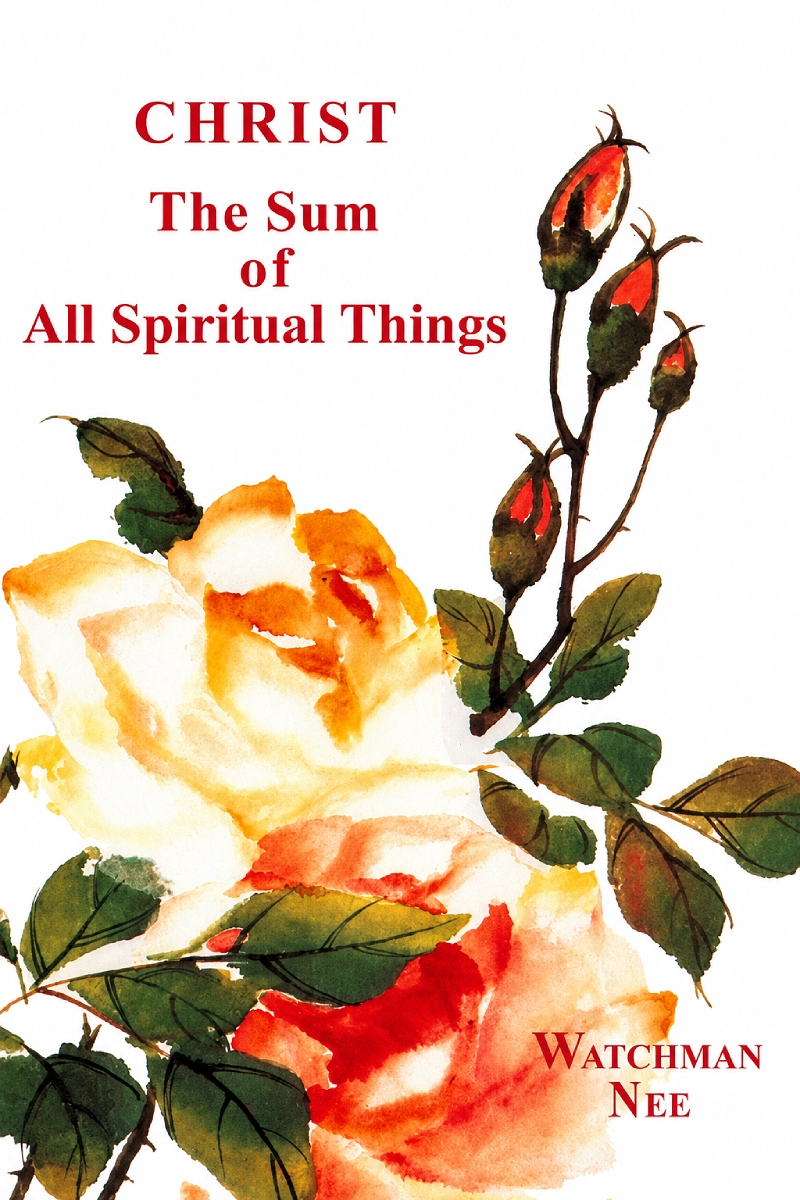
Christ the Sum of All Things Spiritual
Watchman Nee presses one central truth from John and Paul: God does not merely give believers spiritual things—He gives Christ Himself. Christ is the way, truth, life, resurrection, bread, light, wisdom, righteousness, sanctification, and redemption, redirecting Christian experience from methods and attainments to the living Person who is God’s all.
Available Instantly
About This Book
Christ the Sum of All Things Spiritual develops one governing principle from several angles: God’s spiritual provision is not a collection of independent things but Jesus Christ Himself. Across five chapters—Christ as the Way, Truth, and Life; Christ as the Resurrection and the Life; Christ as the Bread of Life and Light of Life; Christ as God’s Everything; and Nothing but Christ—Watchman Nee repeatedly redirects the believer from spiritual methods, virtues, doctrines, and attainments to the living Person in whom their reality is found.
John 14:6 provides the opening framework. Christ does not merely give a way, communicate truth, or dispense life as realities detached from Himself. He says that He is the way, the truth, and the life. Nee uses this statement to expose the tendency to turn Christianity into methods. A believer may seek a technique for guidance, a correct doctrinal formulation, or an experience of spiritual life while missing Christ as the reality of all three. The issue is not that truth or guidance is unimportant, but that their spiritual substance is inseparable from Christ.
John 11:25 develops the same principle through resurrection. Jesus does not merely promise to perform resurrection; He declares Himself to be the resurrection and the life. Nee uses the raising of Lazarus to distinguish the living Christ from an abstract doctrine of resurrection. When human resources reach death and impossibility, Christian experience depends upon a Person whose life is not mastered by death. Resurrection life therefore becomes a present search subject as well as a future hope.
John 6 and John 8 develop Christ as the bread of life and the light of life. Bread answers hunger because it is received and inwardly appropriated; light answers darkness by making reality visible. Nee again resists separating the benefit from the Giver. Religious knowledge about bread does not feed, and correct explanations of light do not themselves illuminate. Christ must be known as the actual spiritual supply and illumination of the believer.
First Corinthians 1:30 becomes one of the book’s strongest Pauline passages. Christ is made wisdom from God, righteousness, sanctification, and redemption. Nee treats these as realities located in Christ rather than separate spiritual commodities. The believer does not receive righteousness and sanctification as possessions that can then function independently of the Son. God gives Christ, and the believer knows these realities by knowing Him.
Colossians contributes the language of Christ as the believer’s life and of divine fullness residing in Him. Ephesians contributes the larger purpose of God to gather and sum up all things in Christ. These passages broaden the book from individual Christian experience to the comprehensive place God has assigned to His Son.
The book also speaks directly to spiritual growth. Nee does not reject doctrine, obedience, or experience; he rejects their separation from Christ. Christian maturity is therefore not the accumulation of spiritual achievements but the increasing knowledge and expression of the Person God has given. “Nothing but Christ” is the concluding emphasis because the self cannot be perfected into God’s answer by collecting spiritual things.
The book addresses readers asking what it means for Christ to be their life, how Christ is the way and truth rather than merely a teacher of them, what it means for Him to be resurrection, how He is spiritual food and light, why First Corinthians 1:30 gathers righteousness and sanctification into Christ, and how Christian experience changes when the believer seeks Christ Himself rather than detached spiritual attainments.
Book Details

Reading Fit
STUDY LEVEL
Fundamental, Intermediate
STUDY SCOPE
Topical
BOOKS INCLUDED

Edition & Format
PUBLISHED
June 27, 2014
AVAILABLE FORMATS
paperback, kindle, audiobook
LENGTH
101 pages
· 2h 25m audio

Topics Covered
You Might Also Like