
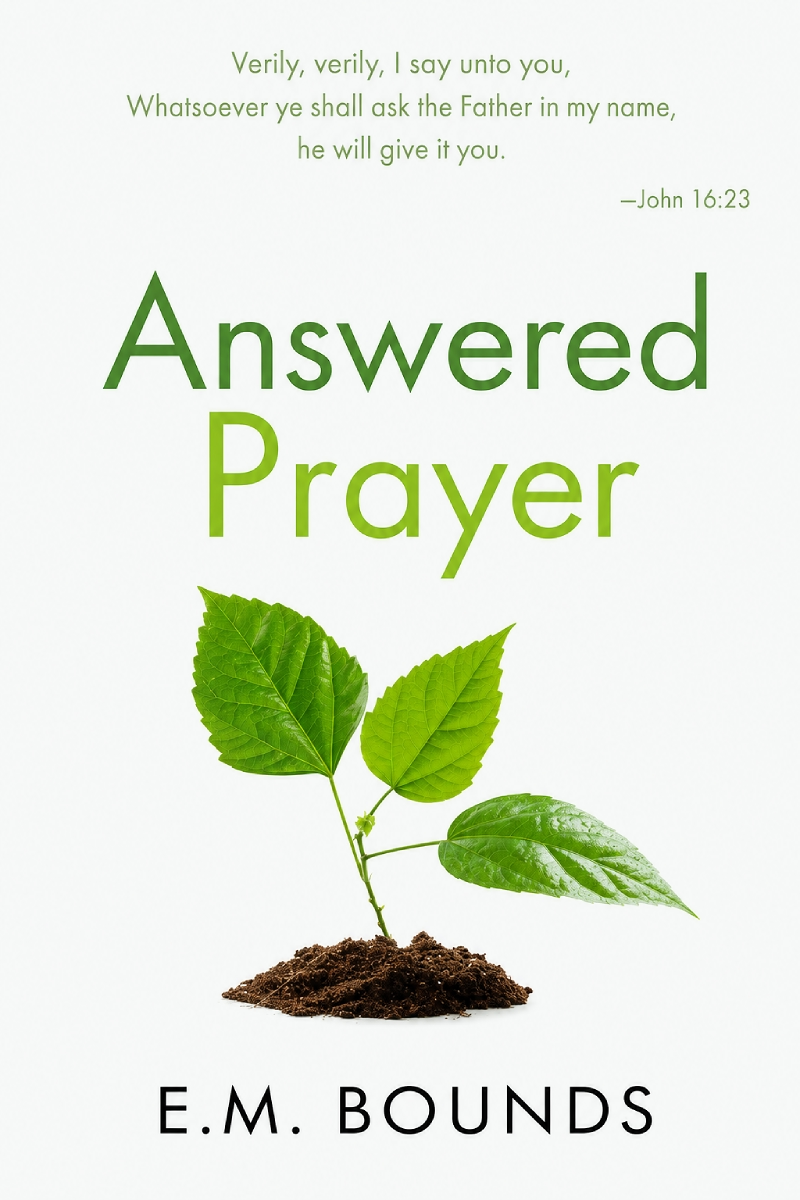
Answered Prayer
E. M. Bounds asks how far believing prayer can reach when it rests on God’s promises and expects a real answer. Through Scripture and Christian examples, he explores the power and possibilities of prayer, faith, intercession, miracles, temporal needs, anxiety, and divine providence, showing why answered prayer is central to the believer’s practical life with God.
Available Instantly
About This Book
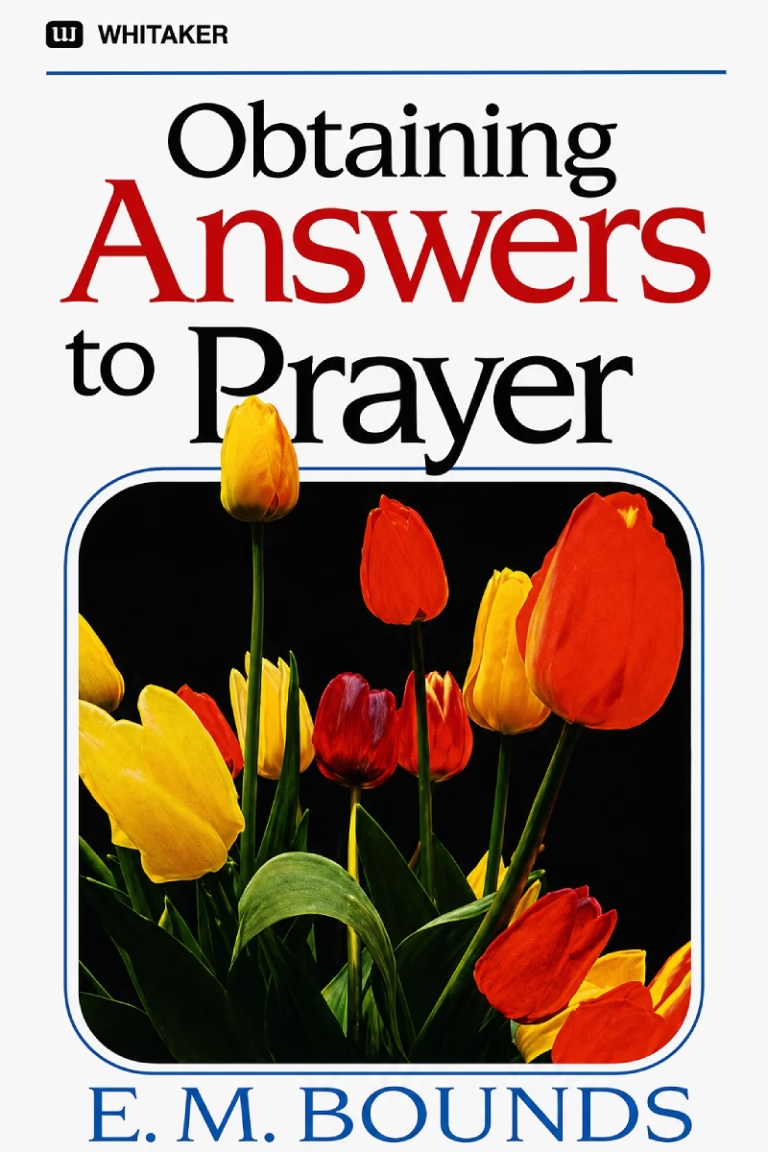
Answered Prayer is E. M. Bounds’s focused study of prayer as a divinely appointed means through which believers ask God for definite help and expect real answers. The Whitaker House edition moves from God’s promises and the possibilities of prayer through its wide range, biblical history, answered prayer, prayer miracles, wonders, and divine providence. Its governing question is practical: how far can believing prayer reach when it rests on what God has promised and on His ability to fulfill those promises?
Bounds begins with the promises of God because they establish both the confidence and the proper basis of prayer. He repeatedly emphasizes biblical language about asking, receiving, seeking, believing, and bringing requests to God. Faith does not manufacture an answer or force God to act; it takes God at His word. The size of the promises therefore becomes the measure of the believer’s expectation. Unbelief narrows prayer by measuring God’s willingness and power according to human limitations, while faith approaches Him as the living God who hears and responds.
The book gives extended attention to the wide range and practical possibilities of prayer. Bounds rejects the idea that only explicitly spiritual matters belong in prayer. Food, clothing, health, family concerns, work, danger, ministry, bodily needs, and other ordinary pressures of life may all be brought to God. Philippians 4 is especially important to this teaching. Paul’s command to be anxious for nothing and to make requests known to God becomes, for Bounds, a direct answer to worry, distracting care, and the burdens of daily life. Prayer is therefore not merely devotional language; it is a practical way of entrusting both temporal and spiritual needs to God and receiving His peace.
Biblical history supplies much of Bounds’s evidence. He returns to Moses, Elijah, Solomon, other Old Testament servants, Jesus Christ, the apostles, and the early Church to show prayer connected with concrete results. Elijah’s prayer concerning rain, the Church’s prayer for Peter, and other examples illustrate both personal prayer and intercession. James 5 receives substantial attention because it brings together affliction, sickness, healing, forgiveness, intercessory prayer, the prayer of faith, and Elijah’s effectual prayer. Bounds uses such passages to show the breadth of circumstances Scripture places within the reach of prayer.
Answered prayer itself receives sustained treatment. Bounds argues that the answer is not incidental to prayer but one of the things that demonstrates its reality and power. He distinguishes prayer that truly asks and expects from prayer reduced to habit or form. This leads naturally to questions about delayed or unanswered prayer, persistence, faith, and whether the believer is actually resting on God’s promises. His emphasis is not on controlling God but on praying with confidence that petition matters within God’s dealings with His people.
The chapters on prayer miracles and wonders press the argument into explicitly supernatural territory. Gospel healings, the Syrophoenician woman, apostolic acts of prayer, and other biblical cases are used to connect faith, petition, intercession, and divine action. Prayer for healing is therefore part of the book’s wider teaching rather than an isolated example. Bounds also addresses the relationship between prayer and natural law. Because God is the creator and ruler of nature, His providence is not confined to an impersonal chain of causes. He may answer through ordinary circumstances or through extraordinary intervention.
Divine providence forms the book’s concluding framework. Bounds presents the God of prayer as personally active in the affairs of life, from large public events to small personal needs. Prayer does not stand outside providence; it belongs within God’s government of the world. This allows the book to connect promises, faith, answers, miracles, and ordinary provision without treating them as separate subjects.
For readers, the book addresses questions such as whether God really answers prayer, what makes prayer effective, how faith relates to God’s promises, why some prayers appear unanswered, whether prayer can change circumstances, whether everyday needs are proper subjects for prayer, how to pray about anxiety and worry, whether prayer for healing is biblical, how intercession works, and how God’s providence relates to specific answers. Its central emphasis is that prayer is meant to be practiced with believing expectancy because its possibilities rest ultimately on the God who hears, acts, and provides.
Book Details

Reading Fit
STUDY LEVEL
Fundamental, Intermediate
STUDY SCOPE
Entire Bible, Topical
BOOKS INCLUDED

Edition & Format
PUBLISHED
March 1, 2002
AVAILABLE FORMATS
paperback, kindle
LENGTH
124 pages

Topics Covered
You Might Also Like