
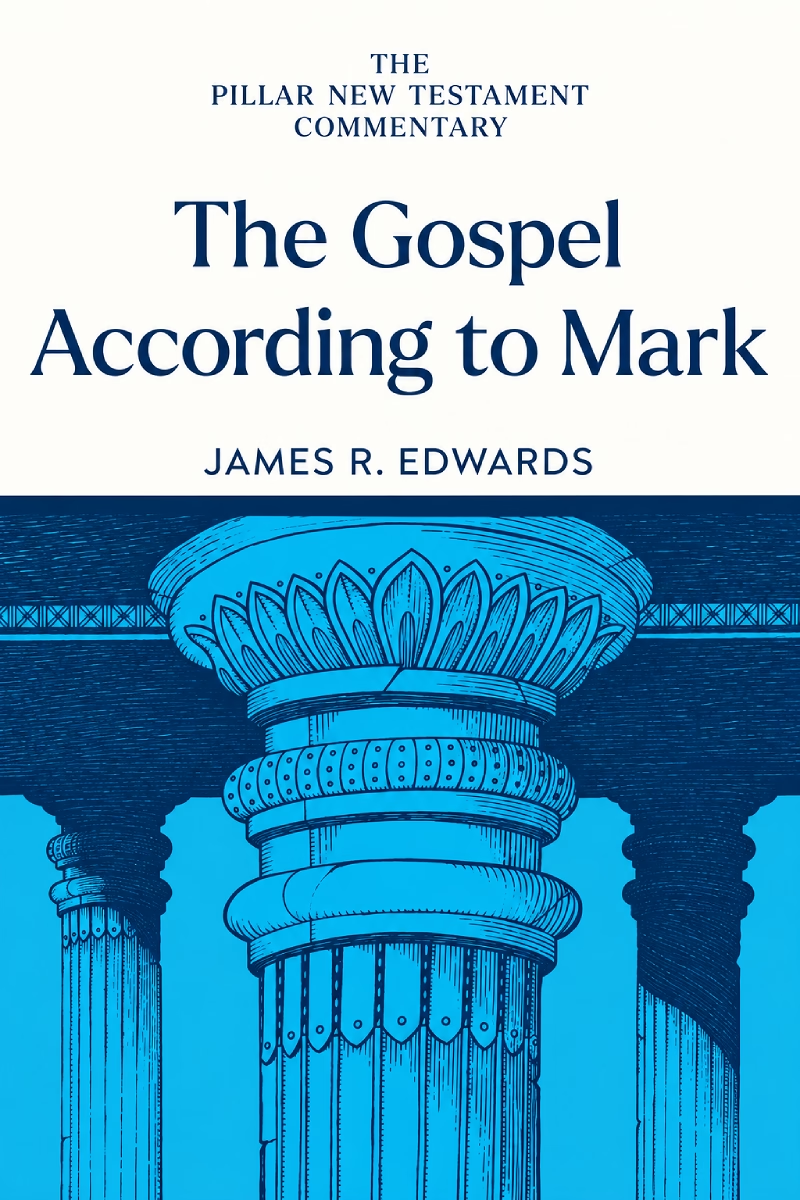
The Gospel according to Mark
James R. Edwards interprets Mark through its theological purpose: revealing Jesus Christ and calling readers to faith and discipleship. He traces Jesus’ authority, Sonship, miracles, conflict, journey to the cross, resurrection, the kingdom of God, Mark 13, and Mark’s literary patterns to show how the Gospel answers the question, “Who is Jesus?” and what it means to follow him.
Available Instantly
About This Book
James R. Edwards’s The Gospel according to Mark is a detailed commentary devoted to the theological intentions and narrative purposes of Mark’s Gospel. Edwards reads Mark not simply as a sequence of events from Jesus’ life but as a carefully shaped proclamation that reveals who Jesus is and calls readers to respond with faith and discipleship. His introduction highlights the authority of Jesus, Jesus as the Servant of the Lord and Son of God, and distinctive Markan themes such as discipleship, faith, insiders and outsiders, Gentiles, the command to silence, and the journey toward Jerusalem.
Edwards begins with Mark 1:1–13 as the appearance of the gospel in the person of Jesus Christ. The opening ministry in Galilee then displays Jesus’ authority through teaching, healings, exorcisms, forgiveness of sins, and conflict with religious authorities. Edwards gives particular attention to the secrecy motif and Jesus’ messianic self-consciousness, asking why Jesus repeatedly silences demons and others who recognize him. The early chapters therefore develop a central reader question that runs through the Gospel: Who is this Jesus whose authority exceeds ordinary human categories?
The commentary closely follows Mark’s literary design. Edwards explains Mark’s characteristic “sandwich” technique, irony, recurring images, and narrative intercalations, showing how one episode interprets another. He also traces the Gospel’s distinction between insiders and outsiders: those near Jesus do not always understand him, while unexpected people sometimes respond in faith. This pattern is especially important for discipleship because the Twelve themselves must learn that following Jesus requires more than proximity, knowledge, or enthusiasm.
From Mark 6 through 10, the commentary follows the widening ministry to Jews and Gentiles and the gradual unveiling of Jesus’ identity. Miracles, feedings, healings, exorcisms, and encounters with outsiders demonstrate both Jesus’ authority and the reach of the gospel. At Caesarea Philippi and on the road to Jerusalem, the issue of Messiahship becomes inseparable from suffering. Edwards explains Peter’s confession, Jesus’ passion predictions, the transfiguration, and the repeated instruction given to disciples who struggle to understand that the Messiah’s way leads through service, rejection, and the cross. Discipleship is correspondingly cross-shaped: to follow Jesus means relinquishing status, receiving the lowly, serving others, and walking the same road.
The Jerusalem narrative intensifies the conflict. Edwards treats Jesus’ entry into the city, the judgment symbolized in the barren fig tree and temple action, debates with the Sanhedrin and other authorities, and the growing opposition that leads to the passion. Mark 13 receives substantial treatment. Edwards offers a distinctive interpretation of the “Little Apocalypse,” addressing the destruction of the temple, tribulation, watchfulness, the coming of the Son of Man, and the relationship between near and future fulfillment. This makes the commentary especially relevant to readers searching for a careful interpretation of Mark 13 and Jesus’ eschatological teaching.
The passion and resurrection narrative brings Mark’s Christology to its climax. Edwards follows Jesus’ abandonment, trial, crucifixion, death, the centurion’s confession of Jesus as Son of God, burial, and the empty tomb in Mark 15:1–16:8. He also examines the textual and interpretive problem of Mark 16:9–20 in a separate treatment of the longer ending. The cross is not an accidental conclusion to Jesus’ ministry but the point at which Mark’s presentation of Messiahship, service, Sonship, and discipleship converges.
This commentary therefore answers several kinds of reader questions: What does Mark teach about the identity and authority of Jesus? Why does Jesus command silence? What do Mark’s miracles and exorcisms reveal? Why do the disciples so often misunderstand? What does genuine discipleship require? How should Mark 13 be interpreted? What is the significance of the cross and empty tomb? And how should readers understand Mark’s disputed ending? Edwards’s sustained attention to theology, narrative, literary technique, and Christian response makes the book a comprehensive guide to Mark as a Gospel of Jesus Christ that summons faith and faithful following.
Book Details

Reading Fit
STUDY LEVEL
Advanced, Intermediate
STUDY SCOPE
Individual Book, New Testament
BOOKS INCLUDED

Edition & Format
PUBLISHED
November 8, 2001
AVAILABLE FORMATS
hardcover, kindle
LENGTH
790 pages

Topics Covered
You Might Also Like