
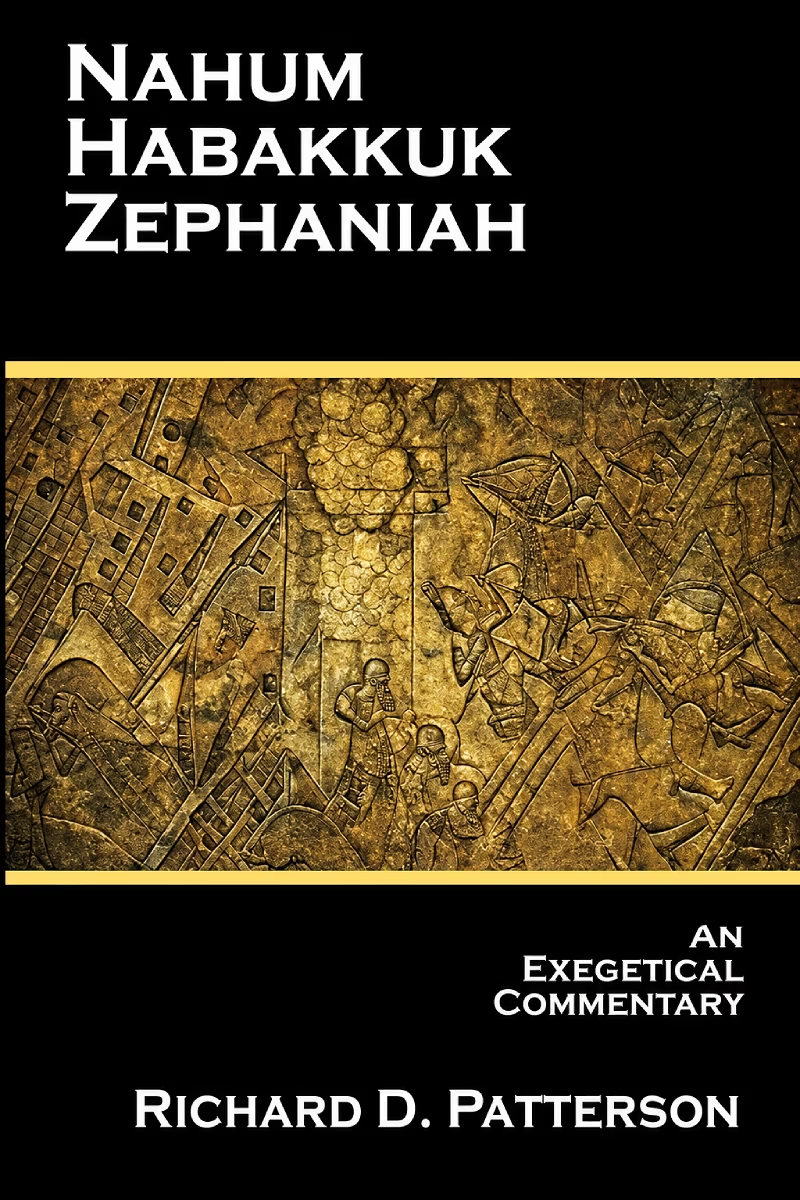
Nahum, Habakkuk, Zephaniah
Richard D. Patterson gives a detailed exegetical study of Nahum, Habakkuk, and Zephaniah, tracing God’s judgment of evil, sovereign rule over history, the call to live by faith, and the Day of the Lord. Historical setting, Hebrew exegesis, literary structure, and theology combine to show how warning, justice, trust, and hope shape these three prophets.
Available Instantly
About This Book
Richard D. Patterson’s Nahum, Habakkuk, Zephaniah is a detailed exegetical commentary on three seventh-century prophetic books. Rather than treating the Minor Prophets as a collection of disconnected predictions, Patterson studies each book in its historical setting, literary structure, Hebrew wording, and theological argument. The result is sustained book-level treatment of Nahum, Habakkuk, and Zephaniah, with particular attention to how divine judgment, God’s sovereignty, human wickedness, faith, and future hope work together in their messages.
In Nahum, Patterson develops the prophecy against Nineveh and the Assyrian empire. Nahum’s announcement of Nineveh’s fall is read as both judgment upon a violent oppressor and reassurance to God’s people that history remains under divine government. Patterson gives substantial attention to the prophet’s poetic artistry, imagery, historical background, and portrayal of God as righteous judge and sovereign ruler. The book therefore helps readers understand why divine judgment is presented as good news to those suffering under brutal power, and how Nahum connects God’s holiness and justice with His control of nations and empires.
Habakkuk receives sustained treatment as a dialogue of faith in the face of moral disorder. Patterson follows the prophet’s questions about violence, injustice, and God’s use of the Chaldeans, then traces the divine answer toward Habakkuk’s mature confidence in God. Habakkuk 2:4 and the call for the righteous to live by faith form an important theological center, while Habakkuk 3 brings the prophet from perplexity to worship and trust even when outward circumstances collapse. This portion of the commentary directly addresses questions such as how a believer can trust God when evil appears to prosper, how God’s justice operates in history, and what faith looks like when visible evidence seems unfavorable.
Zephaniah is treated especially through the theme of the Day of the Lord. Patterson explains the prophet’s warnings of judgment against Judah and the nations, the seriousness of idolatry and moral complacency, and the movement from judgment to restoration and hope. Zephaniah’s picture of a purified people rejoicing in God’s saving love shows that the Day of the Lord is not merely destruction but part of God’s larger purpose to judge evil and preserve a faithful people.
Across all three books Patterson repeatedly connects historical events with enduring theological questions. God’s holiness and justice are not abstract doctrines; they shape His dealings with violent nations, corrupt societies, and His own people. Faith is not passive optimism but confidence in God’s character and rule when circumstances are confusing. Prophecy is presented as God’s word within real history, bringing both warning and hope.
This is an exegetically demanding commentary suited to readers who want more than a devotional overview. Its use of historical context, literary analysis, and detailed textual work makes it especially useful for serious study of Nahum, Habakkuk, and Zephaniah, while its theological exposition helps readers connect these prophets with questions about divine justice, trusting God in troubled times, the judgment of nations, the Day of the Lord, and hope beyond judgment.
Patterson’s commentary also gives readers a disciplined model for reading prophetic literature closely: historical circumstances, poetic form, and theology belong together. That integration helps distinguish each prophet’s particular message while showing why their warnings and promises remain spiritually significant.
Book Details

Reading Fit
STUDY LEVEL
Advanced
STUDY SCOPE
Individual Book, Old Testament
BOOKS INCLUDED

Edition & Format
PUBLISHED
January 17, 2013
AVAILABLE FORMATS
paperback, hardcover, kindle
LENGTH
352 pages

Topics Covered
You Might Also Like