
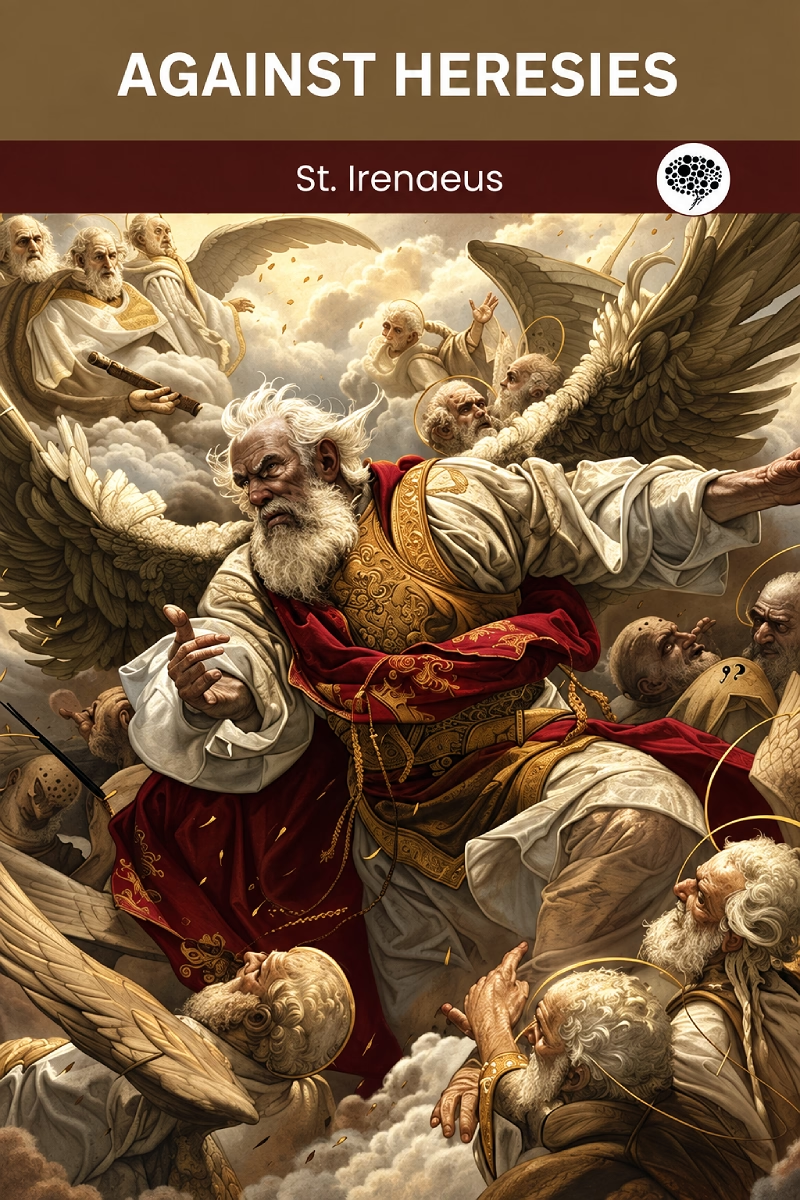
Saint Irenaeus of Lyons: Against Heresies
Irenaeus confronts Gnostic “knowledge falsely so called” by setting the apostolic faith against rival accounts of God, creation, Christ, and salvation. Across five books he defends the one Creator, the incarnation and recapitulation of humanity in Christ, the unity of Scripture, the resurrection of the body, and the church’s public apostolic witness.
Available Instantly
About This Book
Against Heresies, Irenaeus of Lyons’s Detection and Refutation of Knowledge Falsely So Called, is a sustained defense of the apostolic Christian faith against the Gnostic movements of the second century, especially Valentinian systems. Irenaeus does more than deny individual teachings. He first describes rival systems in detail and then tests them against the public apostolic rule of faith, the Scriptures, the preaching preserved in the churches, and the coherent biblical confession of one God who creates, saves, judges, and brings his creation to fulfillment in Jesus Christ.
Book I exposes the structure and claims of Valentinian and related Gnostic teachings: their aeons, pleroma, demiurge, secret knowledge, and competing accounts of creation and salvation. Book II subjects those systems to extended internal and theological refutation. This makes Gnosticism and spiritual deception governing subjects of the work. Irenaeus is particularly concerned with claims to hidden knowledge that detach Christian teaching from the public faith received from the apostles. His apologetic method therefore answers a recurring reader question: how can Christian truth be distinguished from religious teaching that borrows biblical language while changing the Bible’s account of God, creation, Christ, and salvation?
Books III and IV develop the positive biblical case. Irenaeus appeals to apostolic tradition and succession, not as a secret chain of elite teaching, but as public testimony to what the apostles taught in the churches. He argues from the four Gospels and the prophetic and apostolic Scriptures, insists that the God proclaimed by Jesus Christ is the same Creator spoken of in the law and prophets, and presents the Old and New Testaments as one divine economy. The unity of Scripture is therefore central: one God acts through both covenants, the prophets announce Christ, and the gospel fulfills rather than repudiates the Creator’s earlier work. Genesis, the Gospels—especially John—Romans, 1 Corinthians, and the prophetic books materially shape this argument.
Jesus Christ stands at the center of Irenaeus’s alternative to Gnostic division. The Son truly becomes human; salvation does not consist in escape from a creation made by an inferior god. Through the incarnation Christ recapitulates humanity, taking up Adam’s history in order to restore what was lost through disobedience. Irenaeus repeatedly connects Adam and Christ, creation and redemption, and the reality of Christ’s flesh with the reality of human salvation. The cross, blood, resurrection, and embodied life of Christ matter because the same human nature that fell is the nature God redeems and renews. This gives the work a strong doctrine of redemption and of the goodness and restoration of God’s creation.
Book V presses that argument into bodily resurrection and final fulfillment. Irenaeus uses Romans 8 and 1 Corinthians 15 in discussing flesh, soul, spirit, mortality, incorruption, and the resurrection of the body. He rejects the claim that material embodiment is inherently incapable of salvation and insists that God’s life-giving power can raise and transform the human body. The book also addresses Christ’s second coming, Antichrist, the number 666, the kingdom, Revelation, the resurrection of the just, judgment, and the final new creation. These themes serve the larger claim that the Creator’s saving purpose reaches the whole human person and the created order.
The work therefore joins apologetics, biblical theology, Christology, ecclesiology, anthropology, and eschatology. It is relevant to readers asking how early Christians answered Gnosticism, how the church used Scripture against claims of secret revelation, why the Old and New Testaments belong to one story, what Irenaeus meant by recapitulation, why the incarnation requires a real human body, or how bodily resurrection follows from the goodness of creation. Its governing logic is continuity: the God who made the world is the God revealed by Christ; the prophetic Scriptures and apostolic gospel testify to one saving purpose; and the humanity created by God is the humanity Christ assumes, restores, raises, and brings toward its appointed end.
Book Details

Reading Fit
STUDY LEVEL
Advanced
STUDY SCOPE
Entire Bible, Topical
BOOKS INCLUDED

Edition & Format
PUBLISHED
August 6, 2024
AVAILABLE FORMATS
paperback, hardcover, kindle
LENGTH
204 pages

Topics Covered
You Might Also Like