

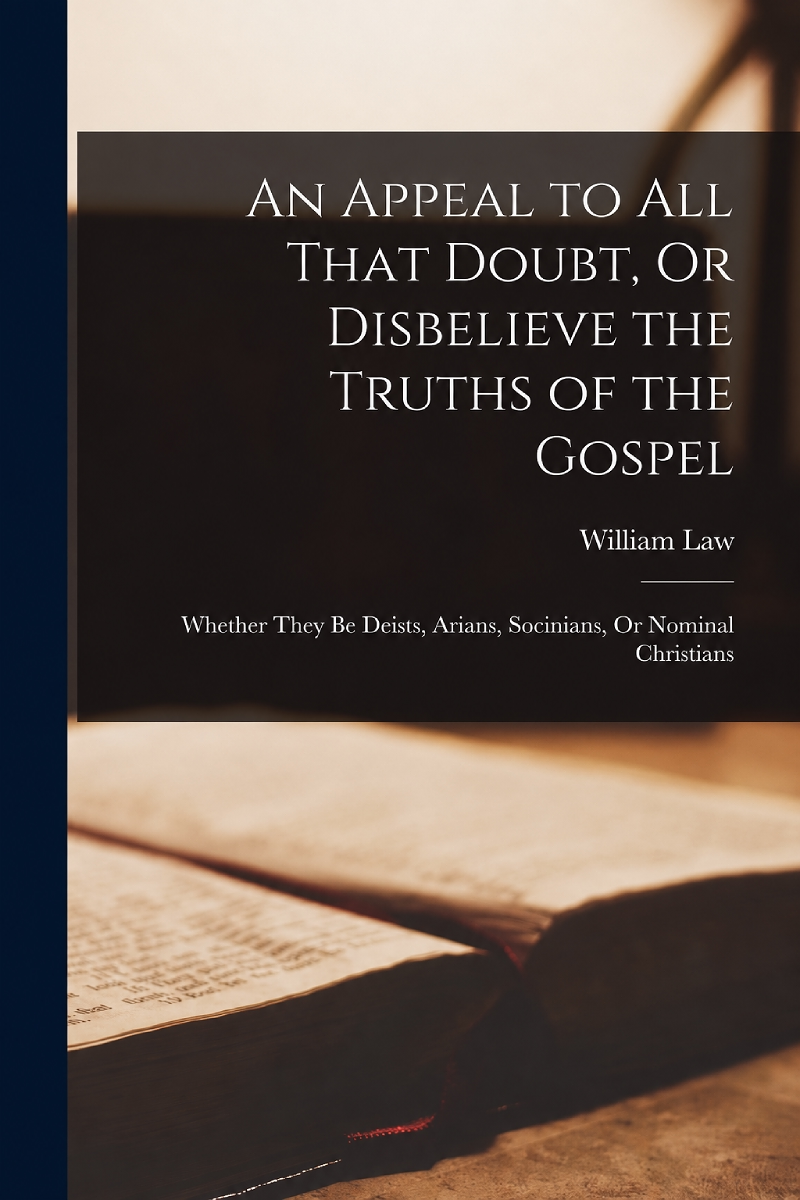
An Appeal to all that Doubt, or Disbelieve The Truths of the Gospel
William Law answers doubts about the gospel by linking creation, the human soul, free will, evil, the fall, the Trinity, regeneration, and redemption in Christ. He explains why the new birth is a real restoration of divine life, why Christ is the second Adam, and how the cross, blood, resurrection, and heavenly life reverse what humanity lost in Adam.
Available Instantly
About This Book
An Appeal to all that Doubt, or Disbelieve The Truths of the Gospel is William Law’s sustained theological and apologetic argument for the reality and necessity of the Christian gospel. Addressed to Deists, Arians, Socinians, nominal Christians, and other doubters, the book does not treat Christianity as a set of detached propositions. Law seeks to show how creation, the human soul, the fall, evil, the Trinity, regeneration, redemption, and eternal life belong to one connected account of God, nature, and the restoration of humanity in Jesus Christ.
The opening portion develops the origin and nature of the human soul, the freedom of the will, and the origin of evil. Drawing heavily on the creation and fall narratives of Genesis, Law presents humanity as created in the image and likeness of the triune God and argues that evil arises through the creature’s misuse of its freedom and separation from the divine life. Adam’s fall is described as a real loss of heavenly life and a descent into the mortal condition of the present world. This framework leads directly to the book’s teaching on regeneration: the new birth is not merely a change of opinion or outward conduct but the real restoration of divine life in the soul through the Son and the Holy Spirit.
The Trinity is therefore central to Law’s explanation of both creation and salvation. Father, Son, and Holy Spirit are treated in relation to humanity’s creation, regeneration, and sanctification, and the book repeatedly connects the triune life of God with the believer’s restoration. Law also argues from the visible order of nature to spiritual realities, using fire, light, spirit, life, death, generation, and growth as recurring analogies for the relationship between temporal nature and eternal nature. This becomes one of his principal answers to the reader who asks why revealed Christian doctrines are necessary rather than arbitrary religious requirements.
The second major movement examines eternal and temporal nature, the fall of angels, the present disorder of the world, heaven, hell, and the meaning of divine wrath. Law distinguishes God’s own unchanging love and goodness from the wrathful condition produced in fallen creatures and fallen nature. The present world is described as a temporal order marked by both good and evil, while heaven is associated with the harmonious life of divine light and spirit and hell with a creaturely life separated from that light. These discussions address questions about the origin of suffering and disorder, the relation of God to evil, and the eternal consequences of a will fixed either toward or away from God.
The final portion concentrates on Jesus Christ and the work of redemption. Law explains why fallen humanity cannot restore itself and why the incarnation, sufferings, death, resurrection, and ascension of Christ are necessary to salvation. Christ is developed as the second Adam who enters human nature in order to undo what was lost in the first Adam and to become the source of a restored heavenly life. The argument gives extended attention to the atonement and the blood of Christ, connecting the shedding of blood with remission of sins, deliverance from death and hell, and the recovery of the life lost through the fall.
Several New Testament passages materially shape this section. First Corinthians 15 underlies the contrast between the first Adam and Christ as the life-giving second or last Adam, as well as the discussion of resurrection and the transformed body. John’s teaching on being born from above and on eating Christ’s flesh and drinking His blood contributes to Law’s treatment of regeneration, union with Christ, and the Lord’s Supper. The Gospel passion narratives are used to interpret Christ’s agony, crucifixion, death, and victory over death. Law also discusses the believer’s future heavenly flesh and blood, presenting resurrection as the recovery of a body fitted for the kingdom of heaven.
For readers, the book addresses questions such as: What is the soul and why is it immortal? Where did evil come from if God is good? What was actually lost in Adam’s fall? Why must a person be born again? Why is salvation possible only through Jesus Christ? What is the relationship between the Trinity and regeneration? Why were Christ’s incarnation, blood, cross, resurrection, and ascension necessary? What do heaven, hell, divine wrath, and eternal life mean? How are the first Adam and Christ related? And what does it mean to receive Christ’s life rather than merely hold Christian ideas? Throughout, Law combines apologetic argument with an inward and experiential account of Christian salvation, presenting the gospel as the restoration of divine life in fallen humanity.
Book Details

Reading Fit
STUDY LEVEL
Advanced
STUDY SCOPE
Topical
BOOKS INCLUDED

Edition & Format
PUBLISHED
October 27, 2022
AVAILABLE FORMATS
paperback, hardcover, kindle
LENGTH
352 pages

Topics Covered
You Might Also Like